
By Priya Lalwani
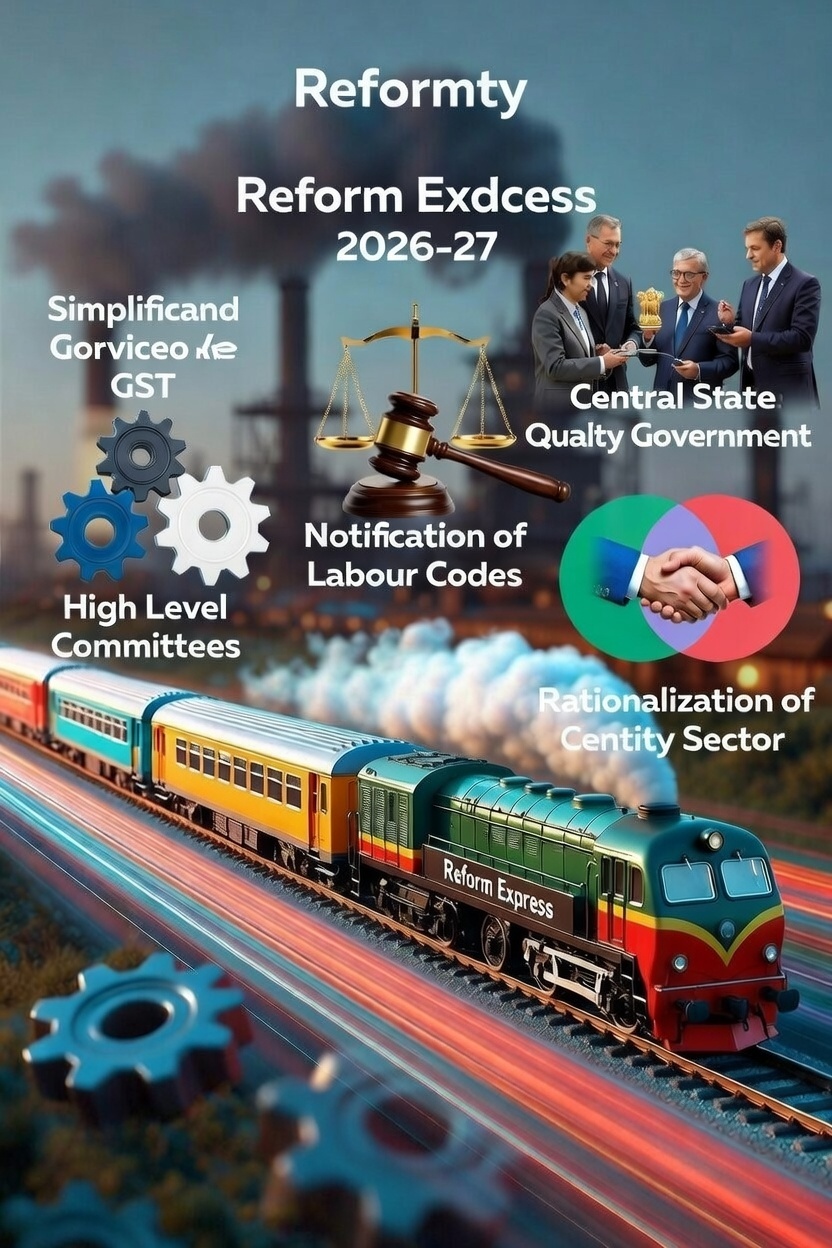
India’s Union Budget 2026-27, presented by Finance Minister Nirmala Sitharaman on February 1, 2026, emphasizes a strong commitment to structural reforms as the foundation for sustainable economic progress. Under the overarching theme of “Reform Express”, the government has prioritized comprehensive measures to drive employment generation, enhance productivity, and accelerate overall growth, aligning with the vision of a Viksit Bharat (Developed India).
A Renewed Push for Economic Reforms
The government has undertaken wide-ranging economic reforms aimed at creating jobs, boosting efficiency across sectors, and fostering faster, more inclusive growth. These efforts build on the momentum generated since the Prime Minister’s announcement on Independence Day 2025.
A key highlight is the rollout of over 350 reforms in recent months. These include:
- GST simplification — Streamlining processes to reduce compliance burdens, improve tax buoyancy, and make the indirect tax regime more business-friendly.
- Notification of Labour Codes — Implementing consolidated labor laws to provide greater flexibility for employers while ensuring better worker protections, easier hiring, and dispute resolution.
- Rationalisation of mandatory Quality Control Orders — Reducing unnecessary regulatory hurdles for products, easing market entry for manufacturers, and cutting down on redundant compliance requirements.
These targeted reforms address long-standing bottlenecks in taxation, labor markets, and product standards, creating a more conducive environment for businesses to thrive and expand.
Institutional Support and Collaborative Efforts
To sustain and deepen this reform momentum, High Level Committees have been constituted to examine critical areas, recommend actionable steps, and monitor implementation. This structured approach ensures reforms remain adaptive and forward-looking.
In parallel, the Central Government is actively collaborating with State Governments on deregulation initiatives and efforts to significantly reduce compliance requirements. This cooperative federalism is vital for creating a uniform, less burdensome regulatory landscape across the country, enabling smoother business operations, faster approvals, and greater ease of doing business.
Broader Context and Impact
These reforms form part of the Budget’s first “kartavya” (duty) — to accelerate and sustain economic growth by enhancing productivity, competitiveness, and resilience amid global uncertainties. By focusing on employment creation, productivity gains, and regulatory simplification, the government aims to transform India’s economic potential into tangible performance.
As the “Reform Express” continues its journey, these measures signal a clear preference for action over ambivalence and reform over rhetoric, positioning India for steady, high-quality growth in the coming years. With sustained implementation and Centre-State coordination, these steps are expected to unlock new opportunities for businesses, workers, and citizens alike.