
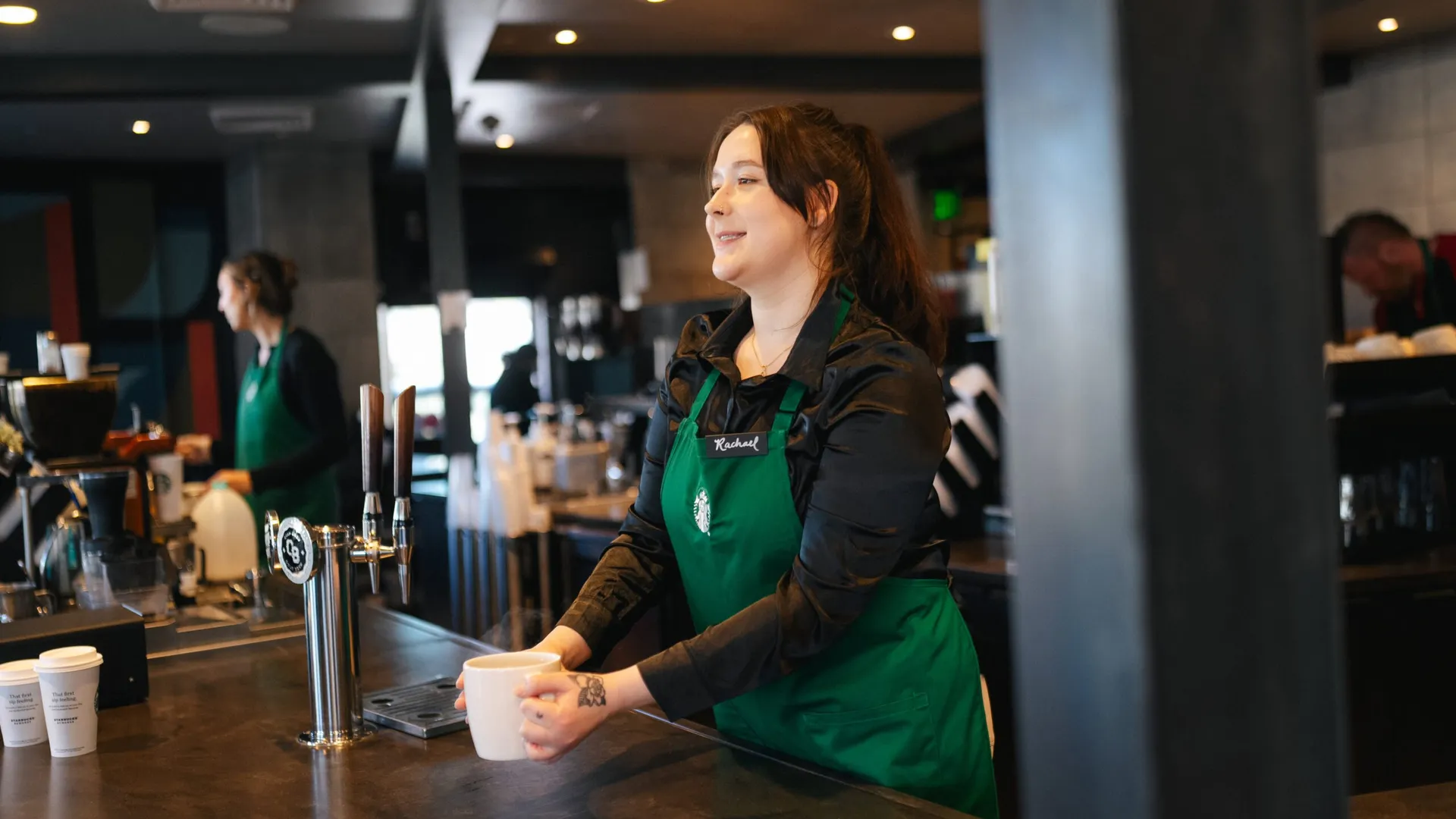
A new dress code is stirring more than just coffee at Starbucks.
Over the past week, more than 2,000 baristas across over 100 U.S. Starbucks stores have walked out of their shifts not over cold brew shortages or espresso machine failures, but because of an unexpected change in wardrobe. The company’s new uniform policy, which took effect on May 12, 2025, has left employees steamed, and not in the good, latte-foam kind of way.
So what’s the big deal?
The New Look: Simpler or Stifling?
Under the updated policy, Starbucks baristas are now required to wear solid black crew-neck, collared, or button-up shirts, paired with khaki, black, or blue denim bottoms including pants, skirts, or shorts beneath their iconic green aprons.
According to Starbucks, the shift is meant to “simplify color options” and ensure that their green apron stands out and creates “a sense of familiarity” for customers nationwide.
But baristas and union leaders say the change is not just superficial it’s symptomatic of deeper issues.
“We Asked for Staffing Help, Not a Fashion Reset.”
The protests, led by Workers United, a union that represents baristas at over 570 stores, weren’t just about fabric choices. The heart of the matter, union reps say, lies in how the decision was made.
“This wasn’t a collaborative change,” said union barista Jasmine Leli. “It was rolled out without proper bargaining. We have bigger problems like short-staffed stores, unpredictable schedules, and low wages. But instead of addressing that, Starbucks is worried about black shirts and khaki pants?”
In many cases, workers had already invested in Starbucks-approved attire under the previous guidelines, only to find those clothes now non-compliant. While the company has offered to provide two new shirts per worker, many feel it’s too little, too late.
Fashion Faux Pas or Corporate Clean-Up?
From a visual branding perspective, Starbucks’ new uniform is certainly more cohesive. The all-black top paired with neutral bottoms is sleek, professional, and minimalistic very much on-brand for a global giant. It might also help shift customer focus back onto the baristas’ service and the signature green apron, which Starbucks considers a “symbol of connection.”
But there’s another side to it: the individuality factor. The old dress code allowed for more personal expression flair, color, character. For many workers, that flexibility was a form of self-expression in an otherwise tightly controlled corporate space.
Now, critics say the new policy feels more like a fashion crackdown than a functional update.
Minor Disruption, Major Message
Though Starbucks claims the impact of the protests has been “minimal,” with most stores still running normally, the symbolic impact is hard to ignore. Drive-thru windows may have stayed open, but the message baristas sent was loud and clear: don’t make decisions for us make them with us.
And this isn’t the first time Starbucks has faced heat for labor issues. The company is still in the midst of ongoing contract negotiations with its unionized workforce, and the dress code debate has only added fuel to an already simmering pot.
So, Is This Uniform a Good Deal?
That’s the real question. On paper, it’s clean, corporate, and consistent. But in practice, it strips away a level of autonomy from employees who already feel underpaid and overworked. It’s not just about colors it’s about culture.
So, what do you think?
Is Starbucks raising the bar on brand identity, or missing the point entirely by prioritizing uniforms over real workplace concerns? Is this a smart move or a step back?
We’d love to hear your take.
-KHIZRA KHAN




 mitolyn official says: