
For the last few weeks, one word has quietly started appearing across headlines, social media reels, YouTube thumbnails, and WhatsApp forwards — Hantavirus.
The fear spread fast.
Some posts compared it to another pandemic waiting to happen. Others claimed mysterious infections were rising globally. A few even suggested it could become “the next COVID.”
And that is exactly where the confusion begins.
Because while Hantavirus is medically real — and in some cases, dangerous — health experts say the internet may be turning concern into unnecessary panic.
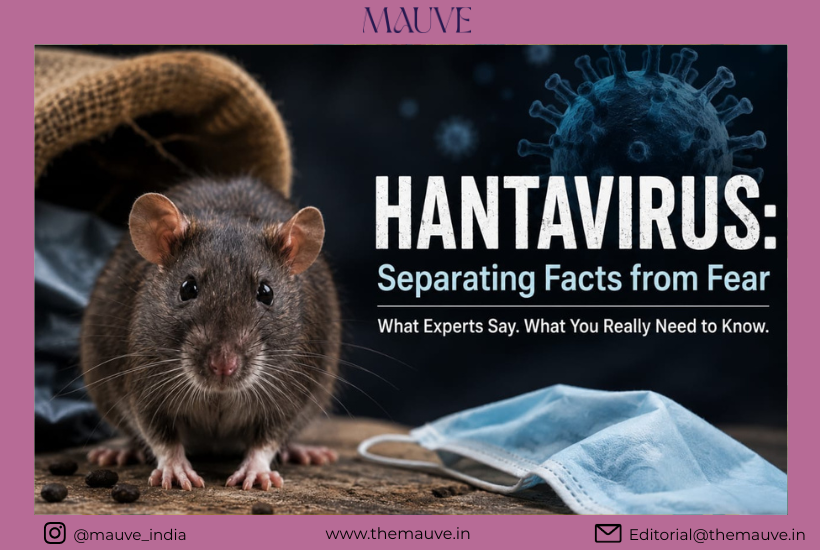
Unlike highly contagious respiratory viruses, Hantavirus does not spread easily between people. It is primarily linked to exposure to infected rodents, especially their urine, droppings, or saliva in enclosed spaces. Globally, the virus has remained rare, even in countries where it is more commonly found.
Yet fear travels faster than facts.
To understand whether India truly needs to worry, we spoke with Indian medical experts and their message was clear: awareness matters, panic does not.
Dr. Saurabh Jain, lead surgical oncologist, American Oncology Institute Raipur believes the current social media panic is far larger than the actual public-health threat in India.
“Hantavirus spreads through inhaling rat feces or urine,” he explained, “but Indian rats don’t have the same kind of hantavirus commonly seen in South Korea, China, Europe, or the US.”
That distinction, he says, is crucial — and often missing from online conversations.
Dr. Jain pointed out that person-to-person transmission in hantavirus cases is “almost not there,” which makes comparisons with rapidly spreading pandemic viruses misleading. While isolated infections can occur internationally, the conditions required for widespread community transmission simply do not exist in the same way.
His advice to the public is simple but powerful: “Stay informed, not frightened. Basic hygiene, rat control, and avoiding exposure to rat feces or urine is usually enough precaution for most people.”
At a time when viral misinformation spreads faster than verified medical guidance, his words reflect a growing concern among doctors: people are consuming fear before facts.
Why Experts Say Awareness Matters More Than Alarm
Another voice urging calm is Dr. Ajay HR, Consultant General Medicine and Diabetology, Prakriya Hospitals bangalore who says India’s current risk level remains extremely low.
According to Dr. Ajay, Indian health authorities — including the Indian Council of Medical Research and the National Institute of Virology — have clarified that recently discussed cases are isolated and imported, not signs of local spread inside India.
He explains that hantavirus infection mainly spreads through inhalation of aerosolized particles from infected rodent urine, saliva, or droppings, especially in poorly ventilated spaces. Direct contact with contaminated surfaces can also pose a risk.
However, he notes that documented person-to-person transmission has been extremely rare and linked only to specific strains like the Andes virus found in parts of South America.
Dr. Ajay emphasized that preventive measures remain straightforward and effective:
“Maintaining good rodent control, hygiene, and caution in dusty or rodent-infested areas is important to prevent potential exposure.”
He added that although some strains can carry significant mortality rates, the overall public-health risk in India is currently “very low.”
The Indian Reality vs Internet Panic
One reason experts are pushing back against online hysteria is because the actual Indian data tells a very different story.
India has only reported sporadic and isolated hantavirus cases over several decades, with no sustained outbreaks ever documented. One of the most discussed Indian medical reports came in 2016, involving a rare postpartum
Hantavirus Pulmonary Syndrome case — considered among the first severe well-documented cases in the country.
As of May 2026, no active domestic hantavirus outbreak has been confirmed in India.
Even the recent international cruise-ship incident that triggered online discussion involved two Indian nationals who were reportedly asymptomatic and kept under observation.
Globally too, hantavirus infections remain relatively rare when compared with common viral respiratory illnesses.
So why does the fear feel so large?
Experts say the answer lies in the modern information ecosystem. A dangerous-sounding virus, dramatic thumbnails, partial information, and pandemic-era trauma create the perfect environment for viral anxiety. People remember how COVID began, and every unfamiliar virus now triggers a sense of déjà vu.
But medical experts warn against treating every emerging infection as the next global catastrophe.
What You Actually Need To Do
Doctors say most people do not need extreme precautions. Instead, they recommend practical hygiene habits that already protect against several rodent-borne diseases:
Keep homes and storage areas clean and ventilated
Avoid direct contact with rodent droppings or urine
Use masks and gloves while cleaning rodent-infested spaces
Wash hands thoroughly after exposure to dusty closed areas
Focus on rodent control and sanitation
In other words, awareness is necessary — panic is not.
The internet may reward fear-driven headlines, but medicine works differently. It relies on evidence, patterns, and risk assessment.
And right now, according to Indian experts, the evidence does not suggest that hantavirus is an immediate threat to India.
What it does suggest is something equally important: in the age of viral misinformation, staying calm may be just as important as staying informed.
– Khizra Khan