
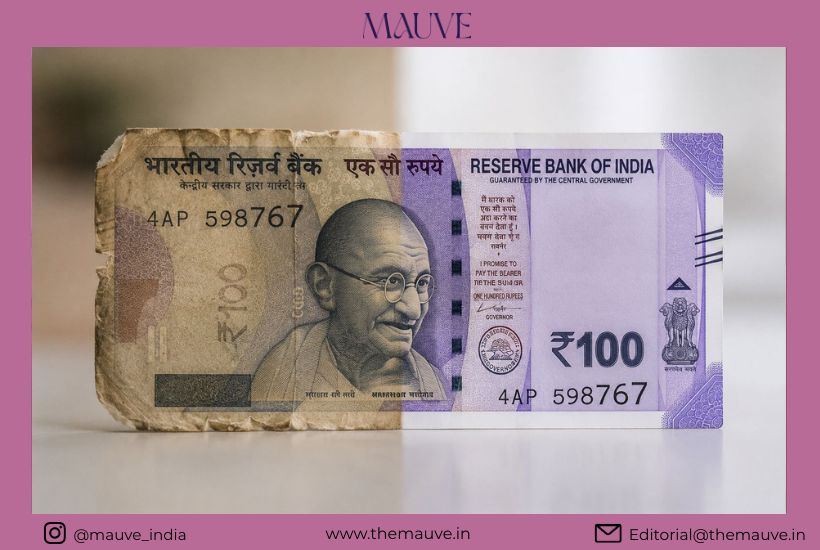
In an age where sustainability dominates global conversations, the idea of introducing plastic rupee notes may seem like a modern and innovative step. Supporters argue that polymer banknotes are more durable, more secure, and more cost-effective over time. On paper, the proposal appears logical.
But beneath the promises of longevity and advanced security lies a more important question: Do plastic rupee notes actually address India’s most pressing financial challenges, or are they a costly distraction from larger priorities?
As discussions around polymer currency gain attention, it may be worth examining whether replacing traditional paper notes is truly the right direction for a country rapidly moving toward a digital economy.
The Durability Argument Isn’t the Full Story
One of the strongest arguments in favor of plastic notes is that they last longer than paper currency. Supporters claim this could reduce replacement costs and improve the quality of notes in circulation.
However, durability alone does not justify a nationwide transformation of a country’s currency system.
Introducing polymer notes would require significant investments in printing technology, distribution networks, ATM calibration, vending systems, and public awareness campaigns. These transition costs could run into substantial amounts before any long-term savings are realized.
The question policymakers must ask is simple: Are longer-lasting banknotes enough to justify such a large financial undertaking?
A Plastic Solution in an Anti-Plastic Era
Perhaps the biggest contradiction lies in the material itself.
Governments, businesses, and environmental organizations around the world are encouraging citizens to reduce plastic consumption. Single-use plastics are being banned, industries are being pushed toward sustainable alternatives, and consumers are becoming increasingly conscious of environmental impact.
Against this backdrop, introducing plastic currency sends a mixed message.
While advocates argue that polymer notes can be recycled, critics point out that manufacturing and disposal processes still involve environmental concerns. At a time when sustainability is becoming a national priority, replacing paper-based currency with plastic may appear counterintuitive.
The optics alone could prove challenging.
India’s Real Financial Revolution Is Digital
The debate over plastic notes also arrives at an interesting moment in India’s economic journey.
Over the last decade, digital payments have transformed how people transact. From QR-code payments at roadside tea stalls to instant mobile banking, India has become one of the world’s leading digital payment ecosystems.
Consumers are increasingly choosing convenience over cash.
In this context, investing heavily in a new generation of physical banknotes may feel like upgrading a technology whose importance is gradually declining. While cash will undoubtedly remain relevant for years to come, the future of financial transactions is increasingly digital.
The larger question becomes whether resources should be directed toward modernizing cash or accelerating digital infrastructure.
Counterfeiting Is No Longer Just a Currency Problem
Supporters often highlight polymer notes’ enhanced security features as a major advantage.
There is no doubt that advanced security measures make banknotes harder to counterfeit. However, financial crime has evolved alongside technology.
Today’s challenges extend beyond fake notes. Cyber fraud, identity theft, online scams, and digital financial crimes now represent some of the biggest threats to consumers and institutions alike.
In this environment, focusing heavily on redesigning physical currency risks addressing yesterday’s problem while newer threats continue to grow.
Public Acceptance Matters
Currency is not merely a financial tool; it is a part of everyday life.
Millions of people interact with cash daily, and any significant change requires public trust and acceptance. Polymer notes feel different, fold differently, and behave differently in circulation.
While these differences may seem minor, widespread adoption would require a cultural adjustment across urban and rural communities alike.
History has shown that even small changes in currency can create confusion and resistance if not carefully managed.
Innovation Should Serve Purpose
Innovation is often celebrated simply because it is new. But not every new idea automatically represents progress.
The success of any policy depends on whether it solves a meaningful problem. In the case of plastic rupee notes, the benefits are real—but so are the costs, challenges, and unanswered questions.
Before embracing polymer currency, policymakers must determine whether durability and security gains outweigh environmental concerns, implementation expenses, and the reality of an increasingly cashless economy.
Conclusion
The discussion around plastic rupee notes reflects a broader challenge facing modern societies: balancing innovation with necessity.
Polymer currency may work effectively in some countries, but India’s circumstances are unique. As digital payments continue to expand and sustainability becomes a central concern, the case for replacing traditional paper notes remains far from settled.
The future of money is undoubtedly changing. Yet the most important question is not whether currency should evolve—it is whether plastic banknotes represent the evolution India truly needs.
Sometimes, the smartest innovation is not adopting the newest solution, but recognizing which problems deserve solving first.