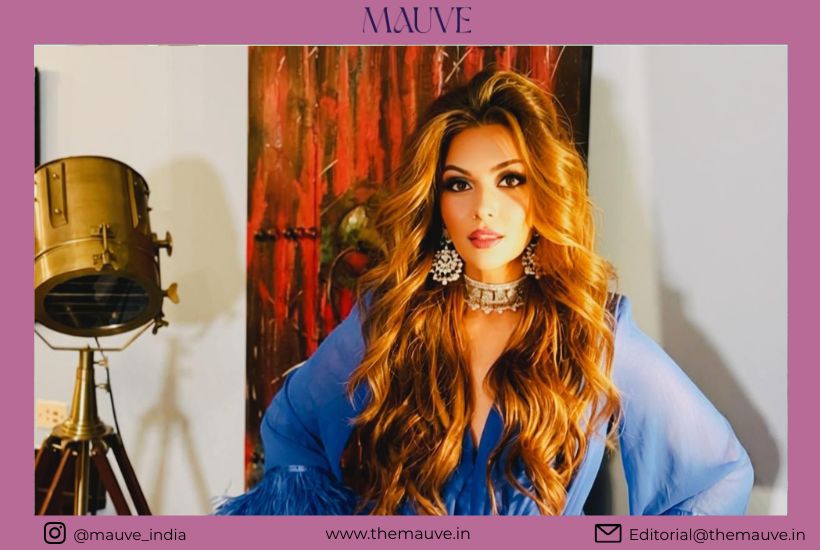
From Bollywood heroine to humanitarian activist, Somy Ali opens up on reinvention, the real meaning of visibility, rescuing over 50,000 lives, and why sitting with survivors at 3 a.m. taught her more than any classroom ever could. Her life has moved through Pakistan, Miami, Bollywood, activism, and filmmaking. When asked which version of herself understood reality the least, she does not hesitate. It was the sixteen-year-old who stepped off a plane into a world of illusions and called it home.
Visibility, for the actress Somy Ali once was, meant being seen by millions on screen, celebrated and desired. The activist she became sees it entirely differently. “True visibility is when a survivor who has been hidden in shame, fear, or silence finally feels safe enough to be seen and believed,” she says. “It is when a woman who lived in her car with her children can stand tall and say, ‘I survived.'”
“The most powerful visibility is no longer about fame. It is about giving people who were erased the dignity of being witnessed and valued.”
That shift from performer to witness has been the defining arc of her life. And it has not come without cost. Somy recalls the rescue of a five-year-old Indian girl, found in Miami, a victim of sex trafficking. She was wearing a frock. That night, Somy was beaten by the perpetrator. “That moment felt more dramatic, more intense, and more real than anything I ever filmed,” she says. “Real life, I have learned, writes the most powerful scripts.”
Somy began her NGO work to apply what she had studied in psychology and human behaviour. What she did not expect was that the work would quietly begin healing her too. “Every time I help a survivor move from victim to thriver, a piece of my own broken identity heals,” she admits. “I no longer see myself only as the girl who was hurt. I see myself as someone who refused to let that pain stay private.”
“The rescues did not just change their lives. They transformed mine from one of survival to one of purpose.”
She has studied psychology, legal studies, filmmaking, and journalism. Each field gave her something. Psychology gave her language and tools. Filmmaking taught her how to tell a story. Journalism taught her how to investigate the truth. But she is clear about what taught her the most. “Nothing has taught me about human pain more deeply than sitting with survivors at 3 a.m., holding their hands while they cry, and helping them rebuild their lives one small step at a time,” she says. “The most accurate understanding of pain comes from love, presence, and the willingness to stay in the room when it hurts the most.”
Her life has reinvented itself more than once. Asked whether that reinvention comes from courage or unrest, Somy says it comes from both. “The unrest, the pain, the trauma, the sleepless nights, pushes you out of what no longer serves you,” she explains. “But courage is what allows you to walk toward the unknown instead of staying in the familiar darkness.”
She is careful not to romanticise the process. “For me, reinvention has never been glamorous. It has been messy, painful, and necessary. Every time I thought I could not go on, something inside me chose to keep moving.” That choice, she believes, is what keeps reshaping her life, one difficult chapter at a time.
“Academic knowledge is powerful, but lived experience and bearing witness to real suffering is the greatest teacher.”
From the film sets of Andolan and Agnichakra to emergency rescue calls in the middle of the night, Somy Ali has lived many lives within one. She remembers her co-stars Divya Bharti and Raj Kiran, two incredible actors whose careers were cut tragically short, with a tenderness that speaks to how deeply she holds the past even as she keeps moving forward. The girl who once chased fairy tales in Bollywood now spends her nights making sure other people’s nightmares end. That, she says, is the only story worth telling.