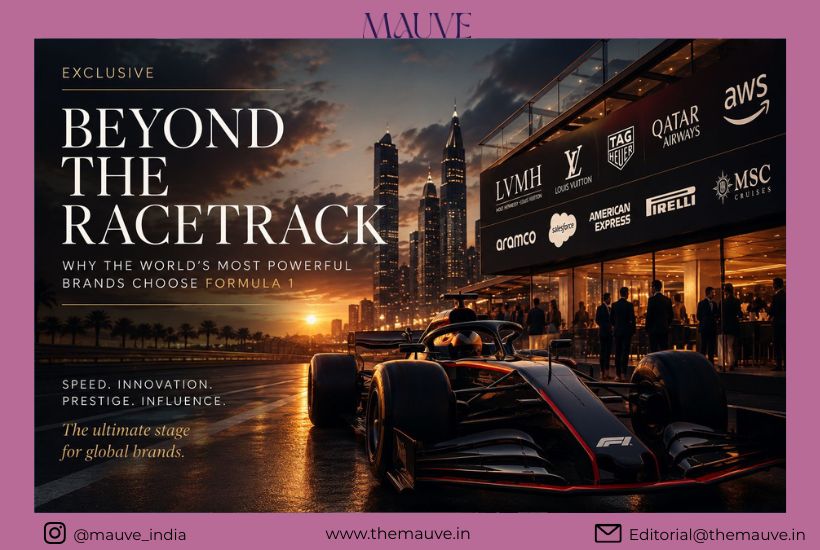
There are sporting events, and then there is Formula 1.
A championship watched by over 800 million fans globally, hosted across glamorous destinations from Monaco to Singapore, Las Vegas to Abu Dhabi, Formula 1 today is far more than motorsport. It has evolved into one of the world’s most influential luxury, technology, and business platforms.
When brands like LVMH, Louis Vuitton, Qatar Airways, TAG Heuer, American Express, AWS, Salesforce, and Lenovo invest millions into Formula 1 partnerships, they are not merely placing logos on race cars. They are buying access to a unique ecosystem where wealth, innovation, influence, aspiration, and entertainment intersect.
The question is not why brands sponsor Formula 1.
The question is why they cannot afford not to.
The Audience Every Brand Wants
Formula 1 attracts one of the most desirable consumer demographics in the world.
The sport’s audience consists largely of affluent professionals, entrepreneurs, corporate leaders, investors, luxury consumers, and high-spending millennials and Gen Z enthusiasts.
Unlike many traditional sports, Formula 1 spectators are deeply engaged with technology, automotive innovation, travel, luxury experiences, fashion, and premium lifestyle products.
For luxury brands, Formula 1 offers direct access to customers who can actually purchase their products.
A billboard may create awareness.
Formula 1 creates aspiration.
Why Luxury Brands Are Racing Into Formula 1
The arrival of LVMH as a Global Partner signals a significant shift in how luxury views motorsport.
Luxury and Formula 1 share the same language:
- Precision
- Craftsmanship
- Heritage
- Performance
- Exclusivity
Louis Vuitton’s custom trophy trunks, TAG Heuer’s return as Official Timekeeper, and Moët Hennessy’s association with victory celebrations are not marketing coincidences. They are strategic alignments of brand values.
A Formula 1 podium is among the most photographed moments in global sports.
Every image carries luxury symbolism.
For brands, that visibility is priceless.
Technology’s Fastest Laboratory
Formula 1 generates enormous amounts of real-time data during every race.
This makes the sport an ideal showcase for technology companies.
AWS uses Formula 1 to demonstrate artificial intelligence, machine learning, predictive analytics, and cloud computing capabilities.
Salesforce is developing AI-powered fan engagement systems.
Lenovo supplies advanced computing solutions.
Tata Communications powers the sport’s global broadcasting infrastructure.
For technology companies, Formula 1 is not simply sponsorship.
It is a live demonstration of what their products can achieve under the most demanding conditions imaginable.
Airlines, Hospitality and Global Connectivity
Formula 1 is one of the few sporting properties that genuinely travels the world.
A single season spans multiple continents, cultures, and time zones.
This makes it particularly attractive to global travel brands.
Qatar Airways leverages Formula 1 to position itself as a premium global connector.
MSC Cruises associates itself with luxury travel experiences and international exploration.
Hotels, airlines, tourism boards, and destination brands recognize Formula 1 as a platform that reaches affluent travellers who actively seek premium experiences.
In many ways, Formula 1 is as much a travel industry event as it is a sporting competition.
The Business of Prestige
Financial institutions such as Santander, Standard Chartered, American Express, and Marsh understand something crucial.
Trust is built through association.
Formula 1 embodies precision, performance, risk management, strategy, and long-term thinking.
These are exactly the qualities financial brands want consumers to associate with them.
A Formula 1 partnership communicates credibility without saying a word.
The association itself becomes the message.
Why Consumer Brands Love Formula 1
From PepsiCo and Nestlé to McDonald’s and Barilla, consumer brands are increasingly investing in Formula 1.
The reason is simple.
The sport has successfully transformed itself into a cultural phenomenon.
Netflix’s “Drive to Survive” introduced Formula 1 to younger audiences and dramatically increased fan engagement across social media.
Formula 1 drivers have become celebrities.
Race weekends have become entertainment festivals.
Brands are no longer reaching sports fans alone.
They are reaching fashion enthusiasts, travellers, entrepreneurs, content creators, and lifestyle consumers.
Formula 1: The New Luxury Media Platform
Traditionally, luxury brands invested heavily in fashion weeks, golf tournaments, yachting events, and art fairs.
Today, Formula 1 sits comfortably alongside these prestigious platforms.
In fact, it offers something many luxury events cannot:
Global reach combined with emotional engagement.
Few experiences can match the glamour of Monaco, the spectacle of Las Vegas, or the exclusivity of the Formula 1 paddock club.
For brands, Formula 1 delivers visibility, prestige, storytelling, hospitality opportunities, and customer engagement in one ecosystem.
The future of Formula 1 partnerships is no longer about logos on cars.
It is about creating immersive experiences.
Brands are building VIP lounges, curated travel experiences, AI-powered fan interactions, luxury hospitality programs, exclusive product launches, and high-value networking opportunities around race weekends.
Formula 1 has become a business platform disguised as a sport.
And that may be its greatest achievement.
The Mauve Perspective
The most fascinating aspect of Formula 1’s commercial success is that it mirrors the evolution of modern luxury itself.
Luxury is no longer just about owning a product.
It is about belonging to an ecosystem of experiences.
Formula 1 delivers exactly that.
It combines speed with sophistication, engineering with elegance, competition with culture.
For brands seeking influence rather than mere visibility, Formula 1 is no longer a sponsorship opportunity.
It is the ultimate stage.
And as luxury, technology, travel, finance, and lifestyle continue to converge, Formula 1’s greatest race may not be on the track at all.
It may be the race among global brands to secure their place beside it.