
Real, lasting social change is rarely the result of a single effort. It is built at the intersection of intent, resources and action—where policy meets people, and ideas translate into impact. In today’s evolving social landscape, the conversation is no longer about who is responsible for change, but how different forces can come together to create it meaningfully and sustainably.
From the collaborative roles of NGOs, corporates and policymakers, to the transformative power of education and compassion-led leadership, the path to social progress is layered and interconnected. It demands not only structured systems and financial backing, but also empathy, grassroots understanding and a shared sense of responsibility.
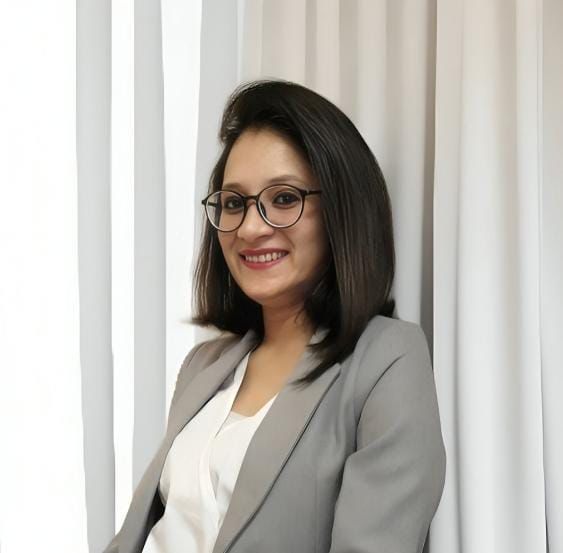
In this conversation, with Nitika Dhiman | National Head-Women Front & Chief-Communications & Engagement | Aayom Welfare Society we explore what it truly takes to build impact at scale—how organisations can touch lives meaningfully, why education remains a cornerstone of empowerment, and how both individuals and businesses can contribute to a more inclusive and conscious society.
What does true empowerment look like for women in today’s social and economic landscape?
When you see a female claiming the authority of her life, that is how true empowerment looks like. The transition from having a seat in a literacy session to holding a pen (literally and metaphorically) that is empowerment.
Through my journey at Aayom Welfare Society as a National Head and at The Fibre Story as a founder, I’ve realized empowerment remains hollow without financial autonomy. When females working with us learn not only how to earn her wage, but how to invest and protect it, that intentional shift is empowerment.
Apart from economic participation, it is also about breaking societal barriers, and changing mindsets. A truly empowered women need not justify her ambitions, choices, her aspirations daily to someone; she should rather lead, create and contribute without limitations imposed by gender stereotypes.
We must never forget, when a woman uplifts herself, she uplifts her family and community with her. I reckon, investing in women is not just a social responsibility, it is one of the most powerful ways to create a sustainable and inclusive development.
How important are community-led initiatives in creating sustainable change for women at the grassroots level?
If we need to build a permanent legacy, then community-led initiatives are not just important but the lifeline of sustainable change. When we design solutions not just for them, but by involving them that is when real sustainability is born.
Women from the community have the understanding of their cultural nuances and societal barriers that no external person can know beforehand. This expertise transforms them from passive beneficiaries into active stakeholders.
The true power of the community-led initiatives can be seen in ripple effect. When one woman masters a skill or claims her legal rights in a righteous manner, she becomes a living blueprint for others and an inspiration in her community. The true impact never comes when you impose, it comes when you build with them and they say – ‘We did it ourselves’. Flaunting newly learnt English words, inspiring others with the baskets, snacks, handicrafts, they make or the cloths they stitch, they rise above everyday. So, to build a permanent cure, grassroots leadership is crucial.
- In your experience, what are the biggest barriers women still face in achieving economic independence?
I assure you, many would start by telling about the one and only biggest barrier in a female’s life – her family itself. Unfortunately, it continues to be the first and most powerful obstacle for many women to encounter. And this does not just restrict their economic independence; it also limits their education, skill development, and employment opportunities.
Another most universal which we witness everyday, which doesn’t prejudice between rural heartlands and urban boardrooms to which I address as the unspoken PRIORITIZATION TAX which only females pay. Society operates on a silent contract: a woman’s professional aspirations are only “allowed” once her domestic balance sheet is settled.
The expectation remains the same or more everywhere – Khana bana hona chahiye, kapde dhule hone chahiye, aur bache sambhale hone chahiye. Once these boxes are checked, then a woman can take a peek on her personal and professional aspirations.
Interestingly, if she dares to change the script, prioritizes herself first, the backlash starts immediately. Females are not just fighting for equal pay, but are fighting against a prejudiced culture that views a woman’s ambition as her hobby which is allowed to be pursued in her spare time or with the prioritization tax.
For women to truly achieve economic independence, the shift has to begin at home.
- How can skill development and education reshape opportunities for women in underserved communities?
These are the fundamentals, the very foundation of growth. No matter the gender, every individual deserves the opportunity to learn, to explore their abilities, and to build a life with dignity. Unfortunately, this still remains as a privilege rather than a primary right for many women in communities. While textbooks teach us many things, life itself is an even greater teacher. But this cannot unfold within the four walls of a house, where a woman’s world is limited to household chores. In a fast-paced world like ours, staying confined does not allow a person to discover their potential, their voice, or their confidence.
We read, write, learn, get trained, gather experiences and through that journey, we grow. We grow in our careers, we grow as individuals, and we begin to understand our own worth. In many ways, education and skill development do something very simple yet very profound: they give meaning and direction to a person’s life. For women in underserved communities, they are not just opportunities; they are the first real step toward dignity, confidence, and the freedom to choose their own path. Join us, in giving this chance to them.
- What role do communication and advocacy play in driving awareness around women’s empowerment?
For a long time, many issues affecting women were either normalized or silenced in the society. When we start communicating openly and advocating for women’s rights, dignity, and opportunities, we begin to challenge those long-standing mindsets. These two – communication and advocacy are the amplifiers of change.
It starts with shifting the narrative, then breaking the silence and finally creating institutional accountability. These steps taken in a structured and focused way can replace outdated stereotypes of pity to power.
These two reminds the society, that women issues are not just theirs to handle, it is a collective responsibility. The more we talk about it, the more we normalize it, and the closer we move toward a society where women’s rights, opportunities, and ambitions are not questioned, but supported. Let them tell their stories, and help them recreate it in a better way.
- What policy or structural changes do you believe are necessary to accelerate gender equality?
I wouldn’t mind asking a question to the system for accelerating the gender equality – even when the policies and laws are made, are they truly implemented?
On paper, everything looks promising, but the real challenge lies in the implementation. Very often, these policies remain stagnant for years, not just in matters related to females, but in other area as well. The intent may exist, but the executive falls.
And we can surely continue to make more policies, or structural changes, but unless they are implemented rigorously and monitored consistently, the impact will remain limited. The real change would happen when these policies would go beyond papers and begin to shape the realities on the ground.
For gender equality to truly accelerate, the focus must shift from merely drafting policies to ensuring accountability in their implementation. Systems must be built where progress is tracked, outcomes are measured, and institutions are held responsible for delivering the change that policies promise.
– Priya Lalwani