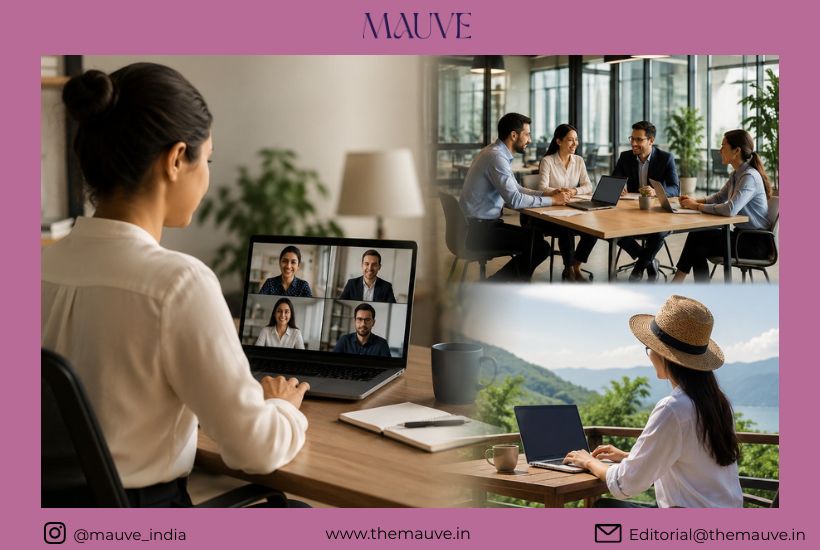
The workplace is no longer defined by cubicles, conference rooms, or even a fixed address. Over the last decade and especially after the global shift toward remote work—organizations around the world have been rethinking what it means to “go to work.” Today, productivity is increasingly measured by outcomes rather than hours spent at a desk, and employees are seeking flexibility, purpose, and balance alongside professional growth.
Welcome to the era of work without walls, where the boundaries of the traditional office are being redrawn.
The End of the Traditional Office Model?
For generations, the workplace followed a predictable formula: employees arrived at the office at a set time, worked under direct supervision, attended meetings in person, and left at the end of the day. While this model provided structure, it was built for a different economic and technological era.
Today’s workforce operates in a world powered by cloud computing, digital collaboration tools, artificial intelligence, and high-speed connectivity. Work can happen from a home office, a co-working space, a café, or even while traveling. As a result, the physical office is no longer the center of productivity—it is becoming just one of many places where work gets done.
This shift is not simply about location. It reflects a broader transformation in how organizations view talent, collaboration, and performance.
The Rise of a Flexible Work Culture
Modern employees increasingly value flexibility as much as salary. Hybrid schedules, remote-first policies, and flexible working hours have become major factors in attracting and retaining talent.
Companies that embrace flexibility are discovering benefits that extend beyond employee satisfaction. They gain access to wider talent pools, reduce operational costs, and often see improvements in productivity. Employees, meanwhile, benefit from reduced commuting time, improved work-life balance, and greater autonomy over how they structure their day.
However, flexibility does not mean a lack of accountability. In fact, many organizations are replacing time-based management with performance-based evaluation. The focus is shifting from where employees work to what they achieve.
Why the Old Office Culture No Longer Fits
The traditional office culture was built around visibility. Being physically present often carried as much weight as actual performance. Long hours at the office were frequently interpreted as dedication, while face-to-face supervision was considered essential for productivity.
In today’s workplace, those assumptions are increasingly outdated.
Employees are looking for trust rather than constant monitoring. They expect leaders to provide guidance, not micromanagement. Modern professionals also value mental well-being, inclusion, and meaningful work experiences—areas where many old workplace models fall short.
A culture based solely on hierarchy and rigid schedules struggles to meet the expectations of a workforce that prioritizes flexibility, innovation, and personal growth. Organizations that fail to evolve risk losing talent to competitors that offer more adaptable and employee-centric environments.
Collaboration Has Been Reinvented
One of the biggest concerns surrounding remote and hybrid work was whether collaboration would suffer. Instead, technology has transformed the way teams connect.
Video conferencing, project management platforms, instant messaging tools, and AI-powered productivity systems now allow teams to collaborate across cities, countries, and time zones. Employees can contribute ideas, share updates, and manage projects without being in the same room.
The result is a more connected global workforce where expertise can be sourced from anywhere, breaking down geographical barriers that once limited opportunities.
Building Culture Beyond Physical Spaces
A common misconception is that workplace culture can only exist inside an office. In reality, culture has less to do with physical spaces and more to do with shared values, communication, and leadership.
Successful organizations are investing in digital engagement, virtual team-building activities, transparent communication, and employee well-being programs. Leaders are learning that culture is created through trust, recognition, and purpose—not office décor or assigned seating arrangements.
The companies thriving in this new era are those that intentionally build connections, regardless of where employees are located.
The Role of Leadership in the New Workplace
As workplaces evolve, leadership styles must evolve as well.
Modern leaders are expected to be adaptable, empathetic, and results-oriented. Rather than focusing on oversight, they are focusing on empowerment. Employees want managers who support professional development, encourage innovation, and foster a sense of belonging.
This shift requires a new set of leadership skills, including emotional intelligence, digital communication, and the ability to manage distributed teams effectively.
As management expert Peter Drucker famously said:
“The best way to predict the future is to create it.”
Organizations that actively shape the future of work rather than resist it are positioning themselves for long-term success.
What the Future Workplace Looks Like
The future workplace is unlikely to be entirely remote or entirely office-based. Instead, it will be defined by flexibility, technology, and human-centered design.
Employees will have greater freedom in choosing where and how they work. Artificial intelligence will automate routine tasks, allowing workers to focus on creativity, strategy, and innovation. Offices will increasingly serve as collaboration hubs rather than mandatory daily destinations.
Most importantly, successful organizations will recognize that work is an activity, not a place.
Conclusion
The workplace revolution is not a temporary trend—it is a permanent transformation. The walls that once defined work are disappearing, replaced by a more flexible, connected, and purpose-driven model.
For businesses, adapting to this change is no longer optional. For employees, it represents an opportunity to redefine productivity, balance, and career growth. The organizations that embrace this evolution will not only attract top talent but also build stronger, more resilient workplaces for the future.
As work continues to evolve beyond the office, one thing is clear: the future belongs to organizations that focus less on where people work and more on how they thrive.
-Azhaan Khan