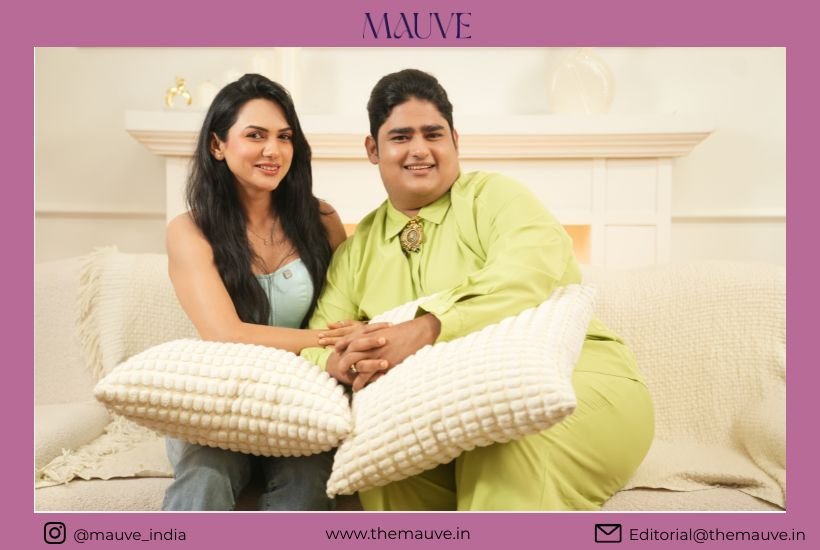
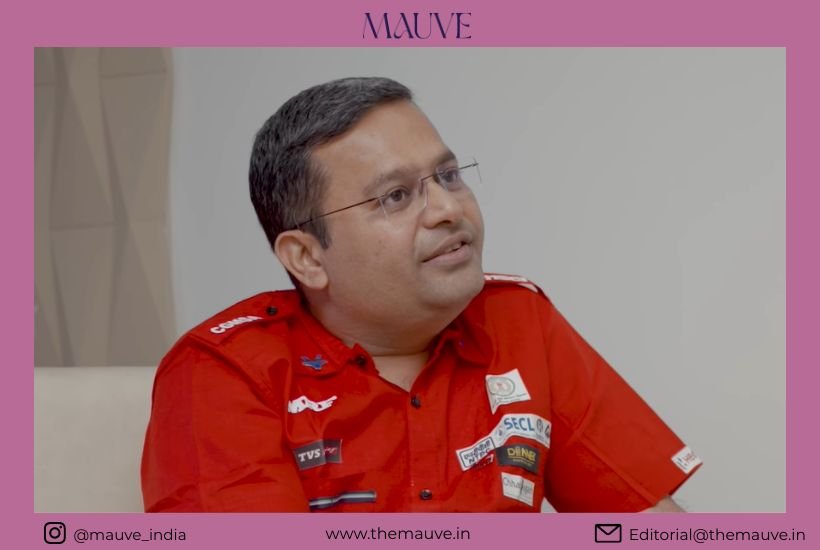
In an episode of Mauve’s Happened Over Coffee, host Priya Lalwani sits down with Ujjwal Deepak, President of the Chhattisgarh Motor Sports Association (CGMSA), for a conversation about motorsport, safe racing, responsible driving and the changing culture of speed in Chhattisgarh.
For many people, the word “racing” immediately brings to mind speed.
The roar of engines.
The thrill of competition.
The danger.
But what if the real problem is not racing itself?
What if the real problem is where people choose to race?
This question lies at the heart of a conversation between Priya Lalwani, founder of Mauve, and Ujjwal Deepak, President of the Chhattisgarh Motor Sports Association, on Happened Over Coffee.
The conversation moves beyond the excitement of motorsport to address a much more important question: Can a culture of speed exist alongside a culture of responsibility?
For Ujjwal, the answer is clear.
It can and it must.
Twenty-Five Years of Building Motorsport in Chhattisgarh
The conversation comes at a significant moment for the Chhattisgarh Motor Sports Association.
This year marks the 25th anniversary of CGMSA.
It also coincides with the 25th anniversary of the state of Chhattisgarh, making it a significant silver jubilee year for both the state and the association.
Over the years, motorsport in the region has evolved from a niche interest into a growing community of riders, racers and enthusiasts.
But the vision for the future is not simply about creating bigger events.
It is about creating better platforms.
Platforms where people can experience speed in a controlled environment.
Where competition can exist without putting innocent lives at risk.
And where young people with a passion for motorsport can find a legitimate space to pursue it.
“Do You Play Football on the Road?”
One of the most powerful arguments Ujjwal makes during the conversation is also one of the simplest.
“क्या आप फुटबॉल सड़क पर खेलते हैं? बैडमिंटन सड़क पर खेलते हैं? तो फिर सड़क पर रेसिंग क्यों?”
The question immediately changes the way we look at street racing.
People do not play football on a busy road because there are designated spaces for the sport.
They do not play badminton in the middle of traffic because there are courts.
So why should racing be treated differently?
The issue, Ujjwal argues, is not necessarily that young people want to race.
The issue is that they often do not have access to safe, organised platforms where they can do so.
And that is where motorsport associations and professional events become important.
“आप रेसिंग करने से लोगों को नहीं रोक सकते, क्या हम उन्हें एक प्लेटफॉर्म दे सकते हैं?”
It is a question that moves the conversation away from simply telling people what not to do.
Instead, it asks what can be created for them.
Racing and Road Safety Can Exist Together
For Ujjwal, the conversation around racing must also include the conversation around driving.
A person can be passionate about motorsport and still be a responsible driver on the road.
In fact, the two should go hand in hand.
The road is not a racetrack.
It is a shared space.
And every person using it is responsible not only for their own safety but also for the safety of everyone around them.
Ujjwal describes driving in Raipur as increasingly similar to playing a video game.
But unlike a video game, there are no extra lives.
“आज रायपुर में गाड़ी चलाना एक वीडियो गेम खेलने जैसा हो गया है, जहाँ आपके पास केवल एक लाइफ है।”
The line captures the seriousness of everyday driving.
A moment of impatience.
A sudden overtake.
A reckless turn.
A decision made in seconds can have consequences that last forever.
Your Driving Can Affect Someone Else’s Life
One of the strongest messages Ujjwal gives young drivers is the importance of civic sense and driving sense.
Driving is not simply about controlling a vehicle.
It is about understanding that you are sharing the road with other people.
Pedestrians.
Children.
Two-wheeler riders.
Families.
Other drivers.
A mistake behind the wheel does not always affect only the person who made it.
“आपकी गलत ड्राइविंग के कारण दूसरों की जान भी जा सकती है, तो प्लीज अपनी जान और दूसरों की जान को हल्के में न लें।”
It is a reminder that responsible driving is not about being afraid of the road.
It is about respecting it.
Speed can be thrilling.
But control is what makes it safe.
From Foreign Category Racing to Paramotors
This year’s event also promises several new attractions.
The championship will feature foreign category racing, freestyle motocross and paramotor performances.
Paramotoring, involving a motorised flight
The Future of Motorsport Needs Responsibility
Ujjwal Deepak’s conversation with Priya Lalwani ultimately presents motorsport in a different light.
Not as reckless.
Not as irresponsible.
And not as something that should automatically be discouraged.
Instead, it asks whether the culture surrounding speed can be made safer through better access, better education and better platforms.
The answer may not be to tell young people to stop loving speed.
It may be to teach them where speed belongs.
Because a passion for racing does not have to mean a disregard for safety.
A professional racer understands control.
A skilled rider understands limits.
And a responsible driver understands that every road is shared.
As CGMSA celebrates 25 years and prepares to bring a major national championship to Raipur, the larger message is perhaps more important than the event itself.
Race on the track.
Drive responsibly on the road.
And never forget that the person sharing the road with you may have only one life too.
This conversation with Ujjwal Deepak, President of the Chhattisgarh Motor Sports Association, is featured on Mauve’s Happened Over Coffee, hosted by Priya Lalwani, founder of Mauve.