By Khizra Khan
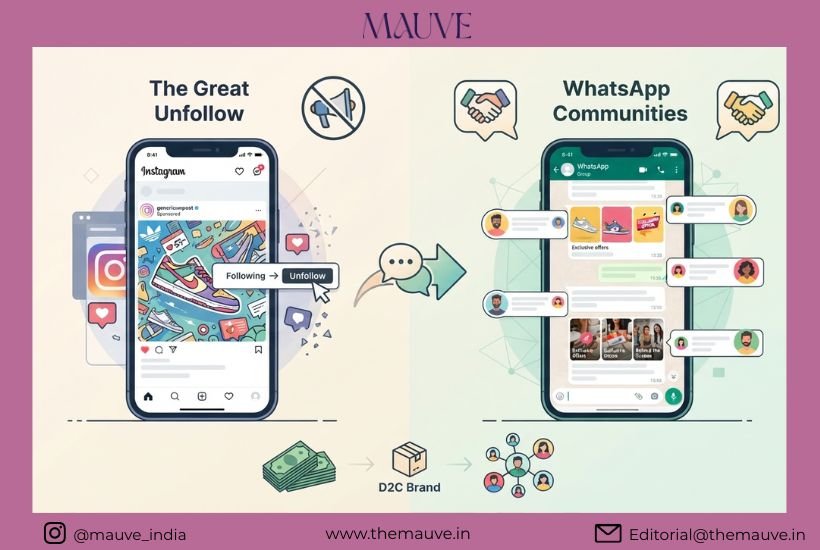
There was a time when a scroll-stopping Reel and a well-timed boosted post were enough to build a direct-to-consumer brand from scratch. That time is quietly ending. Walk into any D2C founder’s Slack or WhatsApp group today, and the conversation has shifted from “what’s our CPM?” to “how do we get people into our community?” The ad account hasn’t been abandoned but it’s no longer the hero of the story. WhatsApp is.
The Feed Got Expensive, and Loud
India now has over 800 active D2C brands chasing the same eyeballs on the same three or four platforms, all running strikingly similar creatives with strikingly similar offers. The consumer on the other end has developed a kind of scroll-immunity they see the ad, register it as an ad, and keep moving. Meanwhile, customer acquisition costs on Meta have climbed steadily since Apple’s privacy changes made targeting less precise and auctions more competitive. Brands are paying more to reach people who are paying less attention. That math doesn’t hold forever.
The Channel Nobody’s Ignoring
Here’s the number that changes the conversation: WhatsApp messages in India see open rates north of 90%, often read within minutes of landing. Compare that to an email sitting unopened in a Promotions tab, or an Instagram post buried by an algorithm that decides who gets to see it at all. There’s no algorithm standing between a brand and its customer on WhatsApp if you’re in the thread, you’re in the conversation.
That distinction matters more than it sounds. Instagram is a discovery channel noisy, público, built for first impressions. WhatsApp is a relationship channel private, quiet, built for the second, third, and fortieth interaction. D2C brands are realizing they’ve been spending their whole budget on the first date and none on the marriage.
From Broadcast to Belonging
The real shift isn’t just “brands are using WhatsApp for order updates” that’s old news, and frankly the bare minimum. The interesting move is brands building actual communities: closed groups of a few hundred to a thousand of their most engaged customers, where they share early access, behind-the-scenes previews, founder notes, and yes, the occasional flash sale Community-style broadcasts, not one-off DMs.
This is a fundamentally different psychological contract than an ad. An ad interrupts. A community invites. When a skincare or fashion brand quietly notices its repeat-purchase rate is meaningfully higher among customers who joined its WhatsApp group, that’s not a coincidence it’s the compounding effect of trust. A message from a brand you’ve opted into, sitting in the same app where you talk to your family, simply carries more weight than a sponsored post from a brand you’ve never spoken to.
Why This Especially Suits India
This shift isn’t universal it’s particularly sharp in the Indian market, and for good reason. India is the largest WhatsApp market in the world, with the app woven into daily commerce in a way few other markets can claim. A green tick and a personal-feeling message land differently here than a generic ad ever could; there’s an inherited trust in the format itself. Add to that the sheer density of D2C competition in the country, and the incentive to own a direct line to the customer rather than rent attention from Meta becomes obvious.
The Ads Aren’t Dead. They’re Downgraded.
None of this means Instagram is being abandoned outright. Click-to-WhatsApp ads where a Meta ad’s only job is to open a chat window, not close a sale are becoming one of the more efficient uses of ad spend precisely because they hand the customer off to the higher-trust channel almost immediately. Discovery still happens on the feed. But the real work nurturing, converting, retaining is increasingly happening one thread at a time, in a place with no algorithm to appease and no ad fatigue to fight.
The Takeaway for Brands Still on the Fence
If there’s a single lesson in this shift, it’s that attention and trust are not the same currency, and D2C brands spent years optimizing for the wrong one. Instagram will always be useful for getting noticed. But the brands quietly winning right now are the ones treating WhatsApp not as a support channel, but as the actual room where the relationship happens and building their communities like they intend to keep them.