What we actually get when a minister steps down — and what we don’t
Every time a government exam goes wrong in India, the same word starts trending within hours: resignation. It happened with NEET in 2024. It is happening again now, with protestors at Jantar Mantar demanding Union Education Minister Dharmendra Pradhan step down over fresh allegations of exam mismanagement. Academics have written open letters. Students have gone on hunger strike. The government, for its part, has sent senior leaders to negotiate, but has stopped short of asking for a resignation.
The question worth asking is not whether Pradhan should resign. It is a different, more useful question: what does a resignation actually fix?
The Ritual
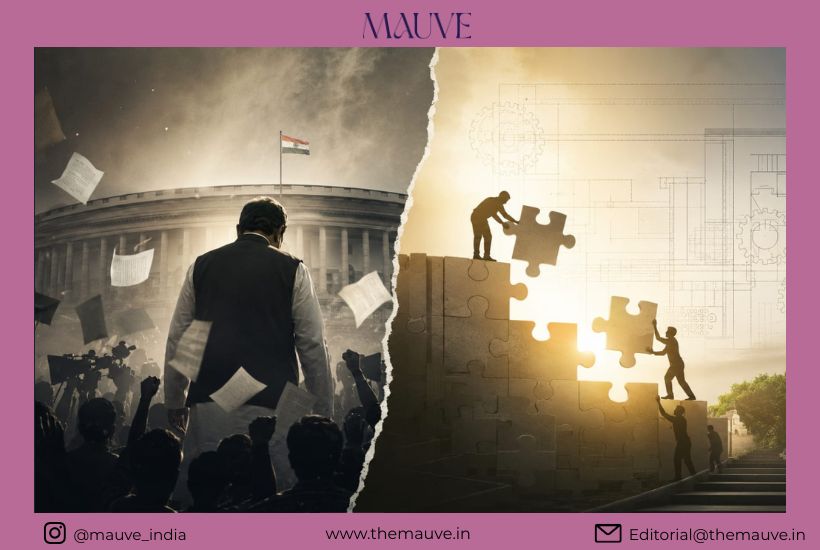
In Indian public life, a resignation demand has become a kind of political punctuation mark. It signals that an issue has crossed a threshold of seriousness, that the opposition or a protest group has landed a blow, that a news cycle has a headline. It rarely, on its own, changes a system.
Consider what typically follows a high-profile resignation in India: a successor is appointed, often from the same party, sometimes with a similar mandate and similar constraints.
The institution that actually failed — in this case, the National Testing Agency, the exam-printing and distribution chain, the audit mechanisms meant to catch a leak before lakhs of students sit for a paper — usually continues to operate exactly as before. The person changes. The plumbing does not.
This is not unique to India, or to this government. Ministerial resignations across democracies frequently function as a release valve — a way to show the public that someone has been held responsible, even when responsibility for a systemic failure rarely sits with one individual alone.
The Reform
Reform looks slower, less satisfying, and far less photogenic than a resignation. It looks like an independent audit of how question papers are printed, transported, and stored. It looks like staggered exam windows so a single leak cannot compromise an exam sat by 24 lakh candidates on one day. It looks like a permanent, empowered oversight body for the NTA that survives changes in government, rather than a committee formed after each scandal and quietly wound down once the outrage fades.
None of this makes for a chantable slogan. “Fix the vendor-verification protocol” does not fit on a placard the way a minister’s name does. That is precisely why reform is harder to demand and easier for any government to quietly shelve — there is no single resignation-shaped moment that marks its completion, and no single person whose exit proves it happened.
Why the Two Get Confused
Part of the confusion is genuine: a resignation can be a precondition for reform, not a substitute for it, if the person leaving was actively obstructing change. Part of it is strategic: for protest movements, a resignation is a concrete, achievable demand that can mobilise people in a way “systemic audit reform” cannot. And part of it suits the government too — a refusal to accept a resignation can be framed as standing firm against pressure, sidestepping any conversation about what structurally broke.
The result is a familiar loop: an exam fails, a resignation is demanded, the government holds its ground or eventually reshuffles a minister, the cycle recedes from headlines, and the same failure modes remain in place until the next exam season.
What to Actually Watch For
If this episode is to be different from 2024, the signal will not be whether Pradhan stays or goes. It will be whether any of the following actually happen in the months after the protest fades: a published, independent audit of the exam-security chain; a change to how question papers move from printing press to exam hall; and an oversight mechanism for the NTA that outlasts this news cycle.
A resignation is easy to see and easy to celebrate. Reform is slow, unglamorous, and usually invisible until the next crisis proves whether it happened. India’s exam system needs one of these far more than the other. The country’s political culture, unfortunately, is built to reward the one that is easier to demand.