
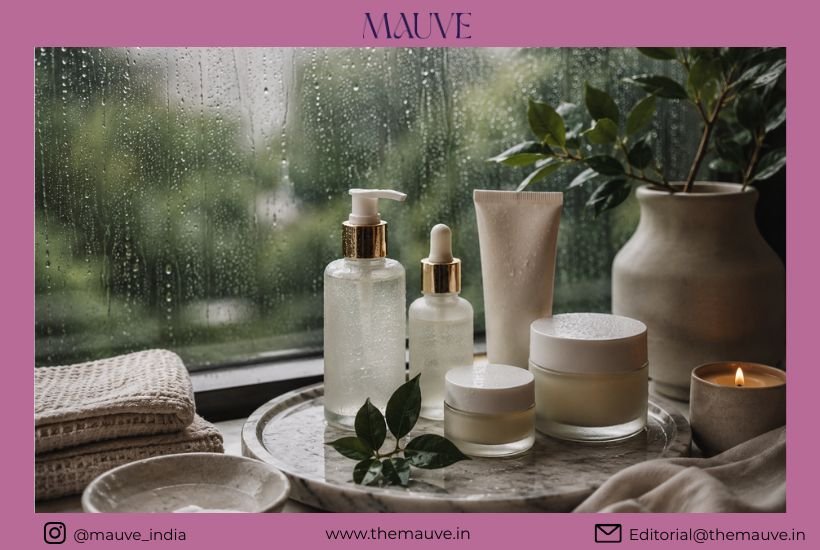
There’s a particular kind of skincare shelf that used to define the monsoon season in India crowded, reactive, stocked with a different serum for every symptom the humidity threw at you. This year, that shelf is quietly disappearing. In its place: fewer bottles, better formulas, and a routine built on restraint rather than accumulation. Call it what the fashion world already has quiet luxury except this time it’s on your bathroom counter, not your back.
The Shift Nobody Announced
Monsoon has always been skincare’s most demanding season in India. Spiking humidity, unpredictable rainfall, clogged pores, and a barrier that can’t decide whether it’s oily or dehydrated it’s the one stretch of the year that used to justify a ten-step routine. But the biggest shift in 2026 isn’t a new ingredient. It’s a philosophy. Editors, dermatologists, and stylists alike are moving away from skinimalism and trend-chasing toward what’s being called slow beauty a deliberate, barrier-first approach that treats skin the way quiet luxury treats fashion: understated, considered, built to last.
The old monsoon routine was reactive a toner for shine, a spot treatment for the breakout, a fresh cleanser every time something felt “off.” The new one is structural. It starts and ends with one question: is this repairing my skin barrier, or just managing symptoms?
What the Routine Actually Looks Like
1. A water-light hydrator, not a heavy cream.
Hyaluronic acid remains the monsoon MVP for a reason it’s a humectant, which means it holds moisture in the skin without adding oil. In a season where humidity already sits at 80%+, that distinction matters. The goal isn’t more product; it’s the right texture.
2. Barrier repair over surface-level fixes.
This is the biggest editorial shift of the year. Skincare in 2026 has moved from “protecting what you have” to rebuilding what’s been lost a broader pivot toward regenerative beauty. Ceramide-rich barrier creams, peptide serums, and gentle actives that support the skin’s own repair mechanisms are replacing the aggressive exfoliants and strong actives that used to dominate rainy-season routines. Over-exfoliating, dermatologists note, is still one of the fastest ways to damage and irritate skin during monsoon restraint is the whole point.
3. Clay, used sparingly, not constantly.
Clay masks remain a monsoon staple for pulling out excess oil and impurities, but the quiet-luxury version uses them as a weekly reset, not a daily habit bentonite for oily skin, kaolin for anything drier or more reactive.
4. Sunscreen and antioxidant protection, rain or shine.
Cloud cover doesn’t mean UV protection is optional. A broad-spectrum SPF paired with antioxidant serums is now considered non-negotiable in any Indian climate-adapted routine, monsoon included.
5. Scalp treated like skin.
One of the more unexpected additions to routines this year: scalp-first haircare. Exfoliating scalp acids and hydrating scalp serums are being folded into the same “less but better” logic the scalp, after all, is the foundation for healthy hair the way the face is the foundation for makeup.
Why “Quiet” Is the Operative Word
What makes this routine feel like quiet luxury rather than just good dermatology is the restraint behind it. It’s not about visible, Instagrammable steps it’s about formulas that work invisibly, consistently, and without fanfare. The brands leaning hardest into this moment aren’t shouting about miracle ingredients; they’re talking about barrier strengthening, regeneration, and long-term resilience over quick fixes. It’s the skincare equivalent of a well-cut, unlabeled blazer the value is in the construction, not the announcement.
There’s also a growing at-home device culture threading through this red light therapy tools and at-home facial devices are having a real moment, letting people bring in-office treatments home. But even here, the quiet-luxury crowd treats devices as a maintenance layer, not a replacement for the fundamentals: hydration, barrier support, and consistency.
The Takeaway
The old monsoon skincare routine treated the season like a problem to be managed. The new one treats it like any other season with a routine that’s consistent, minimal, and quietly effective rather than one that changes every time a new product trends on social media. Fewer products. Better formulas. Zero noise. That’s the whole shift and it’s exactly why it’s sticking.