Lovely Professional University’s School of Fashion Design continues to set new benchmarks in fashion education, offering programs that blend creativity, technology, and sustainability while delivering outstanding career outcomes for students. With applications now open for 2026, the university showcases its world-class infrastructure, industry collaborations, and placement success that have attracted over 70 top recruiters.
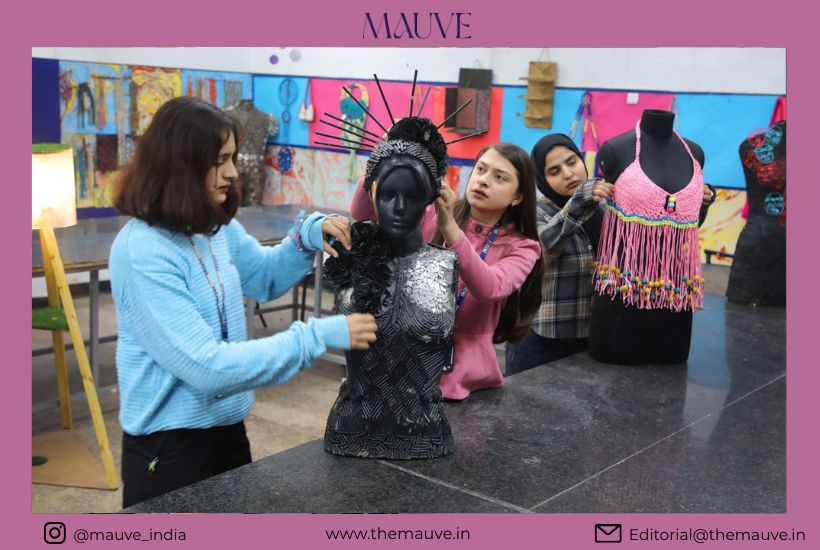
The School of Fashion Design offers comprehensive programmes, including B.Design (Fashion) – a 4 year undergraduate programme, B.Sc. Fashion Design – 3 year UG program and B.F.Tech (Apparel production) – a 4 year undergraduate programme. M.Sc. Fashion Design and Master of Fashion Management – a 2 year postgraduate programme. The curriculum emphasises design thinking, craftsmanship, and sustainability, preparing students to redefine global fashion trends through practical, hands-on learning in state-of-the-art facilities, including Garment Construction Labs, Pattern Making Labs, Textile Testing Labs, Material Handling Labs, and Mac Labs with advanced digital design software. Students are also trained in emerging fashion technologies, including CAD, digital textile design, virtual sampling, 3D design tools, and AI-based trend prediction, preparing them for the evolving fashion industry.
Placement outcomes demonstrate the programme’s excellence, with the highest salary package reaching ₹18 lakh per annum and the average salary of the top 10% of students at ₹11.4 lakh per annum. Recent successes include Anusha Chenichery (B.Sc. Fashion Design 2024) and Sweety Dutta (B.Design Fashion 2024) placed with Trident at ₹18 LPA, Dikhsha Khetan (M.Design Fashion 2024) placed with Trident Limited at ₹12 LPA, and Silpa K.S. (M.Sc. Design) placed with globally renowned brand Nike. Over 70 companies recruit from the school, including international brands and leading Indian fashion houses. Recruiters span global brands such as Nike, Puma and Tommy Hilfiger, as well as leading Indian organisations including Trident, Reliance, Arvind and Shoppers Stop.
Graduates from the school have gone on to build careers as designers, stylists, merchandisers, fashion communicators, retail professionals, and entrepreneurs, reflecting the programme’s strong industry orientation.
The university’s learning model mirrors the real-world fashion industry, with students spending equal time on live projects and industry-collaborated assignments. The practice-first approach includes internships, real client briefs, craft-cluster projects, design competitions, hackathons, industry certifications, and skill-development workshops that help students build professional portfolios while studying. Students participate in Lakmé Fashion Week,
FDCI collaborations, Chandigarh Times Lifestyle Fashion Week, and international events, gaining real-time exposure to fashion operations. Exposure to trade shows, runway presentations, industry exhibitions, and buyer interactions further helps students understand the commercial and operational aspects of the fashion business. The school has secured a ₹6 crore grant from the Ministry of Textiles under the National Technical Textile Mission, demonstrating its research excellence. Research at the school focuses on sustainable textiles, eco-conscious design practices, wearable technologies, and inclusive fashion solutions. Students also benefit from academic international partnerships with 500+ universities across 80+ countries, offering semester exchange programmes, credit transfer opportunities, and global learning experiences. Industry collaborations with brands such as Uniqlo, PDS and Aspire further strengthen practical learning opportunities, while international workshops expose students to global design perspectives.
Industry exposure is enhanced through guest lectures from renowned experts, Burberry senior client advisors, celebrity stylists, and National Award-winning artisans.
Students also benefit from masterclasses and expert sessions led by professionals from organisations such as Burberry and Shima Seiki, covering areas including luxury fashion management, sustainable design, digital innovation, and emerging fashion technologies. Students engage in workshops on digital textile design, sustainable fashion, luxury fashion management, metaverse applications in fashion, and celebrity campaign styling. The curriculum includes specialisations in Fashion Communication, Fashion Merchandising and Sustainable Fashion, with core subjects covering fashion illustration, pattern making, textile science, fashion history and garment construction. The school is supported by experienced faculty members from leading design institutions and the fashion industry, bringing together academic expertise, research experience, and practical industry insights.
Alongside scholarships, LPU is also strengthening its “Earn Your Fee Back” learning ecosystem, which enables students to work on live industry projects, consultancy assignments, startups, hackathons, internships, and innovation-driven initiatives while studying. According to the university, students are increasingly generating professional exposure and financial opportunities through industry-linked learning integrated within the curriculum. The ecosystem encourages students to gain hands-on industry experience and explore entrepreneurial opportunities even before graduation.