Fashion has always demanded sacrifice.
Sometimes it’s blistered feet after an evening in stilettos. Sometimes it’s an uncomfortable shapewear bodysuit worn beneath an impeccably tailored dress. Today’s discomforts are usually temporary—an accepted trade-off in pursuit of confidence or self-expression.
But history tells a far darker story.
Long before luxury fashion embraced comfort, wellness and craftsmanship, clothing was often a genuine health hazard. Dresses contained arsenic. Cosmetics were made from lead. Hairstyles relied on radioactive products. Even an evening gown could become a fatal fire trap.
Looking back at these extraordinary moments reveals more than bizarre trends. It shows how deeply https://themauve.in/style/mauve-beauty/beauty standards have shaped society—and how the fashion industry has continually evolved alongside science, medicine and consumer awareness.
Here are six of history’s most dangerous fashion trends.
- Stilettos: The Heel That Changed Fashion—and Orthopaedics
When stilettos entered mainstream fashion during the 1950s, they became an instant symbol of elegance, femininity and power.
Not everyone celebrated them.
Doctors quickly warned about twisted ankles, damaged joints and spinal strain. Decades of research have since linked prolonged high-heel use with musculoskeletal injuries, altered posture and chronic foot problems.
Remarkably, the stiletto’s danger extended beyond fashion itself. Their pointed construction occasionally turned them into weapons in violent assaults, giving the shoe an unexpected place in criminal history.
Today, despite improved ergonomics and countless design innovations, the debate between fashion and comfort continues every season.
- Corsets: When the Perfect Waist Came at a Price
Few garments have inspired as much fascination—or controversy—as the corset.
Beginning in the sixteenth century, tightly laced corsets sculpted the body into society’s ideal silhouette. The more dramatic the waistline, the greater the admiration.
Medical experts, however, saw something very different.
By the late eighteenth and nineteenth centuries, physicians documented broken ribs, compressed lungs, displaced internal organs and chronic breathing difficulties caused by excessive tight lacing.
Modern shapewear is far less restrictive, yet the conversation remains surprisingly familiar. The pressure to reshape the body has evolved—but it has never entirely disappeared.
- Poison Dresses: When Looking Elegant Could Kill
Victorian society fell in love with one colour above all others: emerald green.
Achieving that brilliant shade required a pigment known as Scheele’s Green, heavily infused with arsenic.
The consequences were devastating.
Women wearing these gowns developed painful skin ulcers, respiratory illness and organ damage. Dressmakers who handled the toxic dye suffered even worse, often experiencing open wounds, seizures and, in some cases, death.
Fashion magazines eventually exposed the dangers, transforming one of the nineteenth century’s most glamorous colours into one of its deadliest scandals.
- Toxic Makeup: Beauty Painted in Lead
For centuries, pale skin represented wealth, nobility and refinement.
To achieve it, European aristocrats relied on Venetian Ceruse—a cosmetic made largely from lead.
Among its most famous users was Queen Elizabeth I, whose iconic white complexion concealed scars left by smallpox. Historians believe prolonged exposure to lead-based cosmetics may have contributed to serious health complications later in her life.
Ironically, many luxury beauty products today market themselves as “clean beauty,” emphasising ingredient transparency—the complete opposite of cosmetics once considered the height of sophistication.
- Radioactive Hair Care
The early twentieth century was fascinated by radioactivity.
Before its dangers were fully understood, companies infused everything from toothpaste to cosmetics with radium—including hair tonics promising stronger, healthier hair.
Some products even advertised glow-in-the-dark effects as a fashionable novelty.
Years later, scientists connected prolonged radium exposure to severe bone disease, blood disorders and increased cancer risk.
It remains one of history’s clearest examples of innovation racing ahead of scientific understanding.
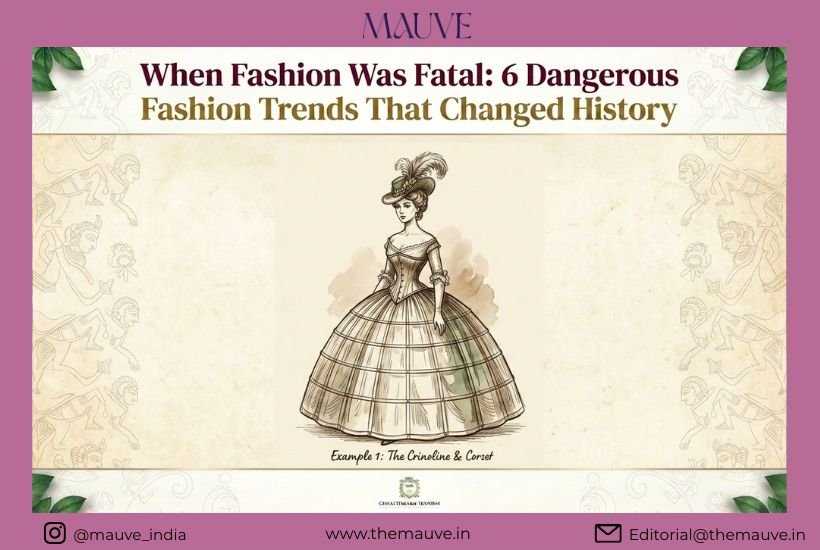
- Crinolines: The Dress That Became a Fire Hazard
The voluminous crinoline skirt defined Victorian elegance.
Its lightweight steel framework allowed women unprecedented movement while creating dramatic silhouettes that dominated nineteenth-century fashion.
Unfortunately, it also made them extraordinarily vulnerable.
Constructed from highly flammable fabrics, these enormous skirts frequently caught fire when passing candles, fireplaces and gas lamps. Thousands of women reportedly died in accidents involving crinolines, making them one of fashion history’s deadliest garments.
The tragedy even touched literary history, when Oscar Wilde’s half-sisters lost their lives after their dresses caught fire during a celebration.
Fashion Has Changed—The Psychology Hasn’t
While today’s fashion industry is significantly safer, the forces driving beauty remain remarkably familiar.
Consumers still debate whether comfort should outweigh aesthetics. Trends continue to influence purchasing decisions. Social media has accelerated beauty standards at unprecedented speed, encouraging millions to experiment with products and silhouettes that promise transformation.
The difference is that modern luxury increasingly values craftsmanship, wellbeing and longevity over discomfort.
Fashion’s future may be built on innovation, but its past reminds us why responsible design matters.
The Mauve Perspective
Luxury has always reflected the values of its era.
There was a time when status meant impossibly small waists, poisonous pigments and dangerous cosmetics. Today, it is increasingly measured through sustainability, intelligent craftsmanship, material innovation and thoughtful design.
Perhaps that’s fashion’s greatest evolution—not simply changing how we dress, but redefining what we are willing to sacrifice in order to feel beautiful.