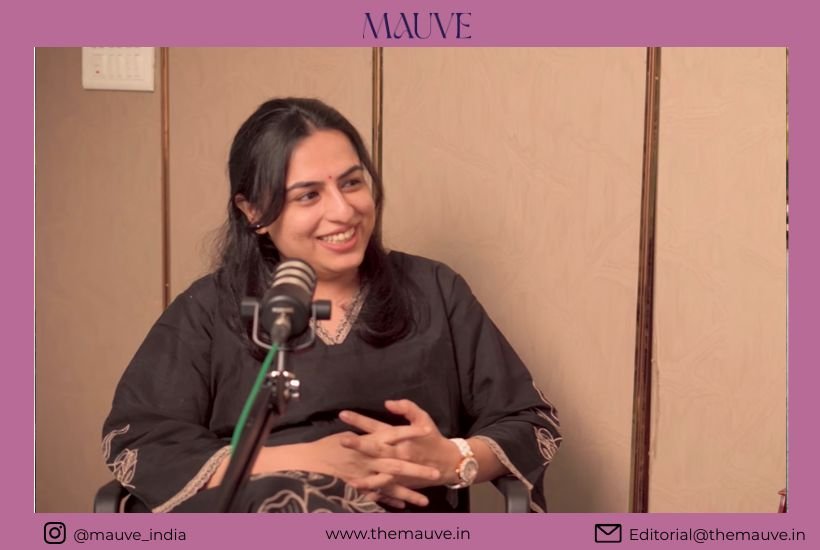
In an episode of Mauve’s Happened Over Coffee, host Priya Lalwani sits down with endocrinologist Dr. Shilika for an insightful conversation about hormonal health, the growing obsession with quick weight-loss solutions, lifestyle-related health concerns and why understanding the body matters more than following the latest health trend.
There is a strange contradiction in the way we talk about health today.
We have more information than ever.
More diets.
More fitness trends.
More wellness influencers.
More supplements.
And now, more medications being discussed on social media as weight-loss solutions.
Yet, despite all this information, understanding our own bodies can sometimes feel harder than ever.
The conversation is ultimately about moving away from quick fixes and returning to something much simpler: understanding the body and building a lifestyle that supports it.f
What Does an Endocrinologist Actually Do?
For many people, endocrinology may sound like a specialised medical field they only encounter after receiving a diagnosis.
But hormones influence far more of everyday health than most people realise.
From diabetes and thyroid disorders to obesity and PCOS, endocrinologists deal with conditions involving the body’s hormonal and metabolic systems.
Dr. Shilika explains the role of an endocrinologist in helping patients understand these complex connections rather than simply treating an isolated symptom.
Hormonal health is rarely about one factor alone.
Sleep can influence hormones.
Stress can influence hormones.
Nutrition can influence metabolism.
Weight can influence metabolic health.
And all of these systems interact.
That is why treating the body as a collection of separate problems can sometimes miss the bigger picture.
The Ozempic Conversation
Few medical developments have entered popular culture as quickly as drugs such as Ozempic.
Originally developed for medical purposes including the management of Type 2 diabetes, semaglutide-based medications have increasingly become part of conversations around weight loss and appearance.
Dr. Shilika makes an important distinction.
Medication can be extremely valuable when it is prescribed for an appropriate medical indication and used under professional supervision.
But using prescription medication simply because it has become a trend is an entirely different matter.
“If you have cancer, will you take treatment for cancer? When you have a disease, taking treatment for the disease is justified. But if you are taking it as a trend… then I would not recommend this as a go-to therapy.”
The concern is not about rejecting medical advancement.
It is about using medicine responsibly.
A prescription medication is not a lifestyle accessory.
And a social media trend cannot replace a doctor’s assessment.
When Weight Loss Becomes an Aesthetic Race
The growing obsession with becoming thinner has changed the way many people think about weight.
Health can become secondary to appearance.
The goal becomes a particular dress size, body shape or number on the scale.
And social media can make extreme transformations appear normal.
Dr. Shilika pushes back against this culture of instant results.
Complex metabolic and hormonal conditions cannot always be solved by simply eating less or exercising more.
The popular phrase “eat less, move more” may sound straightforward, but real human biology is considerably more complicated.
Different people have different metabolic profiles.
Hormonal conditions can affect weight.
Stress can affect behaviour and physiology.
Sleep can influence appetite and metabolism.
And underlying medical conditions can make weight management more complex than a simple calculation of calories.
There Is No Magic Reset Button
One of the strongest points Dr. Shilika makes is about the language surrounding chronic metabolic diseases.
She cautions against claims of complete “reversal” when discussing conditions such as diabetes and thyroid disorders.
“There is no such thing as reversal… If somebody is selling you that I am reversing your diabetes or thyroid, these are pure marketing gimmicks.”
The distinction matters.
Some conditions can enter remission or be controlled extremely well with appropriate treatment and lifestyle changes.
But that does not mean a person should assume the underlying condition has permanently disappeared.
The promise of a dramatic before-and-after transformation may be appealing.
But medicine rarely works like an advertisement.
Your Hormones Are Asking You to Slow Down
Perhaps one of the most relatable parts of the conversation is Dr. Shilika’s discussion of modern lifestyle.
People often look for sophisticated solutions to problems that are partly connected to very basic habits.
Late nights.
Constant screen exposure.
Chronic stress.
Irregular meals.
Too little movement.
Too little rest.
And an always-on lifestyle.
Dr. Shilika puts it simply:
“Basically, your hormones are screaming… trying to tell you to please go back to your normal lifestyle, which includes adequate sleep, minimal stress, and no screens.”
It is an uncomfortable reminder that health does not always require a new product.
Sometimes it requires doing the ordinary things consistently.
Sleep properly.
Eat nourishing food.
Move regularly.
Take breaks.
Manage stress.
And give the body time to recover.
The Problem With Influencer Medicine
The internet has made health information more accessible.
It has also made misinformation more convincing.
A person with a large following can speak confidently about nutrition, hormones, medication or weight loss without having the medical training required to diagnose or treat a condition.
Dr. Shilika offers a sharp observation:
“Some influencers are actually practicing medicine without a license, with better lighting, better glowing skin, and two million followers.”
The line is humorous, but the warning behind it is serious.
Popularity is not expertise.
A transformation photograph is not a medical study.
And a viral reel is not a diagnosis.
The more complicated the health concern, the more important it becomes to distinguish between information and medical advice.
Emotions, Stress and the Hormonal Connection
Stress is often treated as something purely psychological.
But the body does not make such a neat distinction.
Stress can influence hormonal and metabolic processes, which is why managing stress is part of taking care of physical health as well.
The modern lifestyle can keep the body in a near-constant state of stimulation.
Notifications.
Screens.
Deadlines.
Work.
Social media.
Poor sleep.
Even when the body needs rest, the mind may continue running.
The result is a lifestyle that can look productive from the outside while quietly exhausting the systems that keep us healthy.
Home-Cooked Food Over Health Fads
Another recurring theme in the conversation is the importance of returning to basics.
Home-cooked meals.
Adequate sleep.
Regular routines.
Stress management.
These may not be the most exciting things to post online.
They don’t come with dramatic transformation videos.
There is no glamorous “before and after” photograph attached to getting eight hours of sleep.
But health is often built through exactly these ordinary habits.
The body doesn’t necessarily need another trend.
It needs consistency.
Why Quick Fixes Are So Tempting
The appeal of a quick fix is understandable.
We live in a culture of instant results.
Instant deliveries.
Instant information.
Instant communication.
So it is natural that people want instant health transformations too.
But biology does not work on the same timeline as technology.
Hormonal health can require investigation.
Chronic conditions can require long-term management.
Weight changes can take time.
And sustainable lifestyle changes rarely happen overnight.
The desire for speed is understandable.
The mistake is assuming that faster always means better.
Health Beyond the Weighing Scale
One of the most important messages emerging from Dr. Shilika’s conversation is that health should not be reduced to appearance.
A person’s health is not determined by whether they fit into a particular clothing size.
Nor is wellness defined by how quickly someone can lose weight.
Hormonal and metabolic health involve energy, sleep, blood sugar, thyroid function, reproductive health, mental well-being and much more.
The body is a system.
Treating one number while ignoring everything else can mean missing the bigger picture.
The Real Health Revolution May Be Simpler Than We Think
The conversation between Priya Lalwani and Dr. Shilika ultimately brings the discussion back to a question that modern wellness often complicates.
What does the body actually need?
Not necessarily another viral diet.
Not another influencer’s prescription.
Not another crash programme.
But understanding.
Medical guidance when needed.
Good sleep.
Balanced nutrition.
Movement.
Stress management.
And the patience to allow healthy habits to become part of everyday life.
Medicine has made extraordinary progress, and treatments such as modern metabolic medications can be genuinely transformative when used appropriately.
But innovation does not make lifestyle irrelevant.
Sometimes the most powerful health advice is also the least glamorous.
Sleep.
Eat well.
Move.
Reduce stress.
And when something feels wrong, ask a qualified professional rather than the internet.
Because the body is constantly communicating.
The real skill is learning to listen.
This conversation with endocrinologist Dr. Shilika is featured on Mauve’s Happened Over Coffee, hosted by Priya Lalwani, founder of Mauve.