EXCLUSIVE | THE MAUVE
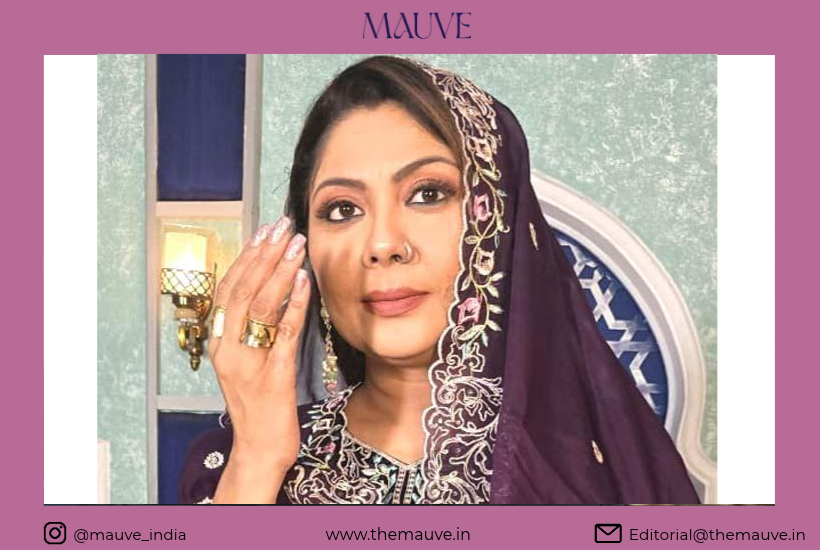
In Raqs, actress Maninee De steps into the emotionally complex world of a widowed mother navigating loss, responsibility and an unimaginable personal crisis. In an exclusive conversation with Priya Lalwani, she opens up about inhabiting a character caught between the demands of motherhood and the weight of her own grief, the power of short-format cinema and a film that seeks to confront one of society’s most disturbing realities.
By Priya Lalwani
There are stories that entertain, and then there are stories that ask us to pause, look closer and confront the uncomfortable realities we often choose to overlook. Raqs belongs to the latter.
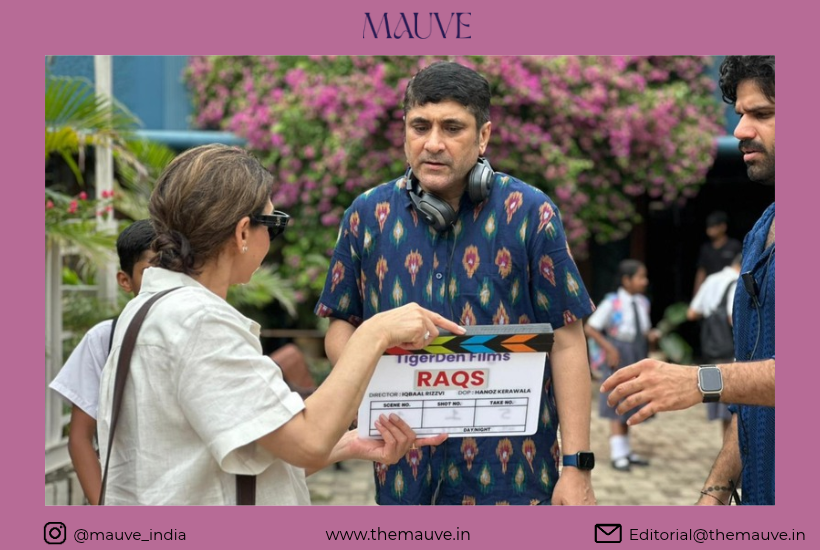
Starring Maninee De, the upcoming short film ventures into the emotionally difficult terrain of motherhood, loss, guilt and the fragility of human relationships. Directed by Iqbaal Rizzvi and produced by Manbeena Sandhu, the film places a woman at the centre of a deeply personal struggle — a widowed mother attempting to rebuild her life while raising her young son, carrying the responsibilities of two parents and navigating a grief that refuses to settle.
For Maninee, whose career has traversed television, cinema and the digital entertainment space, this is a role that demands more than performance. It calls for emotional restraint, vulnerability and an understanding of the kind of pain that does not always announce itself.
Known for her work across projects such as Krrish, Fashion, Student of the Year, Made in Heaven, Abhay and The Jengaburu Curse, Maninee has built a career across diverse storytelling formats. With Raqs, she enters a considerably more intimate emotional landscape.
Speaking about her character, she describes a woman trying to navigate life after losing her partner while raising her child alone. The responsibility of being both mother and father becomes an everyday reality, as she attempts to provide for her son while remaining emotionally present in his life.
But the narrative takes a painful turn.
As circumstances unfold, the character finds herself trapped in a cycle of helplessness and self-hatred following an incident involving her child while she is away trying to secure their future. It is this conflict — the collision between a mother’s instinct to protect and the realities of survival — that gives the character her emotional complexity.
One of the most compelling aspects of the role, Maninee reveals, is its understated portrayal of psychological distress.
“There is a moment when the character experiences a very deep, silent breakdown, which takes her to the point of seeking help from her therapist,” she shares.
It is a moment that speaks volumes about the film’s emotional vocabulary. Not every breakdown is loud; sometimes, the most devastating battles happen behind closed doors, in the spaces where words fail and vulnerability becomes unavoidable.
Visually, her character reflects the contemporary working woman. Maninee describes her look as modern and understated, allowing the character’s everyday reality to remain at the forefront rather than relying on an elaborate cinematic transformation.
The art of saying more with less
For Maninee, short-format cinema has always held a particular appeal. Unlike conventional feature-length storytelling, short films demand precision — every scene, frame and emotional exchange must contribute to the larger narrative.
She believes that communicating something meaningful within a limited duration requires a distinctive creative sensibility. The writing, visual treatment and filmmaking approach become especially important, while the constraints of time, budget and scale make the process considerably different.
With Raqs, however, the ambition extends beyond storytelling.
Maninee describes the film as a collective call against one of the most heinous crimes committed against living beings, whether human or animal. She believes the subject reflects a disturbing erosion of human values and an underlying sickness within society.
For her, the responsibility of the film is to create awareness, encourage prevention, give victims a voice and inspire more people to stand together against such crimes.
It is a sentiment that gives Raqs a purpose beyond its cinematic identity. The intention is not simply to tell a difficult story, but to initiate a larger conversation — one that demands empathy, accountability and collective action.
A collaboration built on empathy
Behind every emotionally resonant film is a creative environment that allows its performers to explore difficult territory. For Maninee, working with director Iqbaal Rizzvi and producer Manbeena Sandhu was an experience she describes with considerable warmth.
She speaks of Iqbaal’s vision, conviction and ability to lead the team, describing him as an empathetic director and an exceptional human being.
Her appreciation for Manbeena is equally heartfelt. Beyond being a gifted writer and producer, Maninee sees her as someone grounded and perceptive, with an ability to look beyond the external and understand people at a deeper level.
For an actor stepping into a character carrying such emotional weight, that trust and understanding can make all the difference.
Beyond the performance
What makes Raqs particularly compelling is the space it occupies between personal storytelling and social responsibility. At its heart is a woman attempting to hold her world together, even as circumstances challenge everything she believes about motherhood, responsibility and her ability to protect the person she loves most.
Maninee De approaches the role through its silences as much as its emotions, bringing attention to a dimension of motherhood that cinema does not always explore — the vulnerability of women who are expected to remain strong, even when they are struggling themselves.
And perhaps that is where the film’s most significant conversation begins: with the recognition that strength and vulnerability can exist in the same woman, that asking for help is not a failure, and that some of the most important stories are the ones we cannot afford to look away from.
With Raqs, Maninee hopes to be part of a story that does more than stay with its audience. She hopes it makes them think, question and, ultimately, act.
The Mauve | Exclusive Conversation
Interview and editorial: Priya Lalwani