Have you ever looked in the mirror and wondered why your lips seem to be losing their natural fullness? It is a common realization. Many of us first notice it on older family members—applying lipstick only to find the upper lip has become noticeably narrower—before eventually spotting the same subtle changes on ourselves.
While modern skincare has made massive leaps in treating fine lines and dullness, lip ageing remains one of beauty’s biggest challenges. Even Virginie Couturaud, Dior’s Global Director of Scientific Communications, points out that thinning lips are one of the trickiest areas for current skincare technology to significantly improve, largely due to a mix of natural ageing and environmental stressors.
Here is what is actually happening beneath the surface—and how you can slow down the process.
The Anatomy of Ageing Lips
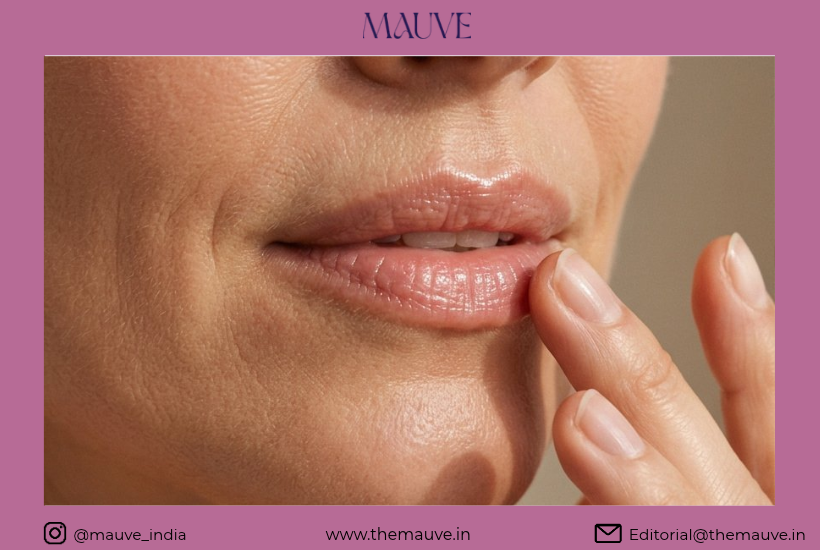
To understand why lips thin, it helps to look at how they are structured. According to dermatologist Dr. Hsu Chia-chi, the mouth area consists of three distinct zones:
- The Red Lip Area: The exposed, naturally pigmented part of the lips.
- The White Lip Area: The ring of delicate skin surrounding the lips, including the philtrum (the space between your nose and upper lip).
- The Lip Mucosa: The moist inner lining of the lips.
As we grow older, thinning isn’t just a surface-level skin issue. Dr. Hsu explains that it is a three-dimensional loss of structure involving everything from deep underlying bones and muscles to superficial skin and mucous membranes. Because standard skincare routines only target the outer skin layers, deeper structural shifts often go unaddressed.
4 Key Reasons Your Lips Lose Volume Over Time
1. Declining Collagen and Soft Tissue
As the years pass, your body’s production of collagen, elastin, and natural hyaluronic acid slows down while existing stores break down faster. Without this internal scaffolding, the red lip tissue loses its natural bounce and hydration, leading to dryness, shrinkage, and a deflated appearance.
2. Lengthening of the Philtrum (The Visual Illusion)
When the skin and ligaments supporting the upper lip lose elasticity, gravity takes over. The distance between the base of your nose and your upper lip—the philtrum—gradually lengthens. As the upper lip loses its natural lift, it sags downward and curls inward. From the front, less of the pigmented red lip is visible, creating the illusion that your lips have shrunk dramatically.
3. Bone and Dental Recession
Your lips rely on your teeth and jawbones for support, much like a curtain hanging over a frame. Over time, natural bone resorption causes the upper and lower jawbones to recede slightly. Paired with decades of gradual tooth wear, this loss of skeletal support causes the lips to fold inward.
4. Muscle Tension and Daily Habits
The mouth is encircled by the orbicularis oris muscle. Years of repetitive movements—speaking, chewing, pursing your lips, or sipping through straws—create chronic tension that pulls the red lips inward and etches vertical “smoker’s lines” around the mouth.
Habits that speed up lip ageing:
- Unprotected sun exposure
- Smoking
- Frequent use of drinking straws
- Licking your lips or picking at dry, peeling skin (which damages the skin barrier and causes roughness)
Can You Reverse Thinning Lips?
Lip thinning typically becomes noticeable around age 40—especially for women navigating perimenopause and menopause, as dipping oestrogen levels accelerate collagen loss. By age 60, deeper bone and dental shifts make the inward recession more pronounced. Genetics also play a major role; if you naturally have thinner lips or a flatter upper jawbone, these changes will appear earlier.
While you cannot naturally reverse structural bone loss without cosmetic procedures, targeted skincare can significantly slow down visible ageing and restore surface plumpness.
How to Care for the Red Lip Area
Unlike the rest of your face, your lips have no oil or sweat glands, meaning they cannot lock in moisture on their own.
- What to use: Look for rich balms and treatments packed with ceramides, squalane, shea butter, vitamin E, and peptides.
- Why it works: Repairing the moisture barrier smooths out dry lines. Healthy, well-hydrated lips also reflect light better, instantly making them look fuller and more lustrous than chapped, flaky ones.
How to Care for the Skin Around the Lips
The “white lip” skin surrounding your mouth is just as thin and fragile as your under-eye area.
- What to use: Apply mild anti-ageing peptides or a low-concentration retinol around the perimeter of your mouth. (Tip: Avoid getting retinol directly on the red lip area to prevent irritation and peeling).
- Why it works: These active ingredients boost dermal collagen, helping to soften vertical smile lines and prevent drooping at the corners of the mouth.
Expert-Recommended Anti-Ageing Lip Treatments
If you are looking to upgrade your lip care routine, these targeted luxury formulas focus on smoothing, firming, and hydrating both the lips and the delicate skin around them:
- CHANEL Le Lift Soin Lèvres et Contours (₹8,150): This lightweight, oil-free lip cream has a velvety finish and combines botanical alfalfa extract, oligopeptides, and hyaluronic acid to visibly smooth, lift, and plump the lip area.
- La Colline Lip Shaper Lip and Contour Remodelling Care (₹12,300): Infused with a nourishing peony complex, this colourless, velvety formula doubles as a smoothing daytime lip primer and an intensive overnight lip mask to banish flakiness and fine lines.
- Sisley Paris Sisleÿa L’Intégral Anti-Age Eye and Lip Contour Cream (₹8,800): Powered by 17 botanical extracts, this dual-purpose treatment targets both the eye and lip contours to restore skin firmness and soften deep-set expression lines.
Would you like me to make any adjustments to this rewrite, such as:
- Adjusting the tone (e.g., more conversational, clinical, or editorial)
- Adding an FAQ section for extra SEO value
- Creating social media captions or image prompts to promote the article
Try without personalization