There is a particular kind of internet magic that no brand brief can manufacture. It begins with one slightly unexpected moment, gets picked up by creators, mutates into memes and remixes, and suddenly everyone is saying the same word differently.
For Vaseline, that word became “Bassline.”
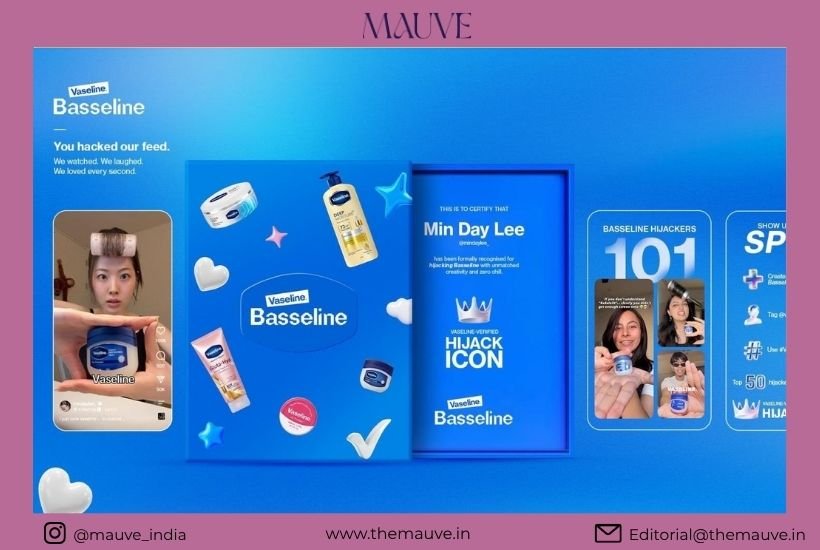
What began with Korean skincare creator Min Day Lee showcasing her extensive Vaseline collection and enthusiastically pronouncing the brand as “Baseline” quickly took on a life of its own. Social media, naturally, did what social media does best: it remixed the moment, turned it into a joke, and gave it a new vocabulary.
Soon, “Baseline” became “Bassline”—and the Vaseline feed was no longer merely a brand feed. It had become part of the joke.
When the Audience Takes Over
The appeal of the moment wasn’t really about pronunciation. It was about recognition.
Creators began recreating the original format, while others added their own interpretations. The trend travelled beyond skincare circles and found its way onto Indian social feeds, becoming another piece of internet shorthand that needed absolutely no explanation.
And Vaseline made the smart decision: it didn’t try to take ownership of something it hadn’t created.
Instead, it joined in.
The brand began echoing the language of the trend across its social channels, with captions like “BASELINEEEEEEE”, essentially acknowledging the joke and letting its community run with it.
As Pratik Ved, VP Skincare, Hindustan Unilever, puts it:
“We didn’t create this moment; the internet did. Our job was to simply show up.”
That may be the most important line in the entire campaign.
Because the contemporary social media playbook is increasingly less about manufacturing virality and more about recognising it when it happens.
From Viral Joke to Vaseline-Verified
Then came the official stamp of approval.
Vaseline has taken the consumer-led phenomenon one step further by recognising key creators—including Min Day Lee—as ‘Vaseline-Verified Hijack Icons’.
The brand is also opening the door for its wider community to participate. Creators and consumers can share their own “Bassline” interpretations, tag @vaselineindia and use #VaselineHijacked for a chance to be recognised as an official Vaseline Verified Hijack Icon.
It is a neat reversal of the traditional brand-to-consumer relationship.
Instead of saying here is our campaign, please participate, Vaseline is effectively saying: you made the campaign, and we’re coming along for the ride.
The New Rules of Brand Internet
There is something distinctly 2026 about the way this has unfolded.
The strongest social moments increasingly don’t arrive with a polished campaign deck attached to them. They emerge from creators, comments, pronunciations, memes and communities—and brands have to decide whether to interfere, ignore them or participate intelligently.
Vaseline chose the third option.
It didn’t over-explain the joke. It didn’t attempt to turn a spontaneous moment into something overly polished. It simply recognised that its audience had created something worth playing with.
And perhaps that’s the real lesson behind #VaselineHijacked: sometimes the smartest thing a brand can do on the internet is let the internet have the first word—and then know exactly when to join the conversation.
The internet decides. The icons get verified.