Some films age. Others become part of the cultural vocabulary.
Twenty years after its release, Lage Raho Munna Bhai continues to occupy that rare space in Indian cinema where a film is remembered not only for its characters and dialogues, but for the way it made an idea feel accessible. Comedy, romance, friendship and Gandhian philosophy came together in a story that managed to be entertaining without losing its heart.
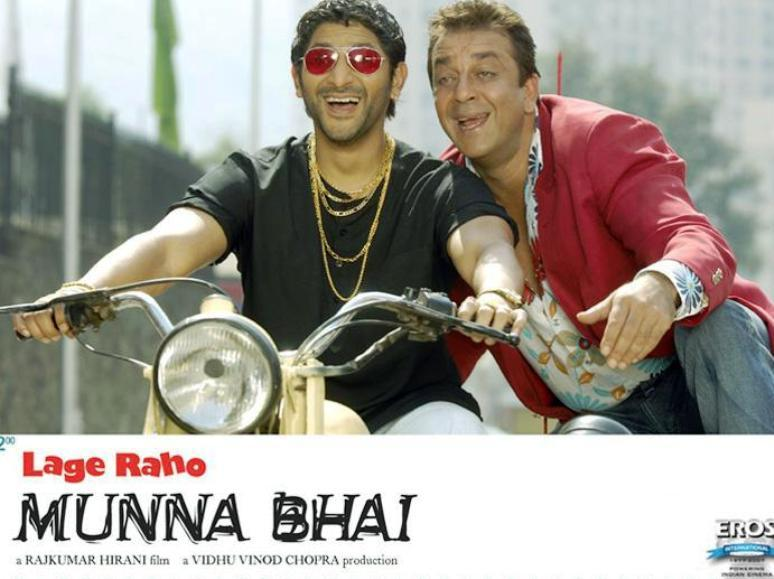

5 Released in 2006 as a follow-up to Munna Bhai M.B.B.S., the Rajkumar Hirani directorial brought Sanjay Dutt back as Munna Bhai and Arshad Warsi as Circuit, with Vidya Balan joining the franchise as radio jockey Jhanvi. What followed was a comedy-drama that found an unexpectedly modern way to talk about Mahatma Gandhi, kindness, truth and non-violence.
Twenty Years Later, the Formula Still Works
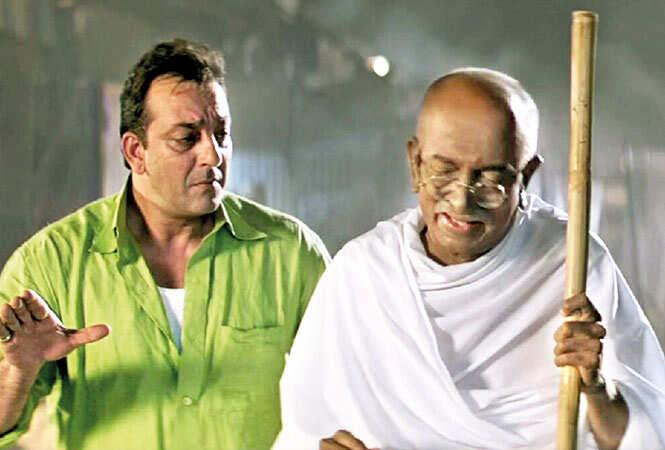
The premise sounds almost absurdly simple. Munna Bhai, a Mumbai gangster, falls in love with Jhanvi and pretends to be a history professor with an expertise in Gandhi. But when Gandhi begins appearing to him, Munna’s understanding of the Mahatma gradually transforms from performance to practice.
That transformation becomes the soul of the film.
Instead of presenting Gandhi’s principles as distant historical lessons, Lage Raho Munna Bhai translated them into everyday situations. Munna begins applying truth, empathy and non-violence to problems around him, giving rise to the film’s now-iconic idea of “Gandhigiri.”
It was an unusual cultural moment: a mainstream Hindi film taking philosophical ideas and turning them into something playful, quotable and, most importantly, usable.
The Munna-Circuit Friendship Remains the Heart
And then there is Munna and Circuit.
The relationship between Sanjay Dutt’s Munna and Arshad Warsi’s Circuit gave the film much of its warmth. Their friendship never needed grand declarations. It lived in loyalty, comic timing, chaos and the unquestioned understanding that one would show up for the other.
That emotional shorthand is one reason the film continues to feel familiar even two decades later.
The ensemble cast, including Boman Irani, Jimmy Shergill and Dia Mirza, further built a world where comedy could coexist comfortably with emotion and social commentary.
A Film That Made Kindness Feel Cool
For a film rooted in Gandhi, Lage Raho Munna Bhai was never particularly solemn.
That was precisely its strength.
It made kindness feel powerful without making it preachy. It made forgiveness entertaining. It turned non-violence into a practical response rather than an abstract ideal. And through Munna’s journey, it suggested that being good did not have to mean being boring.
Twenty years on, that message remains surprisingly resonant.
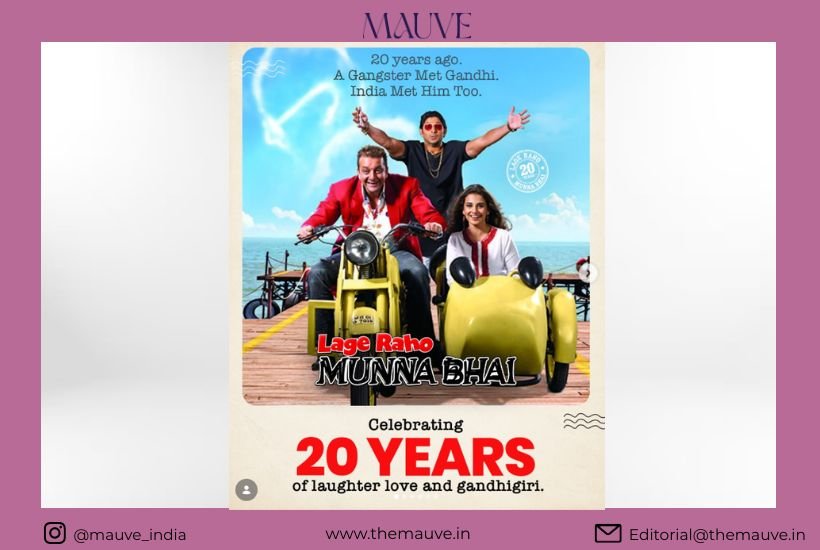
To mark the milestone, Rajkumar Hirani Films shared a special social media carousel celebrating the film’s enduring themes of love, friendship and Gandhigiri. The makers reflected on how the film changed something in its audiences and made Gandhi relevant to a new generation.
They wrote:
“20 years later, the laughter still feels the same, the love still feels pure, and the Gandhigiri still feels relevant. ❤️
#Celebrating20YearsOfLageRahoMunnaBhai”
Rajkumar Hirani Films’ anniversary post
Why Lage Raho Munna Bhai Still Belongs in the Conversation
Nostalgia alone cannot explain the film’s longevity.
What makes Lage Raho Munna Bhai special is the balance it achieved. It could make audiences laugh at Munna and Circuit one minute, fall for the romance the next, and then quietly leave them thinking about how they treat the people around them.
It was commercial cinema with a conscience, but never cinema that forgot to entertain.
Perhaps that is why two decades later, the film does not simply feel like a beloved Bollywood classic. It feels like a reminder of a particular kind of storytelling—one that believed a mainstream film could make people laugh, make them feel, and maybe even make them a little kinder.
The laughter is still familiar. The friendship still feels warm. The romance still feels pure.
And somehow, Gandhigiri still has something to say.