We have spent years being taught to value what is new.
New collections.
New drops.
New launches.
Newness as a marker of luxury.
But what if the most desirable objects are the ones that cannot be made again?
A faded piece of silk.
A fragment of zari.
Hand embroidery with no two stitches exactly alike.
A textile that has already lived another life.
We call them old.
Perhaps we should call them experienced.
At The Mauve, we explored this idea in Why We Should Stop Calling Old Textiles “Old” — looking at why material history, craftsmanship, imperfection and provenance are becoming increasingly relevant to the way we understand luxury.
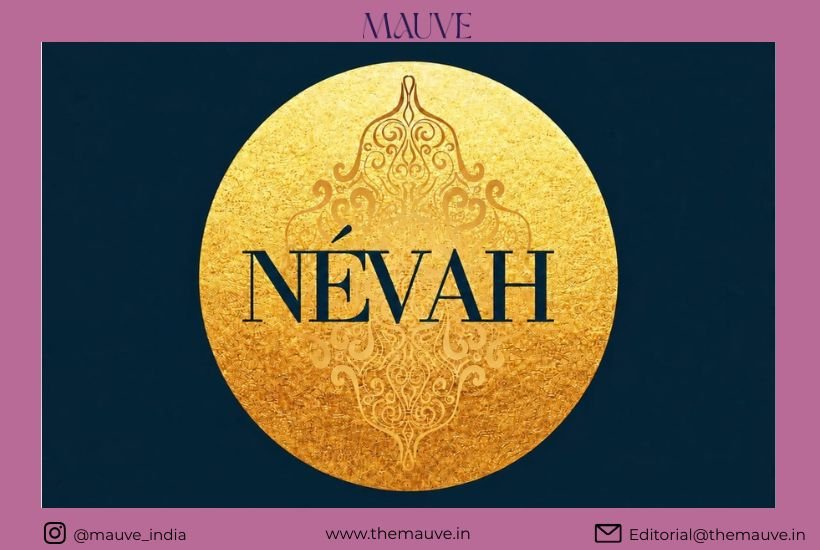
And then came Névah.
Founded by Neha Dev in Goa, Névah takes that conversation from philosophy into practice.
Through Vastra, old ceremonial textiles, zari, aari, mirror work, beadwork, silk and velvet become the starting point for new compositions — without erasing the marks of their previous lives.
Through Atelier, Neha creates one-of-one pieces that refuse to be reduced to a single function.
A piece can become a centrepiece.
Or live on a bedside table.
Or occupy a quiet corner in a bathroom.
Or sit on a kitchen shelf.
Or become whatever its collector sees in it.
The maker creates the piece.
The collector gives it form.
And nothing is repeated.
That is perhaps the most interesting part.
In an age of endless reproduction, Névah’s value lies partly in its refusal to reproduce itself. A material may inspire another work. A technique may return. But the composition, proportions, handwork and final object are allowed to exist only once.
Which brings us to a larger question:
What if the future of luxury isn’t about owning what is newest — but owning what cannot be repeated?
Maybe an old textile isn’t old.
Maybe it is a material with memory.
Maybe imperfection isn’t a flaw.
Maybe it is evidence.
And maybe collectible design isn’t about having more.
Maybe it is about finding something you would actually miss if it disappeared.
Read both stories on The Mauve:
Why We Should Stop Calling Old Textiles “Old”
→ The idea behind the shift from newness to material memory.
Névah: Where Material Memory Becomes Collectible Design
→ The Goa-based design practice putting that idea into objects.