How fashion, beauty and shopping are moving from trend-chasing to personalisation, intention and authenticity
For years, the festive season in India came with an almost predictable formula: heavier embroidery, bigger blouses, more jewellery, elaborate makeup, last-minute facials and an ever-growing list of “must-haves.”
But something is changing.
The festive consumer is still spending, experimenting and dressing up. Yet increasingly, the question is no longer “What is trending?” but “What actually works for me?”
That shift emerged across a series of LinkedIn Conversations hosted by Mauve, bringing together voices from fashion, beauty, skincare and wellness to examine how the festive consumer is changing — and what that means for the industries that serve them.
Read Mauve’s LinkedIn Conversation: Cutting Through the Noise
Festive Edit: Must-Haves, Curated For You
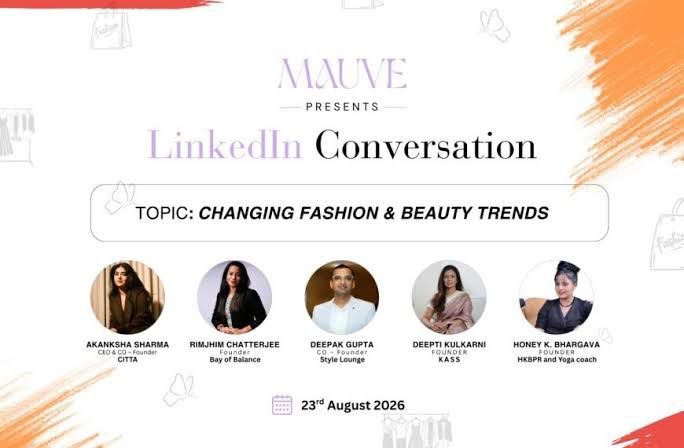
The conversations featured Priya Lalwani, Mauve, as host, alongside Deepak Gupta, Co-Founder, Style Lounge; Akanksha Sharma, CEO & Co-Founder, CITTA (Lexicon Lifestyle – A Lexicon Group Enterprise); Deepti Kulkarni, Founder, KASS and Skincare Formulator & Certified Esthetician; Honey K Bhargava, Founder, HKBPR & Yoga Coach; and Rimjhim Chatterjee, Founder, Bay of Balance.
Together, their perspectives reveal an interesting contradiction at the heart of festive India: the appetite for celebration remains high, but the appetite for unnecessary excess may be declining.
The Festive Edit Is No Longer Automatically “For You”
The explosion of curated festive content has made discovery easier than ever.
Instagram feeds, influencers, brands and creators now produce endless versions of the “Festive Edit”, “Must-Haves” and “Curated For You”. But the more recommendations consumers receive, the harder it becomes to distinguish between personal relevance and algorithmic popularity.
That was one of the central questions in Mauve’s conversation: when every brand claims to know what consumers need, how do people decide what actually belongs in their wardrobe, beauty cabinet or lifestyle?
Akanksha Sharma argues that the starting point should be the individual rather than the trend.
“I would ask people to follow CITTA’s philosophy. I’ll tell them to start with their own skin or their own wardrobe, not with what’s trending.”
Her larger point is significant for the industry: personalisation is moving beyond a marketing buzzword. Consumers increasingly want recommendations based on their skin, lifestyle, wardrobe, personality and actual needs.
Deepak Gupta sees technology playing a role here, describing Style Lounge’s approach as using AI-led skin analysis and discovery to help people make beauty choices based on themselves rather than simply following an influencer’s feed.
And Deepti Kulkarni puts education at the centre of that decision-making process.
“Understanding always come before any product.”
That could well become one of the most important shifts in the beauty industry: brands may no longer win simply by telling consumers what to buy; they may win by helping consumers understand why they need it.
From “More Is More” to “Right Is More”
Festive fashion has traditionally rewarded maximalism.
More embroidery. More sparkle. More layers. More accessories.
But the Mauve conversations suggest that a quieter form of luxury is emerging.
Mauve’s conversation on the changing festive fashion code
The discussion began with a simple observation: consumers appear to be gravitating towards cleaner silhouettes, fewer statement pieces and outfits that feel considered rather than excessively decorated.
Deepak Gupta captured the change succinctly:
“We’re seeing a move from ‘more is more’ to ‘right is more.’ Fewer, better and more personalised choices are becoming the new festive luxury.”
That phrase — “right is more” — perhaps best captures where the festive luxury consumer is heading.
This doesn’t mean Indian consumers are abandoning maximalism. Festivals remain deeply connected to colour, craft, jewellery and celebration. Rather, maximalism itself is becoming more intentional.
As Deepti Kulkarni noted:
“There has been a shift, for sure. But, not entirely, it’s not a complete jump from ‘more is more’ to ‘less is more’.”
The distinction matters.
The future isn’t necessarily minimalism.
It is intentionality.
The New Festive Luxury Is Rewearability
One of the strongest undercurrents in the fashion conversation was the question of whether consumers want something spectacular for one Instagram post — or something they will actually wear again.
Akanksha Sharma pointed directly towards this shift:
“Let’s be honest here, nobody actually buys a dress only for one-time use.”
This changes the equation for brands.
A festive product now has to potentially survive beyond the festive calendar. It needs to justify its place in the consumer’s wardrobe, rather than simply create a moment online.
That makes versatility, longevity, craftsmanship and personal style increasingly valuable.
In other words, sustainability isn’t necessarily entering festive fashion through a lecture about consumption. It may be entering through a much simpler consumer question:
“Will I wear this again?”
Beauty Is Moving From Emergency Preparation to Everyday Ritual
Perhaps nowhere is this transformation more visible than skincare.
Mauve’s conversation on the evolution of festive skincare
Festive skincare once largely meant a facial, treatment or salon appointment immediately before an important celebration.
Now, preparation is increasingly beginning weeks — or even months — earlier.
But the change isn’t simply about wanting better results.
It is about changing the relationship consumers have with beauty.
Akanksha Sharma describes this as a shift towards ritual:
“Skincare prep is actively shifting toward ritual.”
Deepti Kulkarni adds an important nuance: consumers aren’t necessarily choosing between results and self-care.
“People are investing in themselves and self care that gives them results.”
That distinction is important for beauty brands.
The consumer doesn’t necessarily want a product because it promises an instant transformation. They increasingly want a routine that feels good, works for their skin and can continue beyond the festival.
Deepak Gupta summarises the dual demand:
“Both—but results are becoming increasingly important. Consumers want the festive ritual and pampering, but they’re also asking: What will actually work for my skin and hair?”
The beauty opportunity, therefore, is moving from occasion-based consumption to relationship-based consumption.
Skin Barrier Is Becoming More Important Than the “Festive Glow”
The shift towards long-term skincare was also evident in Mauve’s conversation around the trends that could survive beyond the festive season.
What festive beauty trends could become the new normal?
Rather than another viral ingredient or short-lived treatment, several panelists pointed towards skin health, barrier care and personalised routines.
Akanksha Sharma said:
“I would really like it if people took skin barrier care seriously year-round, not just before festivals.”
Deepti Kulkarni similarly pointed towards consumers prioritising:
“skin and barrier health over trending skincare routine.”
This is an important industry signal.
The consumer is becoming more educated — and education changes purchasing behaviour.
When consumers understand their skin, they become less dependent on viral recommendations. They start asking better questions:
What does my skin need?
Why am I using this ingredient?
Will this work for me?
Can I use it consistently?
And that creates a very different kind of beauty market.
The Rise of the “Quiet Glow”
The visible expression of this shift is already showing up in festive beauty.
Mauve’s conversation on the festive trends shaping the season
Honey K Bhargava pointed towards minimal metallics, describing the shift as:
“rich, not loud.”
Akanksha Sharma highlighted the growing interest in natural, glowing skin and the no-makeup makeup aesthetic, while Deepak Gupta pointed towards personalisation over trends.
But perhaps the most interesting interpretation came from Rimjhim Chatterjee.
For her, the movement isn’t really about quieter makeup or understated fashion. It is about people becoming tired of performing for an audience.
“The ask underneath it ; let me be seen without having to perform – that’s not a trend.”
That is a powerful consumer insight.
Because the next phase of luxury may not be about looking like everyone else who is considered fashionable.
It may be about looking unmistakably like yourself.
Social Media Has Made Trends Faster — But Has It Made Them Better?
There is another force driving all of this: social media.
Mauve’s conversation on social media, trend velocity and festive shopping
The festive buying journey has become dramatically shorter.
Scroll. Tap. Buy.
A reel can introduce a silhouette, colour, product or beauty routine to millions of people almost instantly.
The result is what Mauve describes as “trend velocity” — the speed at which a trend moves from discovery to adoption.
Deepak Gupta acknowledges the upside:
“Social media has democratised beauty inspiration, which is great.”
But there is a cost.
Akanksha Sharma points out that the constant arrival of a “new thing” has compressed the shelf life of trends to just a few weeks.
For brands, this creates pressure to constantly produce.
For consumers, it creates pressure to constantly keep up.
And for the industry, it creates a fundamental question:
How fast can a trend move before it stops being meaningful?
The New Consumer Doesn’t Necessarily Reject Trends. They Filter Them.
This may be the most important takeaway from the entire Mauve series.
Consumers aren’t necessarily becoming anti-trend.
They are becoming better filters.
Deepti Kulkarni argues that social media has given consumers access to more information and perspectives, allowing them to form their own judgments rather than simply accepting one opinion.
That means the industry’s job is changing.
The old model was:
Create → Promote → Convince → Sell.
The emerging model is closer to:
Educate → Personalise → Build Trust → Let the Consumer Choose.
That is a significant transformation.
Authenticity Could Become the Biggest Festive Trend
Across all seven conversations, one idea repeatedly surfaces: authenticity.
It appears in fashion through rewearability.
In beauty through personalisation.
In skincare through barrier health.
In wellness through ritual.
In commerce through conscious decision-making.
And in social media through the desire to escape constant performance.
Rimjhim Chatterjee perhaps puts it most directly:
“I sincerely hope, we make AUTHENTICITY, the biggest trend in the coming years, because the secret code then stays with you, and shows up in your personality and that my friends will never go out of style!”
That may be the real story behind India’s changing festive consumer.
The industry isn’t necessarily moving from maximalism to minimalism.
It isn’t moving from offline to online.
It isn’t even simply moving from trends to timelessness.
It is moving from imitation to interpretation.
Consumers are still watching the trends. They are still shopping. They are still dressing up. They are still experimenting.
But increasingly, they are asking:
Does this feel like me?
What This Means for the Industry
For fashion, beauty and lifestyle brands, the message is clear.
1. Personalisation will matter more than mass curation
“Made for everyone” is becoming less persuasive when consumers expect recommendations tailored to their individual needs.
2. Education will become a stronger marketing tool
Brands that explain rather than simply sell can build deeper trust.
3. Longevity will compete with novelty
Consumers increasingly want products that survive beyond one festive photograph.
4. Wellness and beauty will continue to overlap
Skincare is increasingly being viewed as ritual, self-care and lifestyle rather than simply appearance management.
5. Social commerce will continue to accelerate discovery
But faster discovery does not automatically mean stronger consumer loyalty.
6. Authenticity will become a competitive advantage
When every brand can participate in the same trend, the brands with a distinctive philosophy become easier to remember.
7. “Quiet luxury” is evolving into “personal luxury”
The most valuable product may not be the loudest one. It may simply be the one that feels most right for the person buying it.
The Festive Consumer Is Still Celebrating. They’re Just Choosing Differently.
The festive season isn’t becoming less aspirational.
It is becoming more self-aware.
The consumer still wants the beautiful outfit, the glowing skin, the statement accessory, the celebration and the photograph.
But increasingly, those choices have to pass through one more filter:
Is this actually me?
That question could prove far more influential than any single festive trend.
Because trends disappear.
Personal style stays.
And perhaps that is where the next chapter of India’s fashion, beauty and lifestyle industries will be written.
The Mauve Conversations Behind This Story
For readers who want to explore the individual discussions:
- Cutting Through the Noise: Festive Beauty Trends vs Personal Style — Mauve
- Festive Edit, Must-Haves & Curated For You
- Festive Skincare: From Last-Minute Prep to Long-Term Ritual
- The New Festive Fashion: Beyond “More Is More”
- Scroll, Tap, Buy: How Social Media Is Rewriting Festive Shopping
- Which Festive Trends Will Actually Stay?
- Festive Fashion & Beauty: Trend or Moment?