The second half of Day 2 continued with an engaging session titled ‘TV Is Dead. Long Live TV.’ in association with Think Results & B Natural. The session examined the changing role of television in an increasingly fragmented media ecosystem and explored how the medium continues to evolve amidst shifting audience consumption habits.
The panel featured Akshay Agrawal, Head Linear Ad Sales, Sony Pictures Networks India; Rajiv Dubey, Vice President Media & Marketing Activations, Dabur India Limited; Arpan Biswas, Chief Marketing Officer, Ajio; and Avinash Pandey, Secretary General, IBDF. The discussion was moderated by Tamanna Inamdar, Managing Editor, NDTV Profit. The conversation focused on the future of television advertising, audience fragmentation, cross-platform storytelling, and the enduring influence of television in building mass cultural moments.
Highlighting the evolving role of television in an increasingly digital-first media ecosystem, Akshay Agrawal, Head Linear Ad Sales, Sony Pictures Networks India, said, “Television still delivers massive scale, high watch-time, and strong credibility, but broadcasters must evolve from passive reach to participative engagement. Shows like Indian Idol and KBC work because audiences vote, engage socially, follow journeys, and use second screens, making TV increasingly interactive and connected to digital behaviour. The future of TV lies in interactive content, social amplification, co-created viewer experiences, and brand moments embedded within programming. Industry measurement must also shift from GRPs and reach to ROI, attribution, and business outcomes, because it is no longer TV versus digital, it is TV and digital together.”
Adding to the conversation, Rajiv Dubey, Vice President Media & Marketing Activations, Dabur India Limited, said, “Southern markets and several Indian states still have over 80–90% TV penetration, while both Free-To-Air TV and Connected TV continue to grow rapidly. Brands today need an integrated mix of television, celebrities, regional influencers, and micro-content formats, as Gen Z increasingly uses mobile as the first screen. Influencer marketing helps reach audiences that TV alone cannot, but it also brings challenges like brand safety risks, reputation volatility, and cancel culture concerns. Ultimately, marketing is no longer ‘either-or’ but a fully integrated media mix.”
Speaking about how brand building is increasingly being shaped by platform and consumer experience, Arpan Biswas, Chief Marketing Officer, Ajio, said, “Communication today is only one part of brand building, especially for e-commerce brands where the real brand is defined by the platform experience, search, delivery, user interface, and the overall customer journey. As a result, brands are increasingly shifting spending toward consumer experience and performance-driven ecosystems. TV, in this context, is just a distribution channel like digital platforms, with the same content moving across TV, Meta, YouTube, and OTT depending on strategy. The real focus, therefore, is not platform comparison but content effectiveness.”
Highlighting the continued scale, credibility, and cultural relevance of television in India’s evolving media ecosystem, Avinash Pandey, Secretary General, IBDF, said, “Television in India still reaches nearly 900 million viewers across 190 million TV homes, with penetration growing around 6% annually and expected to add over 100 million homes by 2028. TV and OTT together are driving deeper content consumption, reinforcing that television is not dead, only the mode of signal delivery has changed. TV continues to be the strongest medium for mass reach, community viewing, trust, credibility, and unskippable storytelling, making it central to large-scale brand narratives. Emotional brand building cannot rely purely on algorithms, and credible platforms like TV still offer greater brand safety compared to unpredictable influencer ecosystems.”
Next in line was a compelling keynote presented by Spotify Advertising titled ‘Make Some Noise: Why Your Next Big Idea Should Be SOUND-ON’. Haran Ramachandaran, Head of Creative Lab JAPAC, Spotify, highlighted the growing power of audio-led storytelling and the role of immersive sound experiences in creating stronger emotional connections with audiences in a digital-first environment.
Adding a playful and engaging perspective to the discussion, Haran Ramachandaran, Head of Creative Lab JAPAC, Spotify, said, “Even silence has emotional weight, and that is the true power of sound. In an era of divided attention where every platform competes for the same eyes and thumbs, brands are losing the battle for attention as campaigns disappear into endless scrolling and fragmentation. Audio offers a different opportunity because it doesn’t interrupt moments—it becomes part of them, whether during commutes, workouts, cooking, or daily life, especially in visually overloaded markets like India. Unlike visual storytelling, audio is ‘projective’ rather than ‘directive’—it lets listeners co-create meaning in their imagination, making the experience personally owned and more emotionally powerful. Sound also acts as identity, building instant emotional association and memory, while platforms like Spotify create a focused, sound-on environment with over 120 million listeners in India. In a world overspending on visual attention, the real opportunity lies in building stories through sound, emotion, and imagination rather than screens.”
Adding to the conversations around media integration and consumer engagement, Amazon delivered a keynote session titled ‘From Fragmentation to Integration: The Power of Full-Funnel Advertising’. Gulshan Verma, Director, Amazon Ads, shared insights into how brands can navigate fragmented consumer journeys by building integrated full-funnel advertising strategies that combine awareness, engagement, and conversion across platforms.
Highlighting how rapidly evolving consumer habits are reshaping the advertising landscape, Gulshan Verma, Director, Amazon Ads, said, “Consumer behaviour has fundamentally changed, making traditional linear funnels irrelevant as today’s users no longer move in a fixed awareness-to-purchase journey. With quick commerce and instant digital access, decision cycles have compressed, while consumers multitask across streaming, shopping, gaming, and browsing, breaking siloed media thinking. Every format – audio, video, influencers, can now drive full-funnel outcomes, making integrated advertising essential. The focus is shifting from reach to understanding behaviour at scale, using purchase signals and ecosystem data to build richer audience intelligence. In this context, Amazon Ads connects fragmented touchpoints like Prime Video, Fire TV, Alexa, and shopping to enable full-funnel, outcome-driven marketing focused on repeat behaviour, lifetime value, and incremental impact.”
The festival then hosted an impactful session titled ‘IAA Voice of Change: Resetting the Narrative to Break the Bias’, powered by Sun Neo & iAvatarZ Digital. The session brought together voices from across industries to discuss representation, inclusivity and the role of brands and media in driving meaningful societal change.
The panel featured Amitesh Rao, Chief Executive Officer, South Asia Leo & VP – TAC; Preeti Jhangiani, Entrepreneur, Sports Leader; Prasun Kumar, Chief Marketing Officer & Business Head, MagicBricks; Riya Joseph, General Manager – Media, Britannia Industries Limited; and Veetika Deoras, Senior Vice President – Marketing and Brands, IHCL. The discussion was moderated by Megha Tata, Strategic Advisor & Independent Director. Together, the speakers explored how businesses and media platforms can actively challenge stereotypes, foster inclusivity, and create narratives that reflect a more equitable society.
“Advertising should not just mirror culture; it should actively shape culture. The best creative work sits at the ‘bleeding edge of culture,’ where conscious creativity balances cultural impact with business effectiveness. Representation must go beyond tokenism and be strategically embedded into brands, as those that genuinely understand women’s realities and behaviours will build stronger businesses. Conscious advertising is still evolving, but awareness within agencies and brands has increased significantly,” highlighted Amitesh Rao, Chief Executive Officer, South Asia Leo & VP – TAC.
Speaking about the need for more inclusive and progressive representation in advertising and sports, Preeti Jhangiani, Entrepreneur, Sports Leader, said, “Advertising needs to reflect today’s reality, not outdated narratives where women are only shown as mothers, wives, or supportive characters. Modern women hold multiple identities, as entrepreneurs, leaders, professionals, and decision-makers, while societal change, especially in smaller towns and villages, is happening faster than brands assume. Sports ecosystems also need inclusive representation, with equal visibility, screen time, salaries, and inclusion for women and specially-abled athletes. Brands and advertisers must take the lead in changing narratives instead of waiting for society to fully evolve.”
Strongly highlighting the need for more authentic and inclusive storytelling in advertising, Prasun Kumar, Chief Marketing Officer & Business Head, MagicBricks, said, “Conscious creativity is fundamentally about honesty and authenticity, yet bias in advertising extends beyond gender to metro vs small-town perceptions, age stereotypes, and lifestyle assumptions. While data shows women play a major role in real estate and home-buying decisions, advertising narratives often fail to reflect this reality and continue relying on stereotypical ‘happy family’ storytelling. Brands need to evolve to show women as primary decision-makers and better mirror real societal behaviour, with greater experimentation and authentic representation still needed.”
Emphasising that conscious advertising begins long before a campaign goes live, Riya Joseph, General Manager, Media, Britannia Industries Limited, said, “Conscious advertising starts at the briefing stage itself, with diverse teams bringing regional perspectives and different viewpoints into campaign creation. Brands must stay culturally relevant instead of relying on outdated stereotypes, as representation continues to evolve alongside society. Campaigns like Britannia’s have highlighted Paralympic champions, strong women characters, and emotionally expressive fathers, showing how advertising can gradually challenge norms and spark important conversations.”
Strongly emphasising her views on the social responsibility that comes with visibility and scale in advertising, Veetika Deoras, Senior Vice President, Marketing and Brands, IHCL, said, “Conscious marketing is about creating positive societal impact while ensuring there is no negative impact through communication. Given the scale and visibility of advertising, brands and advertisers hold immense influence and social responsibility. Representation can itself break bias—for example, showing women in hospitality and housekeeping roles can create aspirational visibility, while continued portrayal of women in unconventional and leadership-driven roles is essential. Ultimately, visibility through advertising carries a strong responsibility to shape more inclusive narratives.”
The spotlight then shifted to India’s evolving sports ecosystem with ‘New Games, New Gods: India’s Sporting Reset’ in association with The Times of India & Bingo. The session highlighted the rise of emerging sports, changing fan cultures, and the growing influence of new-age sporting leagues in India.
The conversation featured Aditi Chauhan, Former Indian Women’s National Team Captain, Founder – She Kicks; Parvinn Dabass, Founder, Pro Panja League; Rahul Chaudhari, Indian Kabaddi Player; and Sameer Pathak, President, Pickleball World Rankings, The Times Group company. The session was moderated by Anand Narasimhan, Managing Editor, Spl Projects & Senior Anchor, CNN News18.
The interactive discussion brought together diverse perspectives on the evolving Indian sports ecosystem, with speakers highlighting both the challenges and opportunities shaping the industry. Aditi Chauhan, Former Indian Women’s National Team Captain, Founder, She Kicks, spoke about the inspiring journey of her career, while also sharing how football teaches invaluable life lessons through perseverance and discipline. Parvinn Dabass, Founder, Pro Panja League, highlighted the highly entertaining and competitive nature of sports, noting that audiences are naturally drawn to the thrill of competition, with inspiration also drawn from globally successful formats like darts in the UK and Western Europe. Rahul Chaudhari, an Indian Kabaddi Player, engaged the audience with an interactive kabaddi session, while emphasizing that kabaddi is a unique blend of multiple sports requiring diverse training techniques. Sameer Pathak, President, Pickleball World Rankings, The Times Group company, spoke about the rapid growth of pickleball across metro and tier cities, highlighting the excitement around the sport and how its highly experiential and visually engaging nature keeps players coming back. The sessions also witnessed enthusiastic audience participation, with attendees actively engaging with each panelist through interactive sports-led experiences that brought the conversations to life.
Simultaneously, GoaFresh Session on Rewriting Intelligence: How AI is Resetting Brands, Creativity & Consumer Trust by Shubranshu Singh, Member of the Board of Directors Effie LIONS Foundation & Forbes Most Influential Global CMO 2025 highlighted on how AI and machine learning have been evolving for decades, but the biggest shift today is AI’s ability to communicate through natural language, making interactions far more intuitive and accessible. While AI will drive automation and efficiency at scale, the real competitive advantage will come from organisations that deeply integrate AI into workflows, collaboration and decision-making. In an AI-driven world, originality, credibility and emotional memory will become even more critical for building enduring brands, as consumers increasingly rely on creators, communities and conversational platforms for discovery and engagement. As digital ecosystems evolve rapidly through mobile-first behaviour, short-form content, and AI-powered search, brands must stay culturally aware, responsive, and consistently engaged to remain relevant in the future.
Padma Shri Prasoon Joshi, Chairman, Omnicom Advertising India and Chairman, Prasar Bharati, set the tone with a powerful call for authenticity, discipline, and original thinking, emphasising that meaningful creativity is rooted in honesty, curiosity, consistent practice, and lived human experience. Reflecting on his journey in writing and storytelling, he shared how years of discipline helped him master rhythm, cadence, and creative instinct, while noting that although AI can process what already exists, true creativity lies in the unexpressed and unseen. He encouraged young creatives to discover their authentic self and create from lived experience rather than imitation, urging them to embrace their roots and individuality, and stating, “Stay original. Stay authentic. Because if you lose authenticity, you have nothing.” He concluded by highlighting the idea of “seeking,” where perspective shapes creativity and determines whether one finds positivity, inspiration, and meaning, reinforcing that creativity ultimately stems from honesty, curiosity, discipline, and human experience.
In addition to the sessions, the masterclasses on Day 2 offered delegates deeper insights into the evolving intersections of technology, creativity, storytelling, and performance marketing, further enriching the learning experience at Goafest 2026.
Whistling Woods International hosted a masterclass titled ‘Reimagining Filmmaking in the World of Artificial Intelligence’ led by Chaitanya Chinchlikar, Vice President, Business Head, Chief Technology Officer & Emerging Media Head.
Google conducted a masterclass titled ‘Reset. Rethink. Reignite: How to Grow in the New Era of AI Search, featuring Neha Nupur, Head of Search & Shopping, Google India, and Radhika Mehta, Performance Specialist, Google India.
LIONS / WARC presented a masterclass titled ‘The Pace Principle: The Case for Growth for Indian Marketers – a WARC masterclass on growth, brand and performance in India’. The session was led by Sujeet Kulkarni, Global Strategist, and Biprorshee Das, India Editor. JioHotstar conducted a masterclass titled ‘Infinite Stream, Reimagined with AI’ led by Bhaskar Ramesh, Head, Entertainment Sales, Digital, JioHotstar.
Finally, it was time for one of the most anticipated moments of the evening – the BIG FM Presents Advertising Rocks Grand Finale, powered by ABP Network – BAE by ABP Network Initiative. The high-energy finale celebrated creativity and talent from across the advertising and media industry, bringing together music, entertainment, and performance on one stage. The competition was judged by Neeti Mohan, Bollywood Singing Diva; Padma Shri Prasoon Joshi, Chairman, Omnicom Advertising India and Chairman, Prasar Bharati; Manta Sidhu, Founder and Director – Culture Connect India & The Music Academy Gurgaon; Subhash Kamath, Former CEO, BBH India & Former Chairman, ASCI; and Merlin Dsouza, Founding Partner, Brand Musiq and Director of Music Mode, Composer-Director, Pianist, and World Leadership Inspirational Award-winning Musician.
The winners for Advertising Rocks Season 4 were Rahul Sarodi (White Rivers Media), Bodhisattwa Banerjee (VML India), and Ruben Dsilva (ASCI), and Monobina Bhattacharya (Oilver InHouse India Private Ltd).
The evening also featured an exclusive ‘C Suite Soiree’ presented by LinkedIn.
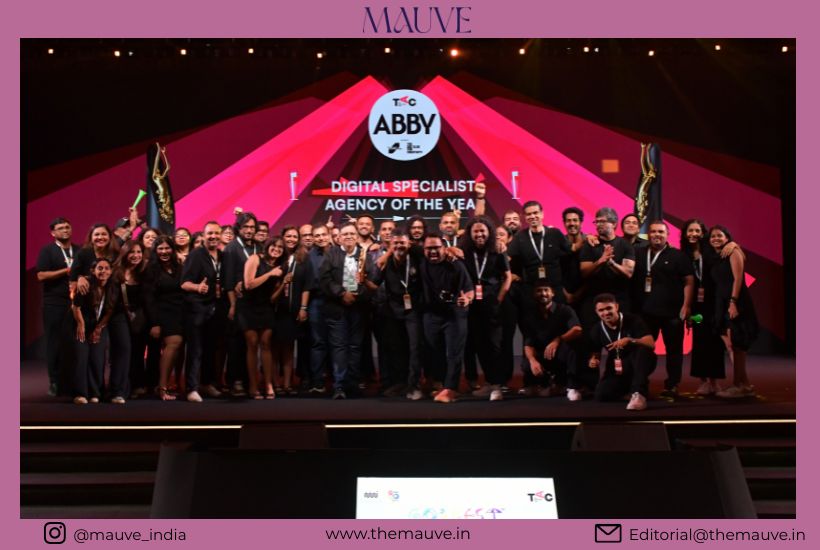
As the day progressed, the focus turned to recognising creative excellence with the ABBY Awards 2026 Powered by The One Club | The One Show. SET India & Sony SAB Presents the Abby One Show Awards, Powered By Republic, in Association with Mobavenue, honoured winners across categories, including Broadcaster, Public Relations, Design, Direct, and Technology. Sharechat | MOJ Presents Abby One Show Awards, Powered By Republic, in Association with Mobavenue, further celebrated excellence across Digital & Digital Craft, Young Maverick Abby Award, Health Abby, and Sustainable Development Goals Abby categories, recognising some of the most innovative and impactful work from across the industry.
The gala dinner was presented by Lemma, and the After Hours Party with Lost Stories was presented by Spotify Advertising.
Stay tuned for Day 3