From eyewear and beauty to fashion, fresh produce and travel, these founders are responding to a new Indian consumer—one who wants more than a good price.
For a long time, the Indian consumer equation was relatively straightforward: price, availability and value.
Today, the equation is considerably more complicated.
A product can be affordable and still be overlooked. A brand can be widely available and still feel irrelevant. Increasingly, Indian consumers are asking different questions: Is it convenient? Does it feel personal? Does it look good? Can I trust it? Does the experience feel worth my time?
The shift is visible everywhere—from the way we buy our groceries and discover beauty to how we shop for clothes, choose eyewear, send gifts and even pack for a holiday.
At the centre of this evolution are founders who aren’t simply building businesses within existing categories; they are rethinking the categories themselves.
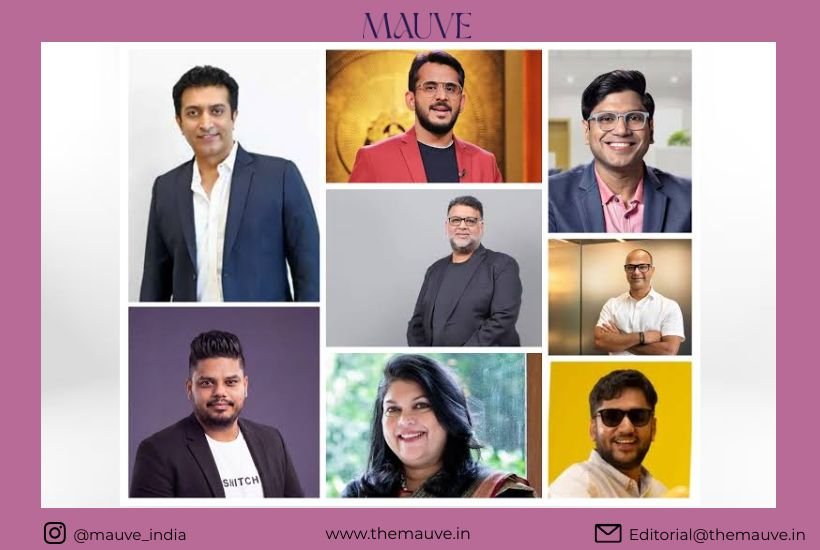
Here are eight founders offering a glimpse into where India’s consumer market is headed next.
1. Peyush Bansal — Lenskart
Eyewear was once largely a functional purchase. Lenskart helped turn it into something considerably more personal.
Under Peyush Bansal, the brand has brought together technology, physical retail and an expansive digital catalogue to make buying prescription eyewear, sunglasses and contact lenses more accessible—and, importantly, more considered.
The transformation is as much about behaviour as it is about retail. Frames are no longer simply something you need to see through; they are increasingly part of how you present yourself.
Lenskart’s evolution reflects a larger consumer shift: even traditionally utilitarian categories are becoming spaces for choice, identity and design.
2. Aman Gupta — boAt
There was a time when buying headphones meant comparing specifications.
Then came boAt.
Aman Gupta understood that for a younger Indian consumer, technology could occupy a very different place in everyday life. Earphones, speakers and wearables weren’t merely devices—they could be extensions of personal style.
boAt built its proposition around that intersection of affordability, design, branding and lifestyle, making consumer electronics feel more culturally relevant to a generation that lives with technology almost constantly.
The lesson extends beyond audio: Indian consumers are increasingly buying into the feeling around a product, not simply its technical specifications.
3. Anant Goel — Handpickd
Fresh produce isn’t traditionally associated with personalisation. You buy your vegetables, take them home and move on.
Anant Goel is challenging that routine.
Through Handpickd, technology, demand-led sourcing and a zero-inventory approach are being used to rethink how consumers buy fruits and vegetables. Customers can make choices around attributes such as ripeness and quality, bringing a level of control to a category that has historically offered very little.
It points to an intriguing direction for Indian commerce: even the most everyday purchases can become more curated, transparent and personalised.
4. Tarun Joshi — IGP
Gifting has always been emotional. The way we shop for gifts, however, has changed dramatically.
Tarun Joshi, Founder and CEO of Join Ventures and IGP, has built around that evolution, transforming gifting from a largely transactional activity into a more personalised, occasion-led experience.
From flowers and cakes to personalised gifts, hampers, gourmet offerings and festive merchandise, IGP has expanded the idea of what it means to send something to someone.
With a presence across more than 1,000 cities in India, the platform reflects a consumer who increasingly wants convenience without sacrificing thoughtfulness.
Because in the age of instant delivery, the challenge isn’t simply getting something there. It is making it feel like you chose it.
5. Siddhant Dungarwal — Snitch
Indian menswear has entered a different era—and Siddhant Dungarwal is building for the consumer at its centre.
Through Snitch, Dungarwal has tapped into a generation that discovers fashion online, responds quickly to trends and expects newness without the traditional barriers of premium fashion retail.
The brand’s digital-first roots and growing physical presence mirror a broader change in Indian fashion: the line between online discovery and offline shopping is becoming increasingly fluid.
For today’s consumer, fashion needs to be accessible, current and easy to discover. Snitch has built its proposition around exactly that.
6. Falguni Nayar — Nykaa
Few categories illustrate India’s changing shopping habits as clearly as beauty.
Falguni Nayar recognised early that beauty wasn’t simply about having products available—it was about helping consumers discover, understand and trust them.
Nykaa built an ecosystem around that idea, combining an expansive assortment with beauty content, discovery and an increasingly significant physical retail presence.
In doing so, it helped move beauty shopping away from a purely transactional model and towards education, aspiration and personal discovery.
Its larger significance lies in what it says about the Indian consumer: specialised platforms can become destinations in their own right when they understand not only what people want to buy, but how they want to discover it.
7. Ravishankar Ramchandran — Nua
Some of India’s most interesting consumer shifts are happening in categories that were once barely discussed.
Ravishankar Ramchandran, through Nua, has been part of the movement bringing period care into the wider conversation around women’s wellness.
What began around menstrual-care products has evolved into a broader proposition around women’s needs, reflecting a consumer who is increasingly unwilling to compromise on comfort, convenience, product experience or wellbeing.
The change is cultural as much as commercial. Categories once treated purely as necessities are now being reconsidered through the lens of design, dignity and everyday experience.
8. Sangeet Agrawal — Mokobara
Luggage used to be something you bought because you needed to travel.
Sangeet Agrawal is part of a generation of founders asking a different question: why can’t the things we use every day be beautifully designed, too?
Mokobara approaches luggage, backpacks and travel accessories through the intersection of function, aesthetics and accessibility, turning travel gear into something that feels closer to a lifestyle purchase.
It is a familiar pattern across India’s new consumer landscape. The products may be practical, but the experience around them is aspirational.
And that distinction matters.
The New Indian Consumer
What connects these eight businesses isn’t a single industry, demographic or business model.
It is an understanding that Indian consumers are becoming more discerning.
They want convenience, but not at the expense of experience. They want affordability, but increasingly with design. They want choice, but also guidance. They want products that work—and brands that understand them.
That may be the most significant shift underway in India’s consumer economy.
The next wave won’t necessarily be defined by who can sell the most products at the lowest price. It may belong to the founders who understand why consumers choose one product, one platform or one experience over another.
And in that sense, the future of Indian consumption isn’t simply about buying more.
It is about buying better—and knowing why.