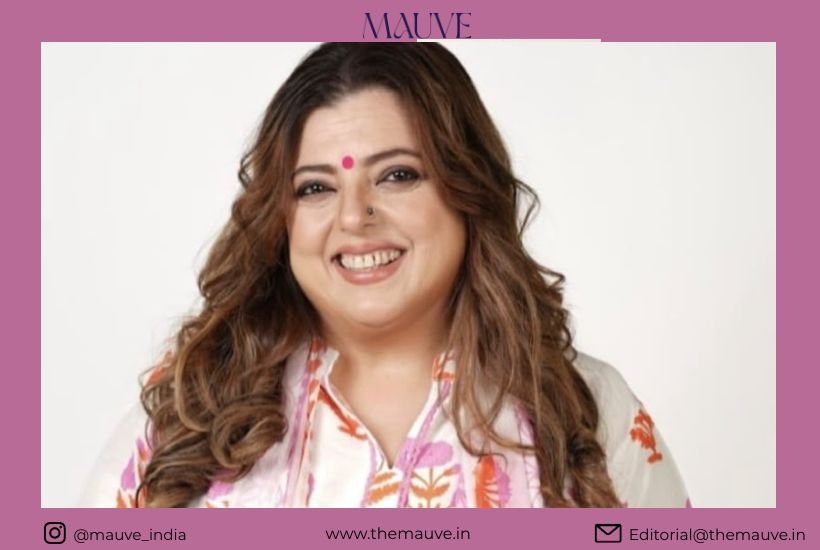
This Dussehra, the actor reflects on emotional resilience, the lessons hidden in difficult chapters and the quiet courage it takes to protect one’s peace.
There is a certain kind of strength that does not announce itself. It is found in knowing when to let go, choosing not to take every opinion personally and learning to move forward without needing every chapter of life to make sense. For actor Delnaaz Irani, these lessons have come through the many turns of a life spent navigating the unpredictable worlds of cinema, television and theatre.
As Dussehra brings its timeless message of the triumph of good over evil, Delnaaz looks beyond the familiar symbolism of the festival to the battles that unfold within us. The disappointments we learn to accept, the relationships that change us and the moments that teach us to stand on our own feet can become victories in their own right.
In an exclusive conversation with The Mauve, the actor opens up about emotional independence, the importance of kindness in an increasingly hurried world and the personal evolution that comes with experience.
Learning to Let Go Without Losing Yourself
Growing older often changes the way we respond to the world. What once felt personal begins to feel temporary; the need to explain ourselves gradually gives way to the freedom of simply being. For Delnaaz, one of the most meaningful changes has been learning to protect her emotional space.
“I think I have learnt to stop taking everything to heart. Earlier, I would think a lot about what people said or how they behaved with me. With time, I have realised that you cannot please everyone, and you don’t have to explain yourself to everybody. I have become more accepting of people and situations. I still feel things deeply, but I have learnt to let go and protect my peace.”
It is a lesson that sounds simple but often takes years to practise. Acceptance does not necessarily mean becoming indifferent; sometimes, it means recognising what deserves our energy and what is better left behind. For someone whose profession places her in the public eye, that distinction can be especially valuable.
The Chapters That Teach Us to Begin Again
Careers rarely unfold in a straight line, and life beyond the spotlight is no less unpredictable. Delnaaz acknowledges that uncertainty, whether personal or professional, can become an unexpected teacher, revealing strengths that may otherwise have remained undiscovered.
“Life has taught me that you have to be strong even when things don’t go as planned. There are personal and professional phases when you feel uncertain about what lies ahead. I have had my own share of such moments, and they have made me more independent. You realise that you have to pick yourself up, keep working and find happiness in the little things. I think every difficult phase teaches you something about yourself.”
There is no suggestion that resilience makes difficult experiences painless. Rather, it changes what we do with them. The ability to begin again, to keep working and to recognise joy in ordinary moments becomes its own form of progress. Sometimes, the most important turning points are not the ones the world witnesses, but the ones that quietly alter how we see ourselves.
A Case for Kindness in a World That Moves Too Fast
If Dussehra invites reflection on the values we wish to uphold, Delnaaz has a clear answer when asked which quality deserves renewed attention: kindness.
“I would say kindness. I feel people have become so busy with their own lives that they sometimes forget to be kind to others. A small gesture, a few good words or simply being there for someone can make a big difference. You never know what another person is going through. We don’t always have to agree with everyone, but we can still be respectful and kind.”
It is a reminder that kindness need not be grand to be meaningful. It can be a conversation offered without judgement, a moment of patience or the decision to treat someone with dignity despite differences in opinion. In a culture that often rewards visibility, speed and achievement, these quieter gestures can be easy to overlook.
Yet perhaps kindness is most powerful precisely because it asks for so little while offering so much. It allows us to disagree without diminishing one another and to recognise that every person carries a story we may never fully know.
What Acting Teaches You About Human Nature
Years of inhabiting different characters can offer an unusual education in human behaviour. Each role requires an actor to step outside personal assumptions and explore motivations, vulnerabilities and contradictions. For Delnaaz, this process has reinforced the understanding that people are rarely defined by a single quality.
“As actors, we get to explore different kinds of people through our characters. Nobody is completely good or completely bad in real life. Sometimes, a person’s circumstances or experiences influence the way they behave. Playing different characters helps you look at people from different perspectives. You may not agree with what a character does, but understanding the reasons behind their behaviour is a part of the job.”
This ability to look beyond first impressions extends far beyond performance. Understanding is not the same as excusing someone’s actions; it is the willingness to consider the circumstances that shape them. Perhaps that is one of storytelling’s most enduring gifts: the opportunity to see the world through lives different from our own.
Staying Grounded When the Industry Keeps Changing
In entertainment, visibility can be fleeting and professional fortunes can shift without warning. For Delnaaz, remaining grounded begins with separating professional success from personal identity.
“I have always believed in being myself. This industry can be unpredictable, and you may be doing well one day and waiting for work another day. You have to understand that your work does not define your entire identity. I am grateful for the opportunities I have received, and I try to treat people with the same warmth and respect, whether they are senior actors, newcomers or people working behind the scenes. For me, that is what really matters.”
It is a perspective rooted in the understanding that recognition and self-worth are not interchangeable. Work may introduce us to the world, but the way we treat people often says more about who we are. In an industry built around collaboration, remembering the value of everyone involved is as important as celebrating the faces in front of the camera.
The Victory of Making Peace With Yourself
For all the victories that can be measured through professional milestones or public recognition, Delnaaz believes that some of life’s most significant battles are deeply personal. They involve learning to stand independently, accepting what cannot be changed and finding the courage to move forward.
“I think the biggest battle is learning to stand on your own feet emotionally and not let difficult situations break you. Life doesn’t always turn out the way you imagine it, but you have to find the courage to move ahead. I have learnt to accept things, make peace with the past and look forward to what is coming next. I think being able to smile, laugh and continue enjoying life despite its ups and downs is a victory in itself.”
As Dussehra arrives with its reminder that darkness does not have the final word, Delnaaz’s reflections offer a more intimate interpretation of triumph. Sometimes, victory is not about defeating another person or proving a point. It is about releasing resentment, choosing compassion and discovering that difficult experiences need not determine the person we become.
And perhaps that is the more enduring lesson of the festival: the goodness we celebrate in the world must also find a place in the way we live, the way we respond to adversity and, most importantly, the way we treat one another.
For Delnaaz Irani, the triumph lies in continuing to live with warmth, humour and the courage to begin again.