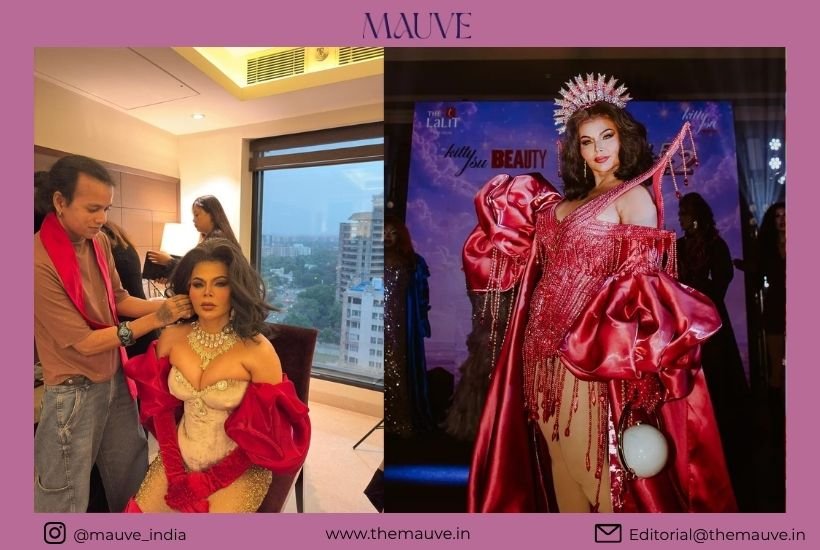
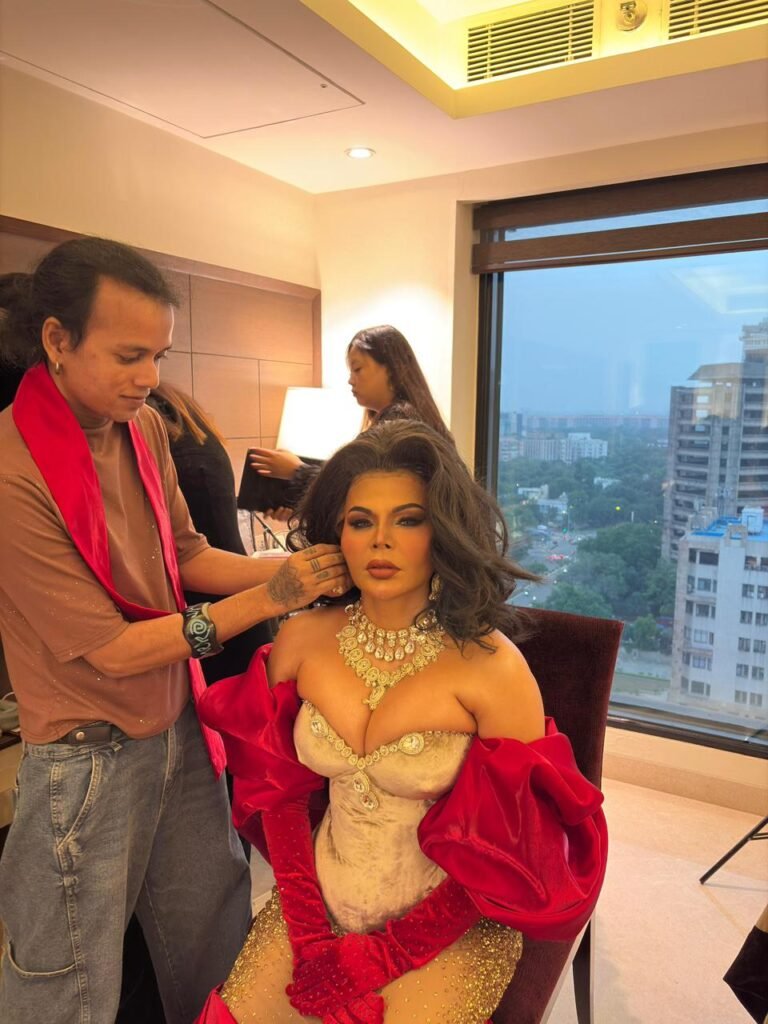
From a drag show in Raipur to an 11-member team in Delhi, Sidhant’s journey over the last two years has taken him through national and international pageants, 30 costume awards and, most recently, a five-day collaboration with Rakhi Sawant.
Who could be a better drag queen than Rakhi Sawant?
It is almost too obvious a question.
Rakhi has spent years understanding the power of exaggeration — the glamour, the makeup, the hair, the drama and the sheer confidence required to turn an entrance into a performance. Vogue India recently put that history into the context of drag, exploring how Rakhi has long embodied elements of drag without necessarily calling it that herself.
But while Rakhi may command the spotlight, there is another creative story unfolding behind the look.
That story belongs to Sidhant.
And for me, his journey feels particularly personal.
From Raipur, With a Little Bit of Courage
My first introduction to Sidhant wasn’t through a celebrity or a fashion page.
It was at a drag show in Raipur.
It was during a celebration of the queer community, where I had come on board as the venue partner. I remember Sidhant and Ankit approaching me and speaking about the event and the possibility of partnering with us.
I said yes without a second thought.
There was something about the idea that felt important — creating a space where queer performers could be celebrated, where drag could exist openly, and where fashion and performance could meet without apology.
At the time, none of us could have known where that journey would lead.
Today, Sidhant is in Delhi, working with a team of 11 and building a body of work across national and international independent pageants.
And then came Rakhi Sawant.
Two Years in Delhi Changed Everything
When I asked Sidhant about his Delhi journey, his answer was surprisingly grounded.
The move happened around two years ago.
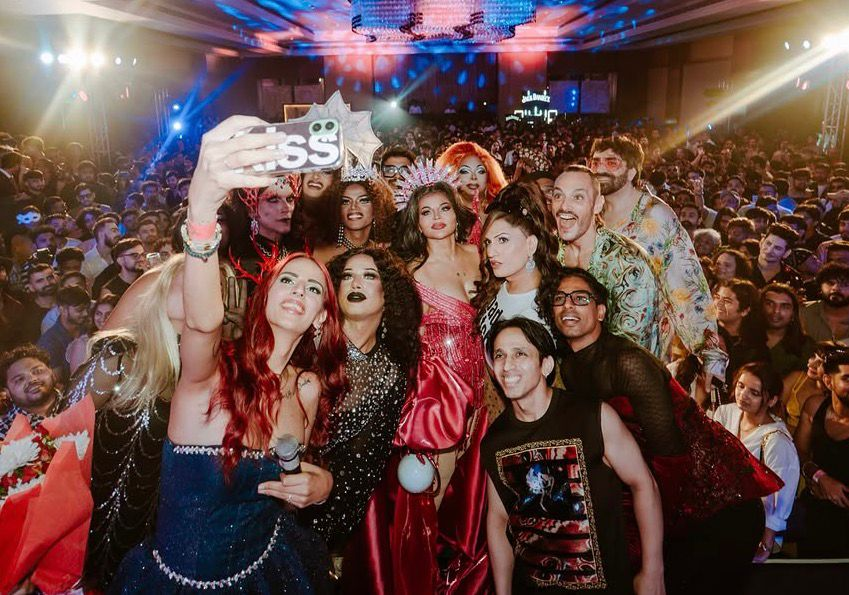
Post-COVID, he remembers the industry as hectic — opportunities were coming through events, projects were moving quickly, and what initially seemed like individual assignments began turning into something much larger.
What started with an event eventually became a team.
Today, 11 people work alongside him.
That growth is perhaps the most interesting part of his story.
Because creative success is rarely just about getting a big client.
At some point, the question becomes: Can you build something that exists beyond you?
Sidhant appears to be at that stage now.
His team has worked across numerous national and international independent pageants over the last two years, with costumes receiving around 30 awards across national and international categories.
Most recently, the team has also been recognised for work associated with Mrs Universe.
For a costume designer, those awards aren’t simply trophies.
They represent the ability to translate identity, culture and personality into something that can hold its own on an international stage.
Then The Lalit Made the Introduction
The Rakhi Sawant collaboration came through The Lalit New Delhi.
The hotel team suggested Sidhant to Rakhi, opening the door to what would become a five-day working experience.
And when we spoke about Rakhi, there was one thing Sidhant said that stayed with me.
She is exactly how she appears virtually.
There is no separate, heavily managed personality waiting behind the camera.
The Rakhi people see online is, according to Sidhant, very much the Rakhi they encounter while working with her.
The drama is for the audience.
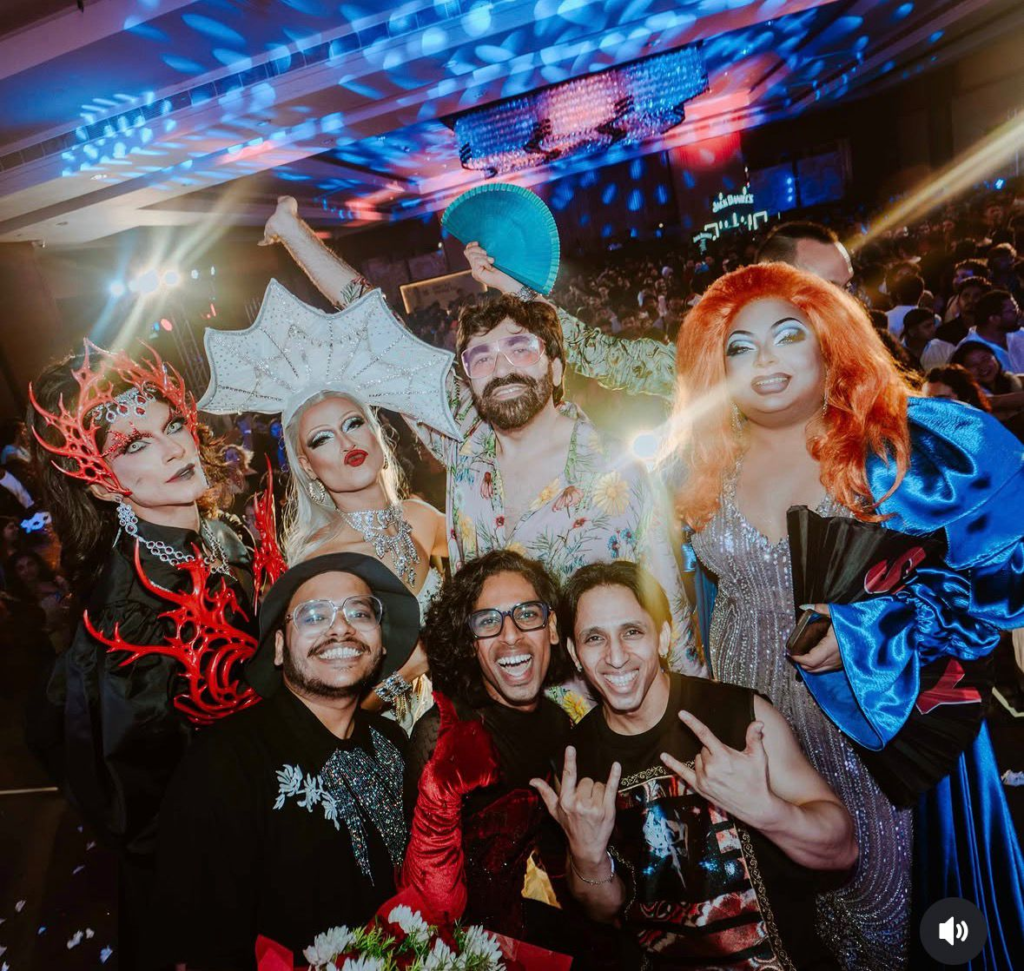
Not for the people behind the production.
For a team working on a highly visual performance, that distinction matters.
Celebrity styling can be an intense environment. There are fittings, changes, timelines, multiple creative departments and an image that ultimately has to come together in a very short window.
The person wearing the costume is at the centre of all of it.
When that person is collaborative, the entire process changes.
Five Days With Rakhi
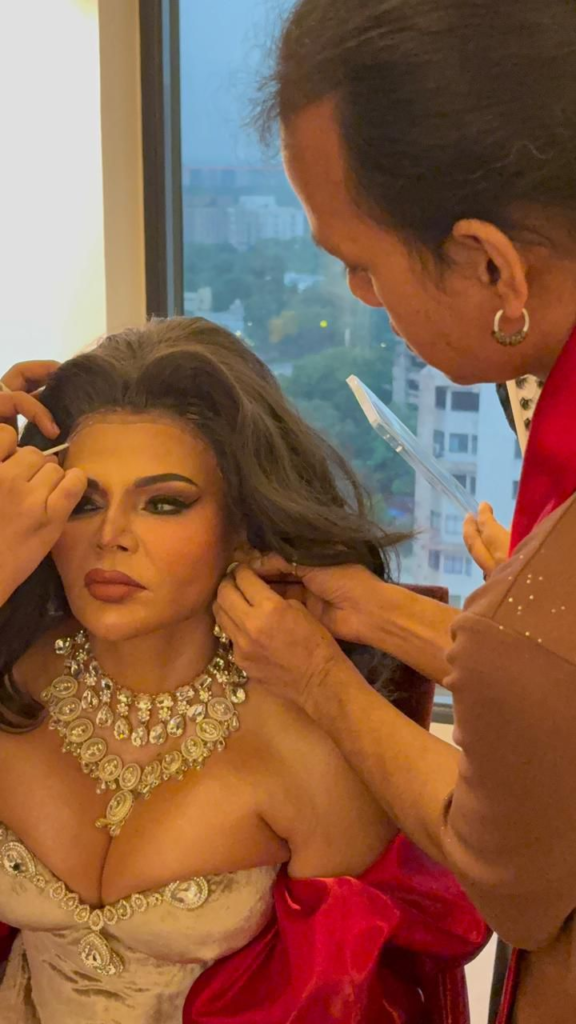
Sidhant describes the five-day experience with Rakhi with an almost unexpected sense of warmth.
She was kind with the team.
And then came a moment that perhaps said more about her than any red-carpet image could.
Rakhi invited the entire team into her personal room.
There was no performance happening there.
No stage.
No cameras.
Just conversation.
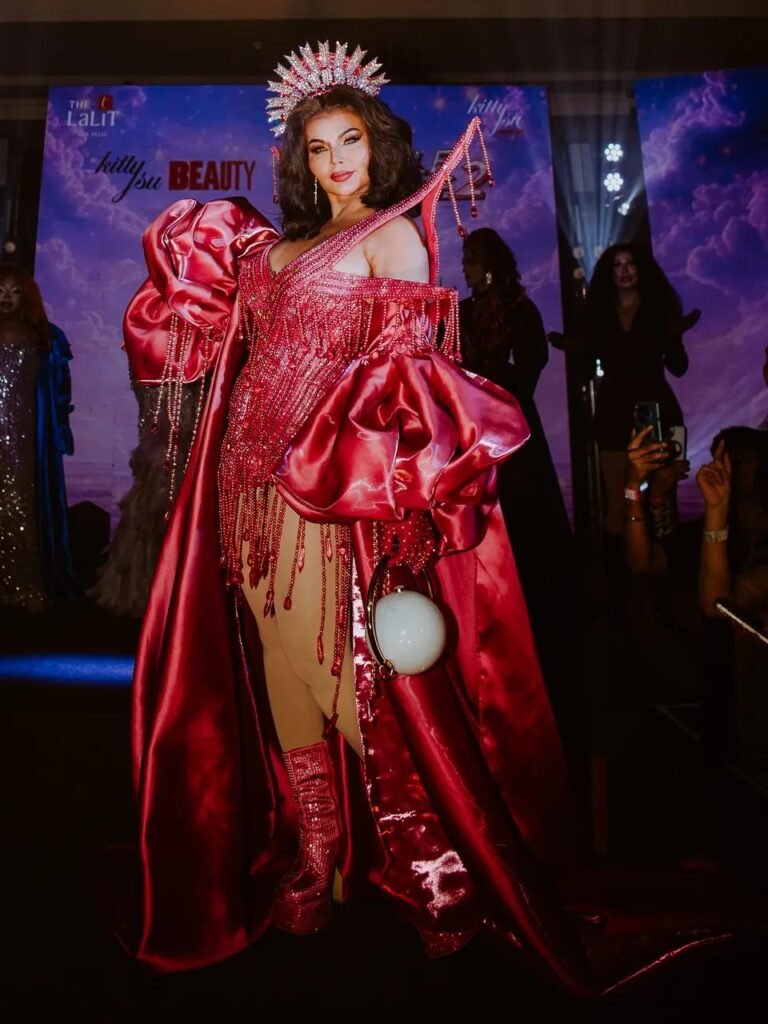
They spoke, chatted and discussed possibilities for the future.
For Sidhant and his team, it became less about a celebrity collaboration and more about building a relationship.
And perhaps that is what makes a successful styling collaboration work.
The photograph may last for years.
But the relationship behind it is what creates the next photograph.
Designing Rakhi Isn’t About Making Her Someone Else
There is an interesting creative equation between Rakhi and Sidhant.
Rakhi already understands exaggeration.
She understands the theatre of femininity.
She understands that fashion can be funny, dramatic, glamorous and provocative at the same time.
So the costume doesn’t necessarily have to turn Rakhi into someone else.
It can simply make Rakhi more Rakhi.
That is where costume design becomes more than fashion.
A costume can alter the way someone moves.
It can change their posture, their scale and the way light interacts with them.
A dramatic headpiece can transform an entrance.
A structured corset can change the body language.
Embellishment can make movement visible from across a room.
The audience may simply see glamour.
The designer sees architecture.
The Craft Behind the Crown
Sidhant’s work across pageants makes this especially relevant.
National and international pageants require costumes to perform several jobs at once.
They need to represent something.
They need to photograph beautifully.
They need to stand out against competing looks.
They need to work on a moving body.
And they need to communicate quickly to an audience that may not understand the cultural references immediately.
That is a very different brief from simply creating a beautiful outfit.
It requires research, construction, proportion, storytelling and an understanding of performance.
And that is why the costume designer deserves to be brought into the conversation.
We often remember the person on stage.
We rarely remember who built the world around them.
A Creative Journey I Have Watched Closely
There is another chapter in Sidhant’s story that makes this particularly meaningful for me.
When More India was being conceptualised, Sidhant was someone we had envisioned working with for the front-cover costumes.
It was something we were genuinely excited about.
But then Sidhant had to move to Delhi.
The collaboration couldn’t move forward.
At the time, it felt like one of those creative plans that simply didn’t find its moment.
Looking at his journey today, I think perhaps it was exactly what needed to happen.
Sometimes people have to leave the room you met them in to discover the scale of the room they are capable of building.
Sidhant went to Delhi.
He built a team.
He worked across national and international pageants.
He collected recognition for his costumes.
And now he has worked with Rakhi Sawant.
From that first conversation in Raipur to this moment, there is something incredibly satisfying about seeing the evolution.
The Bigger Conversation Around Drag and Fashion
The Rakhi-Sidhant collaboration also arrives at an interesting moment for Indian fashion.
Drag has always challenged conventional ideas of beauty, gender and performance.
And fashion has always been one of its most powerful tools.
A costume can exaggerate identity.
It can question it.
It can celebrate it.
It can make a performer feel larger than life.
For the queer community especially, fashion can become a language of visibility — a way of taking up space in a world that has historically tried to decide what that space should look like.
Designers working in this space are therefore doing more than creating spectacular clothes.
They are contributing to a visual vocabulary.
And Sidhant’s journey is becoming part of that vocabulary.
From One Event to 11 People
Perhaps the most revealing number in Sidhant’s story isn’t 30 awards.
It is 11.
Eleven people working together today where once there was simply an individual creative responding to opportunities.
That is how careers become businesses.
That is how a stylist becomes a creative studio.
And that is how a designer begins building a legacy rather than simply collecting credits.
Two years in Delhi have given Sidhant more than a city.
They have given him scale.
And Now, Rakhi
There is something wonderfully fitting about Rakhi Sawant being part of this chapter.
Because if drag is about transformation, Rakhi has spent her entire career understanding transformation instinctively.
She knows how to command attention.
Sidhant knows how to give that attention a visual form.
Together, the result becomes bigger than a costume.
It becomes performance.
And perhaps that is the real lesson in Sidhant’s journey.
The best stylists don’t simply dress people.
They understand people.
They understand the stage.
They understand the audience.
And they understand that sometimes the most important thing a costume can do is give its wearer the confidence to become the most unapologetic version of themselves.
From that first drag show in Raipur to Delhi, from a potential More India cover to international pageants, from one event to a team of 11, and now to Rakhi Sawant — Sidhant’s journey is still unfolding.
And for someone who has watched a little bit of it from the beginning, there is only one thing left to say:
Cheers to the evolution.
The best looks, after all, may still be ahead.

 KeithRaita says:
  DanielKal says:
  nbzrMeD says:
  DanielKal says:
  DanielKal says:
  Allengor says:
  DanielKal says:
  VincentZet says:
  Zetsoani says:
  DanielKal says:
  DanielKal says:
  DanielKal says:
  DanielKal says:
  Bryanvot says:
  Photo-Mog says:
  JamesHak says:
  ChatGPTPex says:
  Aaronkar says:
  HeathNuh says:
  DennisSlode says:
  nbzfrMeD says:
  Danielseaby says:
  Williamzic says:
  Wolf New says:
  Timleabe says:
  mathabeauh says:
  ShereeJex says:
  TermiGram says:
  otaletpmjo says:
  Allanvup says:
  GilbertWaF says:
  Leroydar says:
  htaletqefi says:
  NoahToken says:
  Photo-Acuby says:
  ThomastooKs says:
  Photo-Acuby says:
  Joshuasmuse says:
  avtoplenky_fan says:
  Matthewdiste says:
  Jasonzer says:
  Laurabep says:
  Davidnig says:
  EthancrUro says:
  nbzfrMeD says:
  DanielKal says:
  Davidton says:
  megamarketcof says:
  Robertnal says:
  Michael New says:
  Slonloath says: