Where real estate, fashion, beauty, hospitality and status converge, Dubai is no longer simply selling luxury. It is building an entire ecosystem around it.
There is a particular kind of absurdity to shopping in Dubai.
You can walk into a mall looking for one store and, within minutes, realise that you need a map.
Not metaphorically. An actual map.
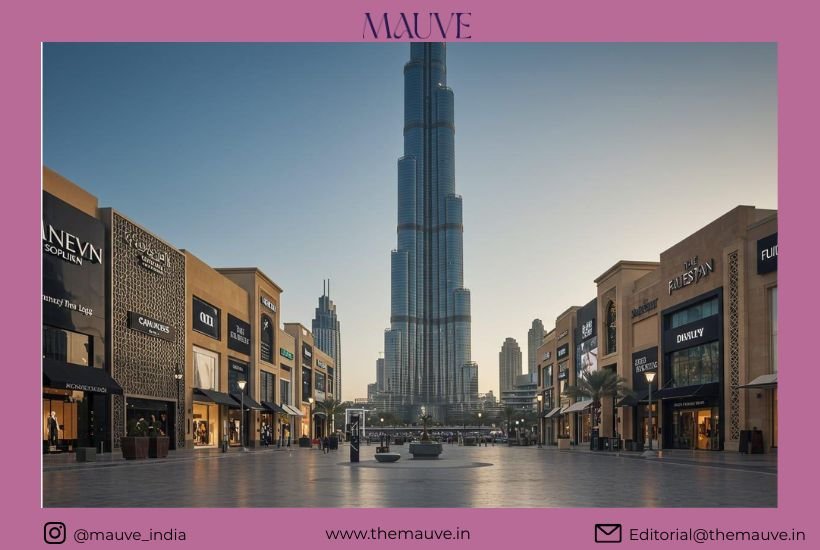
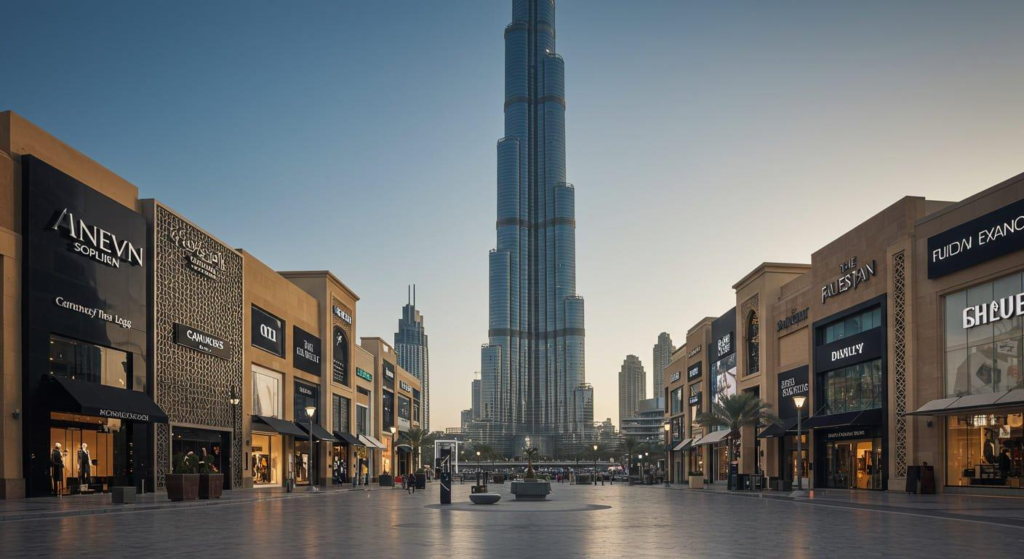
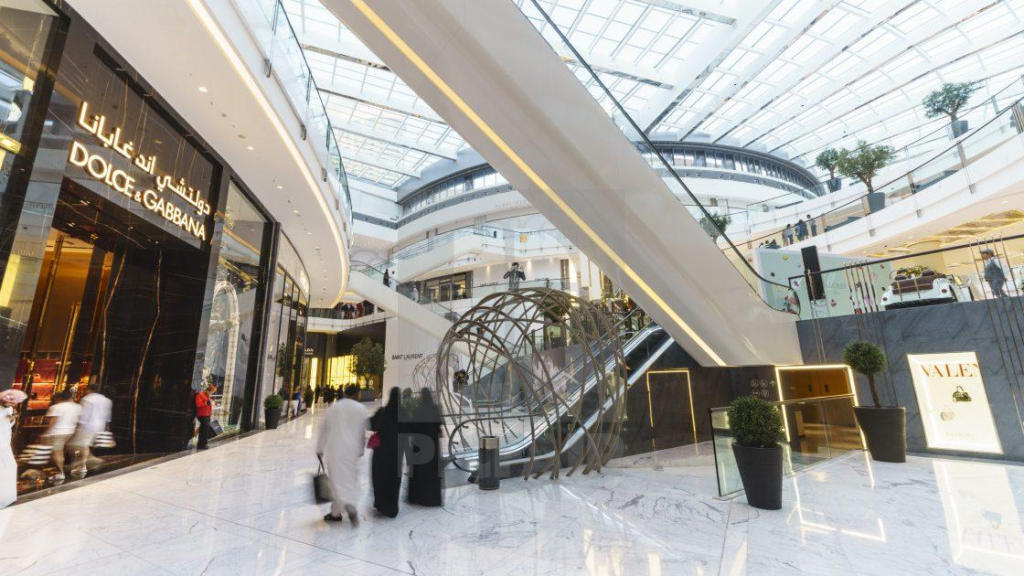
At Dubai Mall, the scale itself becomes part of the experience. The mall has more than 1,200 stores, and its official website offers an interactive map to help visitors locate individual brands. Its directory spans fashion, beauty, jewellery, watches, dining and entertainment.
And somewhere between finding the right floor, the right entrance and the right luxury wing, you realise something about Dubai: luxury here isn’t an occasional indulgence. It is infrastructure.
6
What Makes Dubai Feel So Elite?
Luxury cities traditionally have a particular language.
Paris has couture.
Milan has fashion.
London has heritage.
New York has power.
Dubai has something slightly different: scale.
It takes the conventions of luxury and makes them bigger, newer, more accessible and, often, more spectacular.
The city has built an ecosystem where a luxury apartment can come with hotel-style services; a fashion brand can become part of a real-estate development; a restaurant can be an experience rather than simply a place to eat; and beauty maintenance can become part of one’s regular lifestyle.
This is why Dubai’s luxury story cannot really be told through handbags or penthouses alone.
It has to be understood as an interconnected economy of property, fashion, beauty, hospitality, wellness, cars, jewellery, travel and personal image.
And the numbers support the cultural perception.
Visa’s Global Economic Insight research, cited in the material supplied for this story, found that while luxury spending cooled across major global cities during the first half of 2025, Dubai remained remarkably resilient. Nearly one in nine Dubai residents made a luxury purchase each quarter, while around 37% of households were earning more than $150,000 a year.
That is a very different consumer ecosystem from a city where luxury exists primarily for tourists.
Dubai has built a population that can sustain it.
The Mall Is a Microcosm of the City
Perhaps the best way to understand Dubai’s luxury obsession is to look at its malls.
The city has effectively turned shopping into urban architecture.
Dubai Mall’s Fashion Avenue is positioned as one of the region’s most exclusive shopping destinations, with brands including Cartier, Bvlgari, Chopard, Louis Vuitton, Tiffany & Co., Chanel, Graff and others.
The extraordinary part isn’t simply that these brands are present.
It is that there are enough of them, and enough customers for them, to justify creating entire districts around the idea of luxury consumption.
That is the Dubai difference.
Here, luxury doesn’t necessarily mean finding a discreet boutique tucked away on a historic street. It can mean walking through an enormous climate-controlled ecosystem where haute jewellery, fashion, fragrance, restaurants, beauty clinics and entertainment coexist.
Even the act of finding a shop becomes part of the spectacle.
Real Estate and Fashion: Two Sides of the Same Wealth
Dubai’s property boom and its fashion boom are not separate stories.
They are, in many ways, the same story.
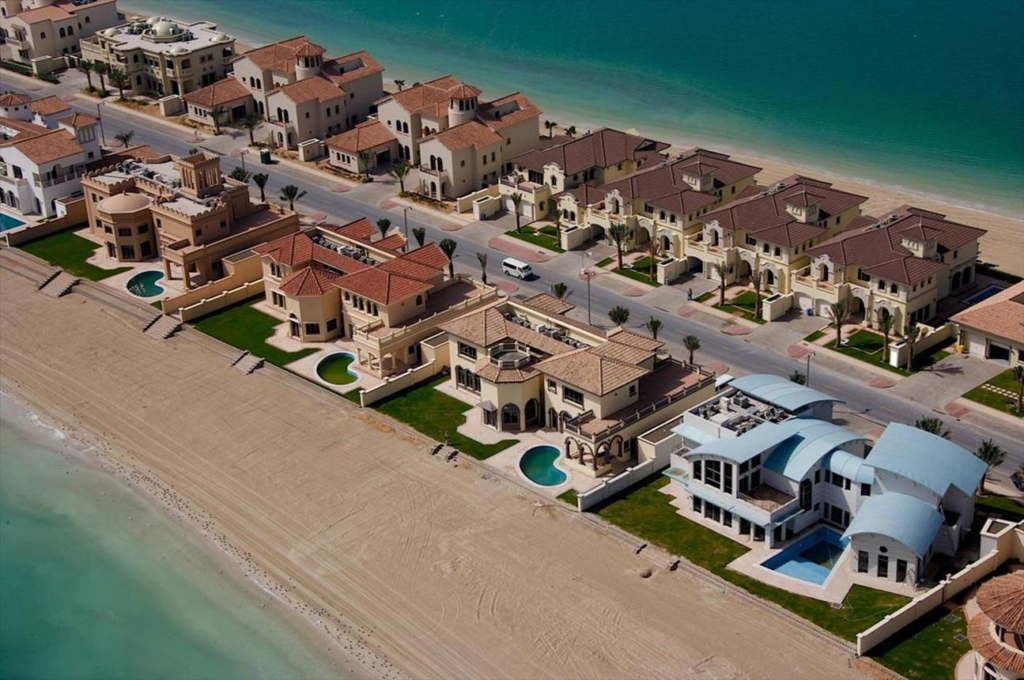
The person buying a multimillion-dollar waterfront villa is also part of the consumer ecosystem that supports luxury fashion, watches, jewellery, cars, hospitality and beauty.
And the reverse is true.
A city that attracts the global luxury consumer creates demand for the kind of residences that accommodate that lifestyle.
This explains the rise of branded residences in Dubai.
The idea of buying a home associated with a luxury brand has expanded rapidly across global markets. By 2025, the global branded-residence sector had grown to 611 developments, according to Knight Frank data reported by the Financial Times, with brands from fashion, automotive and other luxury categories increasingly entering residential real estate.
Dubai is particularly suited to this model.
Because here, the brand is not merely selling an apartment.
It is selling belonging.
A branded residence promises the same language as luxury fashion: recognition, exclusivity, service and identity.
The logo on the handbag and the name on the building begin to speak the same language.
When Your Home Becomes Your Status Symbol
Dubai’s ultra-luxury property market increasingly revolves around privacy and experience.
Waterfront villas, private pools, private beaches, penthouses, concierge services and residences connected to global luxury brands all cater to the same desire: to live exceptionally without having to leave the property.
The supplied market data points to record-breaking transactions including an AED 425 million Emirates Hills mansion, an AED 300 million Palm Jumeirah beachfront villa and an AED 282 million Bulgari Lighthouse penthouse.
These aren’t simply houses.
They are architectural statements.
And that distinction matters.
Because in Dubai, real estate is increasingly part of personal branding.
The address says something about you.
The view says something about you.
The size of your terrace says something about you.
And increasingly, the brand attached to your home says something about you.
Then Comes the Face
But Dubai’s luxury culture doesn’t stop at what you wear or where you live.
It extends to how you look.
This is where the city’s beauty and aesthetics economy enters the picture.
Botox, fillers, skin treatments, lasers, facials, body treatments, hair restoration, wellness programmes and preventative aesthetics have all become part of a broader global shift in which beauty maintenance is increasingly treated as routine rather than exceptional.
Botox itself has moved far beyond its old association with Hollywood secrecy. The Washington Post reported in 2025 that neuromodulator treatments had become increasingly normalised, with younger consumers and mainstream beauty culture helping turn injectables into an increasingly familiar part of aesthetic maintenance.
Dubai’s particular relationship with beauty fits neatly into its wider culture of presentation.
When the city places enormous value on looking successful, looking polished becomes part of the social currency.
The perfectly dressed woman at lunch.
The impeccably groomed businessman.
The influencer photographed beside a supercar.
The real-estate agent presenting a penthouse.
The entrepreneur at a luxury hotel.
The face becomes part of the brand.
And beauty maintenance becomes less about vanity and more about curating an image of success.
There is an important evolution happening here, too. Luxury beauty is increasingly moving away from the obvious “work done” aesthetic towards subtle, preventative and wellness-led treatments. Contemporary luxury beauty is beginning to sell the appearance of effortlessness: better skin, rested faces, longevity and refinement rather than dramatic transformation.
In other words, the new luxury face may be the face that looks like it has had nothing done to it.
High Living Is the Product
Dubai’s greatest luxury may ultimately be convenience.
A private driver.
A concierge.
Valet parking.
A personal shopper.
A private chef.
A stylist.
A trainer.
A beauty appointment.
A restaurant downstairs.
A beach club five minutes away.
A helicopter transfer when the road feels inconvenient.
The city has developed an economy around eliminating friction.
Even its malls are designed around this principle. Dubai Mall, for instance, offers guest service desks, valet parking, delivery services and digital mapping alongside its enormous retail offering.
This is important because modern luxury has changed.
Luxury used to be about having things other people couldn’t afford.
Increasingly, it is about having access to a life other people cannot easily replicate.
Time becomes luxury.
Privacy becomes luxury.
Convenience becomes luxury.
Personalisation becomes luxury.
And Dubai is exceptionally good at packaging all four.
The City Where Luxury Feeds Luxury
This is perhaps why Dubai’s luxury economy is so difficult to compare with traditional luxury capitals.
Its ecosystem is circular.
Wealth attracts luxury.
Luxury attracts wealthy people.
Wealthy people drive real estate.
Real estate creates demand for fashion and interiors.
Fashion and beauty reinforce social status.
Hospitality packages the lifestyle.
And the lifestyle attracts more wealth.
The result is a city where luxury isn’t confined to a particular neighbourhood or social occasion.
It is everywhere.
In the lobby.
In the lift.
At the airport.
At the mall.
At the restaurant.
In the showroom.
In the clinic.
And, increasingly, at home.
Dubai Doesn’t Just Sell Luxury. It Sells the Feeling of Being Wealthy.
That may be the real secret behind Dubai’s rise.
The city understands that the luxury consumer isn’t necessarily buying a handbag, a watch, a penthouse or a beauty treatment in isolation.
They are buying a life narrative.
A life that looks successful.
A life that feels effortless.
A life surrounded by exceptional service.
A life where bigger, newer and more exclusive are not extraordinary — they are simply the baseline.
And perhaps that is why Dubai requires a map even to find a shop.
Because the city has built something far larger than a shopping destination.
It has built an entire geography of luxury.
And as wealth continues to flow into its real estate, fashion, hospitality and beauty industries, that geography is only getting bigger.