The new handcrafted collection pairs heritage rug-making with a giving initiative that turns every purchase into a contribution towards essential food supplies.
Luxury interiors have long been defined by what they place inside a home: rare materials, considered craftsmanship, distinctive design and objects that carry a sense of permanence. But increasingly, the conversation around luxury is also moving towards what a purchase makes possible beyond itself.
Saraswati Rugs’ new Niwaala Collection enters that conversation with a proposition that brings craftsmanship and conscious giving together. Launched in Mumbai on September 2, the collection combines handcrafted rugs rooted in India’s rug-making heritage with a social initiative that directs a share of net sales towards essential food and grocery support.
Its philosophy is summed up in four words: “Your Rug. Their Niwaala.”
The New Language of Conscious Luxury
The luxury industry has spent years redefining the relationship between consumption and responsibility. For consumers buying into premium interiors today, provenance, craftsmanship and longevity increasingly sit alongside questions of impact.
A handcrafted rug naturally lends itself to this conversation.
Unlike objects produced for rapid consumption, a rug can remain in a home for years, sometimes becoming part of its history. It can define a room, carry a memory and eventually become something that is passed down. The value is therefore not only in its material or appearance, but in the time, skill and human effort embedded within it.
Niwaala builds on that idea while adding another layer: the purchase itself contributes to someone else’s everyday needs.
Through the Niwala Fund, in association with the Saraswati Foundation, a share of the net sales from every Niwaala Collection rug is contributed towards food and grocery support for families and individuals in need.
The initiative focuses particularly on the weaver community as well as families, attendants and individuals around selected government hospitals.
Where Craft Meets Giving
Niwaala is not positioned as a charity collection disguised as décor. The rugs remain at the centre of the proposition.
The collection brings together intricate detailing, varied textures, considered colours and contemporary compositions while retaining a connection to India’s longstanding tradition of handmade rug-making.
That balance is important.
Contemporary luxury increasingly depends on the ability to make heritage feel relevant without reducing it to nostalgia. Niwaala approaches traditional craftsmanship through pieces designed for modern interiors, allowing the visual language of Indian rug-making to exist within a contemporary home.
The result is a collection where the story is not separate from the object. The craftsmanship gives the rug its character; the giving initiative gives the purchase another dimension.
The One-Off Rug
One of the collection’s most distinctive elements is its Signature Piece.
Created in a distinctive size and composition, the piece is produced only once and will never be recreated.
In an industry where design can often be reproduced across collections and markets, deliberate non-repetition introduces something increasingly rare: certainty that a particular object will remain singular.
Rarity, after all, does not necessarily have to come from a precious material. It can come from the decision not to make something twice.
For collectors and design-conscious homeowners, that changes the relationship with the object. The rug is not simply another piece from a larger catalogue; it becomes an individual work with its own place in the history of the home.
What “Your Rug. Their Niwaala.” Really Means
The collection’s social component is designed around a straightforward premise.
Every rug purchased contributes towards the Niwala Fund, which supports essential grocery kits containing everyday staples such as atta, rice, dal, cooking oil, sugar, salt and spices.
The initiative also aims to maintain records of funds generated, kits distributed and communities reached, creating an ongoing mechanism through which its impact can be tracked and strengthened.
There is something significant about the simplicity of this model.
Rather than asking consumers to make a separate charitable decision, Niwaala integrates giving into an existing act of consumption. The rug remains a luxury purchase, but the transaction carries a second outcome.
That reflects a broader evolution in conscious luxury: the idea that indulgence and impact do not necessarily have to exist at opposite ends of the spectrum.
An Evening Built Around the Idea of Intimacy
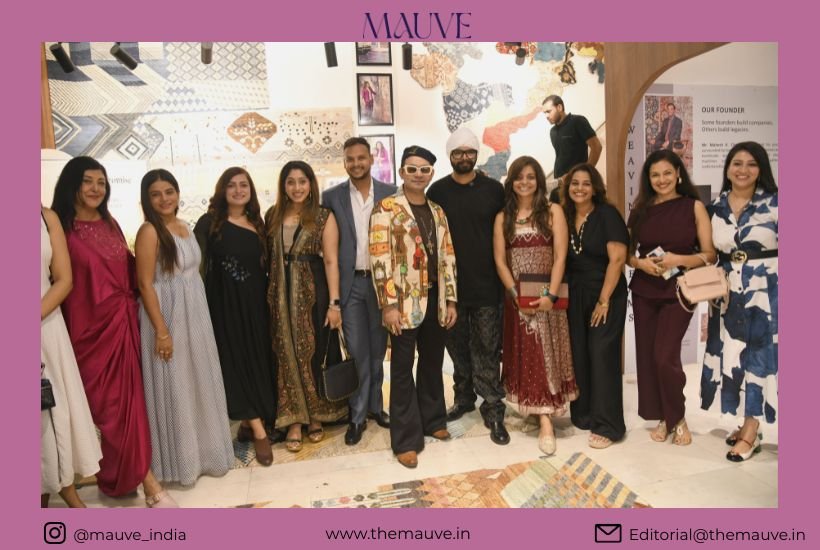
The Mumbai launch reflected the collection’s positioning.
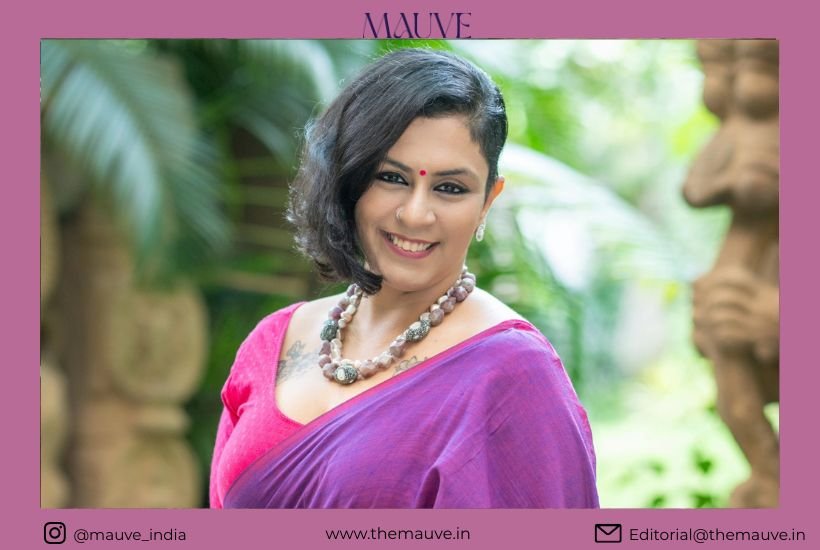
Hosted and curated by Bandita Patro, Image & Brand Consultant, the evening brought together design, fashion and creative personalities in an intimate setting. Raj Choudhary and Anupriya Choudhary launched the collection, with actress Arti Singh attending as Chief Guest.
The evening also included soulful music, curated conversations, wine and cheese, creating an environment designed less like a conventional product launch and more like a private introduction to a design collection.
That distinction matters for luxury brands.
When the product is rooted in craftsmanship, the experience around it becomes part of the storytelling. A rug is not particularly easy to communicate through specifications alone. Its texture, scale, colour and workmanship need to be experienced.
Niwaala’s launch therefore brought together the three elements that define the collection: design, heritage and purpose.
Why Indian Craftsmanship Still Matters
Saraswati Rugs’ proposition also sits within a much larger conversation around Indian craftsmanship.
India’s handmade textile and rug traditions represent generations of knowledge, from weaving techniques and pattern-making to the understanding of materials and regional aesthetics. Yet traditional craftsmanship faces the continuing challenge of remaining commercially relevant in a world increasingly shaped by industrial production and rapid consumption.
Luxury can play a role here.
When craftsmanship becomes desirable within contemporary interiors, traditional skills gain a new market rather than surviving solely as cultural artefacts.
For Saraswati Global, which was founded in 1986 and has built its business around handmade area rugs, artisans and weavers remain central to that proposition. The company describes itself as India’s largest vertically integrated rug production syndicate, producing rugs across price points and constructions for design, retail, hospitality, commercial and big-box distribution channels.
Niwaala takes that manufacturing and craft heritage into a more purpose-led territory.
The Future of Luxury May Be More Personal
There is a larger shift behind collections like Niwaala.
Luxury was once largely communicated through scarcity, status and price. Today, those markers remain relevant, but they are increasingly being joined by provenance, personal meaning and impact.
Consumers want to know what they are buying, but also where it comes from, who made it and what the purchase represents.
For interiors, this shift is particularly interesting because homes are becoming increasingly personal expressions of identity. A handcrafted object can carry the story of a maker, a region, a technique or a cause alongside its visual appeal.
That gives objects a kind of emotional permanence that mass-produced décor struggles to replicate.
Niwaala’s proposition is therefore larger than a new rug collection. It is an attempt to connect the private world of luxury interiors with the public idea of social responsibility.
And perhaps that is where conscious luxury becomes most compelling—not when it asks people to choose between beauty and purpose, but when it makes the two part of the same purchase.