From Aishwarya Rai Bachchan’s regal couture to Janhvi Kapoor’s reimagined saree, Nora Fatehi’s leather statement, Tara Sutaria’s understated tailoring and Khushi Kapoor’s dramatic trench, seven stars bring seven distinct interpretations of global glamour to Paris Fashion Week 2026.
By The Mauve Desk
Paris has always understood the power of a fashion moment. A silhouette can become a statement, a fabric can tell a story, and a single appearance can set the tone for an entire season.
At Paris Fashion Week 2026, Bollywood’s leading women are bringing their own interpretations to the international fashion conversation. Some are embracing the grandeur of couture; others are experimenting with contemporary proportions, rich autumnal colours and Indian craftsmanship. What emerges is not one definitive vision of celebrity style, but a collection of individual fashion identities.
Aishwarya Rai Bachchan brings the drama. Janhvi Kapoor places Indian textiles in the spotlight. Nora Fatehi experiments with leather and colour, Aditi Rao Hydari challenges conventional occasion dressing, Huma Qureshi makes a case for modern power tailoring, Tara Sutaria champions understated elegance, and Khushi Kapoor turns a trench coat into a statement of its own.
Together, these appearances offer a compelling look at how Bollywood is engaging with global luxury fashion.
1. Aishwarya Rai Bachchan: When Glamour Becomes Theatre
The aesthetic: Regal, dramatic and unapologetically couture
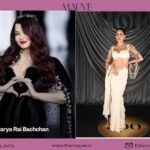
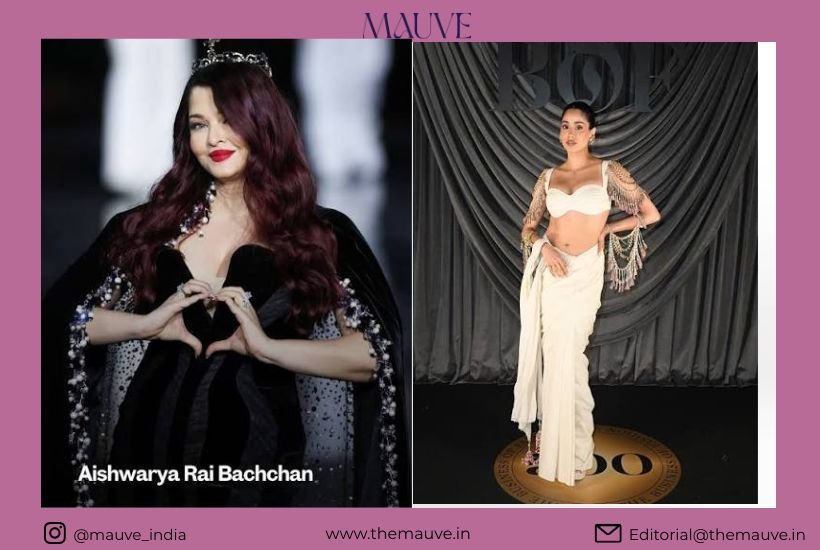
Aishwarya Rai Bachchan has never needed to dress quietly to make an impression. At L’Oréal Paris’s Le Défilé during Paris Fashion Week, the actor embraced the grand tradition of fashion as spectacle.
Her dramatic black velvet creation by Yara Shoemaker featured a crystal-embellished cape, while a statement tiara and burgundy-red hair completed the look. The combination balanced the richness of velvet with the luminosity of embellishment, creating a silhouette that felt closer to a modern royal portrait than conventional runway dressing.
What made the appearance work was its commitment to a singular vision. Rather than dilute the drama with minimalist accessories, the styling embraced it. The cape, the tiara and the saturated hair colour all belonged to the same visual story.
In an era when quiet luxury remains a significant fashion conversation, Aishwarya’s appearance offered a reminder that maximalism still has a place when every element feels intentional.
The Mauve perspective: There is a difference between wearing a statement and embodying one. Aishwarya’s Paris appearance belonged firmly to the latter category.
2. Janhvi Kapoor: The Saree Finds Its Parisian Moment
The aesthetic: Heritage craftsmanship meets contemporary sensuality
At a time when conversations around luxury increasingly include craftsmanship, provenance and cultural identity, Janhvi Kapoor’s Paris wardrobe offered a particularly compelling statement.
At the Business of Fashion BoF 500 Gala, Janhvi wore a custom ivory Bengal muslin saree by Pankaj S Heritage, styled by Rhea Kapoor. The 460-count fabric, associated with the historic tradition of exceptionally fine Bengal muslin, brought extraordinary delicacy to an ensemble that reinterpreted traditional Indian dressing through a contemporary lens. <Cite refs={[“turn240123search4″,”turn240123news8”]}/>
The ruched bustier and pleated drape created a modern silhouette, while intricately embellished sleeves featuring polkis, garnets and emeralds introduced a jewellery-like dimension. The pallu, detailed with chikankari embroidery, added another layer of craftsmanship.
The effect was neither conventionally traditional nor dependent on Western codes of glamour. Instead, the look allowed Indian textile artistry to remain the central character.
Janhvi’s other Paris appearances offered a contrasting interpretation of her style. At Miu Miu’s Spring/Summer 2027 show, she embraced a more playful combination of knitwear, a patterned mini dress, a plush gilet and boots.
The two looks demonstrated how her Paris wardrobe could move between the intricacy of Indian craftsmanship and the experimental language of contemporary luxury fashion.
The Mauve perspective: The saree does not need to be reinvented to remain relevant. Sometimes, it simply needs a new context, a thoughtful drape and the freedom to be interpreted differently.
3. Nora Fatehi: Leather, Colour and the Art of Contrast
The aesthetic: Sculptural silhouettes with a bold colour story
Nora Fatehi’s Paris Fashion Week appearances demonstrated how a familiar wardrobe staple can become a fashion statement through proportion, texture and colour.
For the Christian Louboutin show, Nora wore a structured chocolate-brown mini dress by Mugler, paired with sheer black stockings and glossy red heels. A matching red handbag provided an equally deliberate finishing touch. <Cite refs={[“turn240123search1″,”turn240123search3”]}/>
Brown is often treated as a grounding neutral, while red tends to demand attention. Together, they created a visual tension that felt both polished and unexpected. The sleek silhouette allowed the accessories to stand out without competing with excessive detailing.
Nora also experimented with an all-black leather ensemble, wearing a structured, cinched-waist jacket with a matching mini skirt and sheer tights. The look drew on the appeal of leather dressing while retaining a defined, feminine silhouette.
The contrast between the two appearances was revealing. One relied on the interplay of rich brown and vibrant red; the other explored the power of a monochromatic leather look.
Both demonstrated that a strong silhouette can do much of the work, leaving colour and accessories to establish the mood.
The Mauve perspective: Sometimes, the difference between an ordinary outfit and an exceptional one is a colour combination that feels just a little unexpected.
4. Aditi Rao Hydari: The Case for Breaking Fashion’s Rules
The aesthetic: Romantic, rebellious and deliberately unconventional
Aditi Rao Hydari has often been associated with a softer, more romantic approach to dressing. In Paris, she demonstrated how interesting that aesthetic can become when it is pushed in an unexpected direction.
For Christian Louboutin’s Spring/Summer 2027 presentation, Aditi wore a sheer, embellished longline coat with brown faux-fur trim from Self-Portrait, paired with relaxed light-blue denim. Cherry-red heels and a matching handbag introduced a vivid accent, while jewellery completed the ensemble. <Cite refs={[“turn240123search5″,”turn240123search1”]}/>
The contrast was the point. The ornate coat introduced texture, delicacy and a sense of old-world drama; the jeans brought an everyday informality that prevented the ensemble from feeling overly precious.
There was romance, but it was not overly sweet. There was casual dressing, but it was not careless. The tension between the two gave the outfit its personality.
The appearance also challenged the familiar expectation that a major fashion-week look must revolve around a gown or a sharply tailored suit. Instead, Aditi demonstrated how contrasting elements can create their own kind of sophistication.
The Mauve perspective: The most interesting outfits do not always obey the rules of occasion dressing. Sometimes, a pair of jeans is precisely what a dramatic coat needs.
5. Huma Qureshi: Chocolate Brown Is the New Power Suit
The aesthetic: Modern power dressing with a luxurious edge
Power dressing has long relied on the authority of a sharply tailored black suit. Huma Qureshi’s Paris wardrobe suggested that the formula has room for a richer, more nuanced alternative.
One of her standout looks featured an olive-green trench coat paired with black heels, while her tailored appearances embraced the appeal of structured silhouettes and sophisticated autumnal colours. <Cite refs={[“turn240123search1”]}/>
The wider appeal of Huma’s fashion choices lies in their balance of structure and ease. A defined waist, considered proportions and understated accessories can make tailoring feel contemporary without sacrificing its authority.
Autumnal colours also offer an alternative to conventional black eveningwear. Olive, chocolate and caramel tones bring depth to a wardrobe, working across daywear, formal dressing and transitional separates.
For Huma, the result is a fashion language that prioritises confidence over excess: pieces that make an impression through cut, colour and fit rather than unnecessary embellishment.
The Mauve perspective: A great power look does not need to be loud. The right proportions, a considered palette and confident styling can communicate authority just as effectively.
6. Tara Sutaria: The Quiet Luxury of a Perfectly Cut Trench
The aesthetic: Understated Parisian elegance
Tara Sutaria made a case for the power of a beautifully constructed outerwear piece during her Paris Fashion Week appearance at the Hermès show.
Her look centred on a long tan suede trench coat with structured lapels, layered over a fitted black turtleneck. She completed the ensemble with sheer black tights, pointed-toe stilettos and a structured black shoulder bag. Silver hoop earrings, dark sunglasses and a sleek high bun kept the styling polished without distracting from the silhouette. <Cite refs={[“turn240123news7”]}/>
The appeal lay in the interplay of texture and proportion. The warm, tactile suede softened the sharp tailoring, while the black base created a clean contrast that allowed the coat to take centre stage.
There was no need for excessive embellishment or an elaborate colour palette. The outfit relied on considered proportions, rich materials and accessories that served a purpose.
Tara’s look also offered a practical lesson in transitional dressing: a statement coat can transform familiar wardrobe staples into something that feels distinctly elevated.
The Mauve perspective: True luxury does not always announce itself. Sometimes, it is the quality of a fabric, the precision of a cut and the confidence to leave everything else understated.
7. Khushi Kapoor: Burgundy Leather and the New Power Dressing
The aesthetic: Bold, sculptural and unapologetically modern
Khushi Kapoor took a more dramatic approach to Parisian dressing with a floor-length burgundy trench that transformed classic outerwear into the centrepiece of an entire look.
At Messika’s high-jewellery showcase, Khushi wore a burgundy vegan-leather creation from Ukrainian label Kris Marán, styled by Rhia Kapoor. The elongated silhouette, oversized lapels and defined waist gave the ensemble a sculptural quality. <Cite refs={[“turn240123search1″,”turn240123search3”]}/>
The deep wine colour added richness, while the trench’s construction provided the drama. Rather than relying on multiple layers or competing prints, the look allowed one statement piece to establish its identity.
Burgundy has become a compelling alternative to conventional black eveningwear, bringing warmth and depth to a wardrobe while retaining a sense of formality. Khushi’s interpretation took that idea further by combining the structure of a trench with the impact of a floor-length statement garment.
Coordinated jewellery added a polished finish without distracting from the strong silhouette.
The result was modern power dressing with a fashion-forward edge: less about the traditional suit and more about material, proportion and attitude.
The Mauve perspective: The most interesting wardrobe pieces often refuse to stay in their assigned category. Khushi’s trench was not simply outerwear; it became the entire look.
Seven Stars, Seven Different Definitions of Glamour
What connects these appearances is not a shared aesthetic. In fact, their differences are precisely what make the Paris fashion conversation interesting.
Aishwarya embraces the spectacle of couture, using velvet and embellishment to create a cinematic presence. Janhvi places Indian textile heritage at the centre of a contemporary luxury look. Nora experiments with leather, colour and body-conscious silhouettes, while Aditi challenges the boundaries between occasion dressing and everyday pieces.
Huma’s tailoring offers a more structured approach to glamour, Tara champions the understated appeal of suede and classic proportions, and Khushi uses a single dramatic garment to establish an unmistakable visual identity.
Each look operates by a different set of rules, and none needs to imitate another to make an impression.
This diversity reflects a wider shift in how Indian celebrities engage with international fashion. The conversation is no longer limited to wearing a prestigious label or securing a place in the front row. The most compelling appearances are those in which clothing, styling and the wearer come together to express a clear point of view.
Beyond the Front Row: What These Looks Say About Indian Fashion
Paris Fashion Week is one of fashion’s most visible international stages, but its significance extends beyond the runway.
For Indian celebrities, it offers a space to engage with global luxury houses while presenting different dimensions of their own style identities. That can mean embracing European couture, experimenting with contemporary silhouettes or bringing Indian textiles and artisanal traditions into an international conversation.
Janhvi’s Bengal muslin saree is particularly significant in this context. It demonstrates that Indian craftsmanship can be presented as contemporary luxury without being stripped of its cultural character. Meanwhile, the contrasting looks worn by Aishwarya, Nora, Aditi, Huma, Tara and Khushi show that there is no single template for Indian glamour.
The opportunity lies in individuality: in knowing when to embrace drama, when to exercise restraint and when to challenge an established fashion formula.
These appearances also highlight the importance of styling as a form of storytelling. A trench coat can become eveningwear; denim can balance an embellished coat; a saree can become an exploration of textile heritage; and a carefully chosen colour can change the entire mood of an outfit.
The result is a fashion conversation that is less about following one global aesthetic and more about making personal style visible on an international stage.
The Mauve Verdict
The best fashion weeks do more than give us a collection of beautiful photographs. They reveal something about how style is changing.
This season, Bollywood’s Paris appearances move between couture fantasy, textile heritage, bold colour, unconventional layering, refined suede and modern tailoring. Each woman offers a different answer to the same question: what does it mean to dress with intention?
The answer is not to follow one particular aesthetic. It is to understand your own.
And in Paris, that may be the most compelling fashion statement of all.