From innerwear to loungewear, 900+ styles and plans for 100 exclusive stores, Juliet Apparels enters its Golden Jubilee year by looking firmly towards the next generation of Indian consumers.
There is something revealing about the way a fashion brand chooses to celebrate 50 years.
For Juliet Apparels, the answer isn’t nostalgia alone. Its Golden Jubilee year is being marked by a forward-looking Summer 2027 showcase in Mumbai, where the brand is bringing together more than 900 styles, around 500 retailers and distributors, and a larger retail ambition that could see 100 exclusive Juliet outlets across India.
Taking place from August 31 to September 3 at Sahara Star Hotel, Mumbai, the four-day Summer Booking 2027 event is less about looking back at where Juliet began and more about understanding where a legacy Indian apparel brand believes its consumer is headed.
Founded in 1976, Juliet started with women’s innerwear before gradually expanding into nightwear, loungewear, western wear and ethnic wear. Fifty years later, the category landscape has changed considerably. Comfort has moved from being a functional consideration to a fashion conversation, while loungewear has increasingly become part of the everyday wardrobe.
Juliet’s Summer 2027 collection sits directly within that shift.
The 900-Style Question
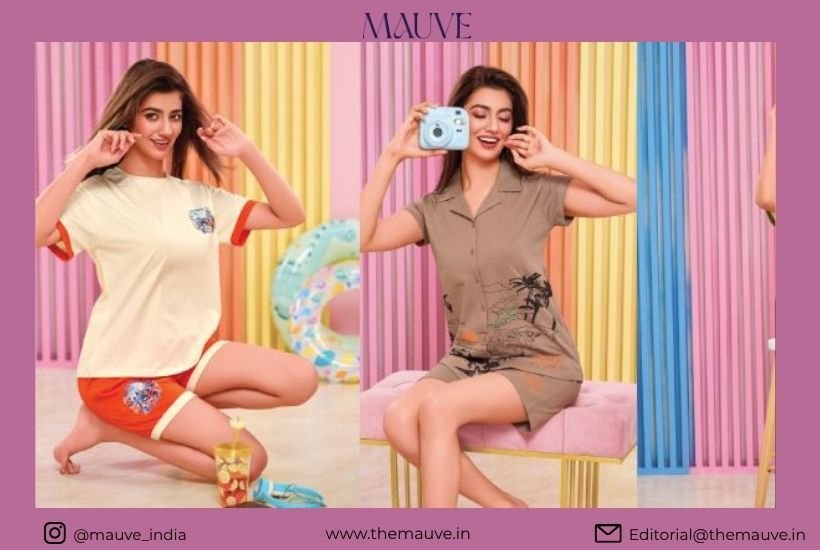
With more than 900 SKUs spanning pyjama sets, shorts sets and shirt-pyjama sets, the collection is substantial by design.
Hosiery fabrics remain central to the range, but the visual language has moved with the consumer. Contemporary colours, playful prints and relaxed silhouettes bring a younger sensibility to a category traditionally defined primarily by comfort and practicality.
The interesting part is that Juliet isn’t abandoning what made the brand familiar in the first place.
Comfort remains the foundation. The difference is that comfort is now being interpreted through a more contemporary lens.
For a brand that began in 1976, this becomes particularly significant. The woman buying Juliet today is not necessarily shopping in the same way as the woman who encountered the brand decades ago. Her wardrobe is more fluid, the boundaries between homewear and casualwear are less rigid, and fashion increasingly has to work around real life.
The Summer 2027 range appears designed for exactly that reality.
Fifty Years, But Not Standing Still
Juliet’s Golden Jubilee is also a reminder of how dramatically India’s women’s apparel market has evolved.
The brand’s journey from innerwear into a broader wardrobe proposition reflects a larger movement within Indian fashion: consumers increasingly expect brands to understand multiple aspects of their lifestyle rather than simply one product category.
Nightwear became loungewear. Loungewear became daywear. Comfort became a design proposition.
Juliet’s expansion follows that trajectory while retaining the comfort-led DNA that has defined the business for decades.
At the Mumbai showcase, the brand expects around 100 retail partners each day, with retailers and distributors travelling from markets including Maharashtra, Gujarat, Karnataka, Andhra Pradesh, Telangana, Tamil Nadu, Madhya Pradesh, Rajasthan, Uttar Pradesh, Odisha and several others.
That geographical spread matters.
For an Indian apparel brand, the relationship between manufacturer, retailer and consumer remains an important part of the business. The Summer Booking event therefore functions as more than a collection preview. It becomes a meeting point between Juliet and the network that has helped it build a pan-India presence.
From Multi-Brand Shelves to Juliet Stores
Perhaps the more consequential announcement sits beyond the Summer 2027 collection.
Juliet is planning to establish 100 exclusive brand outlets across India, while also exploring partnerships with existing retailers interested in converting their multi-brand stores into exclusive Juliet outlets.
It signals a move towards greater control over how the brand is presented and experienced.
For legacy fashion businesses, this transition can be particularly important. Multi-brand retail offers reach, but an exclusive store offers something else: the ability to communicate an entire brand universe rather than a single category.
For Juliet, whose portfolio now extends from intimate apparel to loungewear, western and ethnic wear, that distinction could become increasingly valuable.
The Retailer Is Still at the Centre
The scale of the Summer Booking 2027 event also reveals how important the B2B ecosystem remains to the brand.
Juliet is targeting orders of more than 3,00,000 pieces across the four-day showcase, while using the event to discuss consumer trends, upcoming collections and business opportunities directly with its retail partners.
In an industry increasingly obsessed with direct-to-consumer growth, social commerce and digital discovery, the continued importance of physical retail is easy to overlook.
But India’s fashion market remains deeply heterogeneous. Different cities, regions and consumer groups have different preferences, price sensitivities and shopping habits.
A retailer often understands those nuances before a dashboard does.
For Juliet, its retailer network is therefore not simply a distribution channel. It is part of the feedback loop that allows a 50-year-old brand to understand what the next generation is actually buying.
Building for the Next 50
“As we complete 50 years, this showcase is a moment to thank the retailers who have stood by us across generations, and to show them where we are headed next. Our focus remains on comfort and quality, but we are building it for a new generation of Indian consumers,” said Shashikant Trevadia, Founder and Director, Juliet Apparels.
That final distinction may be the most important one.
Juliet isn’t positioning its next chapter as a departure from its history. Instead, the strategy appears to be about translating the values that built the business into categories and formats that make sense today.
The Summer 2027 collection, the expansion into exclusive stores and the continued investment in its retail network are all pieces of the same puzzle.
A brand that has survived five decades in Indian fashion doesn’t necessarily need to reinvent itself completely.
Sometimes, it simply needs to understand what its original promise means to a new generation.
And for Juliet, that promise still begins with comfort.
It just looks considerably more fashionable now.