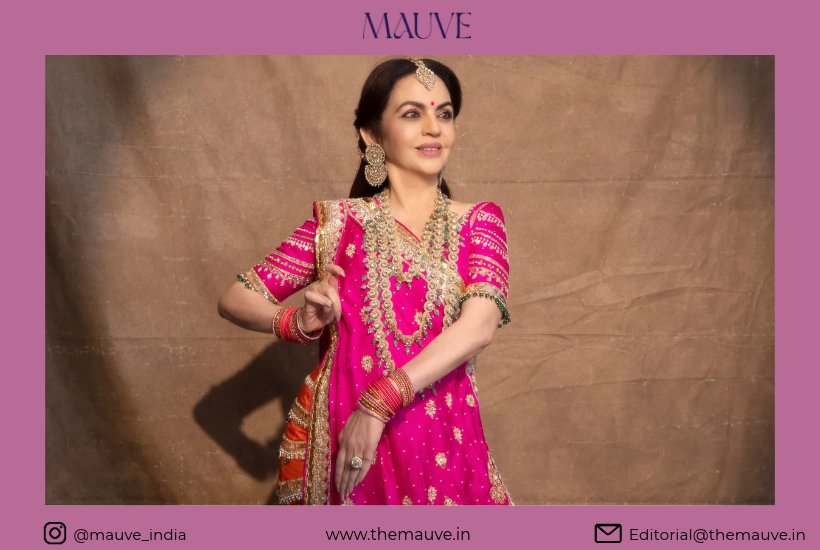
Featuring intricate aari, zardozi and badla embroidery, the jewel-toned creation brings together the richness of Banarasi weaving and the artistry of traditional Indian craftsmanship.
When heritage craftsmanship meets contemporary couture, the result is often a celebration of India’s extraordinary textile legacy. Nita Ambani’s latest traditional ensemble is a case in point. For a Bharatanatyam performance at the Nita Mukesh Ambani Cultural Centre, the philanthropist turned to a bespoke Banarasi sari by celebrated designer Manish Malhotra, bringing together intricate embroidery, rich silk textures and the timeless elegance of Indian draping.
Crafted in a striking combination of orange and fuchsia pink, the ensemble draws attention to the intricate artistry of Banarasi textiles. The orange section of the sari features recurring woven shankh motifs, a sacred conch symbol deeply rooted in Indian cultural and spiritual traditions. Adding further dimension to the weave are elaborate aari and zardozi embroideries in gold and silver, complemented by delicate pearls, sequins and touches of traditional badla work.
The craftsmanship extends beyond the borders, with intricate embellishments placed across the sari to create the illusion of body jewellery around the hip. The sari is paired with a fuchsia-pink Tanchoi silk blouse, featuring green beaded sleeve hems that evoke the appearance of traditional bajubands.
The draping, too, has been thoughtfully considered. Pre-pleated for ease of movement, the sari is styled in a seedha pallu drape, allowing the ensemble to accommodate the graceful movements and expressive gestures of Bharatanatyam while retaining its traditional aesthetic.
Jewellery plays an equally important role in completing the look. Ambani accessorised the ensemble with a three-tiered haar featuring diamonds and green precious stones, elaborate pearl and diamond earrings, a matching maang tikka, and stacked bangles in shades of orange and pink. An oversized kundan ring added another statement detail to the traditional jewellery selection.
Her beauty look complemented the jewel-toned ensemble, with understated nude-toned makeup, soft pink lips and a matching fuchsia bindi. Her hair was styled in a classic half-up, half-down arrangement, keeping the overall look elegant and rooted in tradition.
The choice of a Banarasi sari for a classical dance performance also reflects a larger appreciation for India’s regional textile traditions. Known for their intricate weaving, luxurious silk and elaborate motifs, Banarasi saris remain among the country’s most celebrated expressions of artisanal craftsmanship.
Interestingly, the occasion also recalls another recent cultural moment within the Ambani family. During Ganesh Chaturthi celebrations at their residence, Radhika Ambani performed a Bharatanatyam sequence in a Kanchipuram silk sari designed by Manish Malhotra, featuring elaborate gold marodi embroidery and zardozi detailing.
Through these sartorial choices, traditional Indian textiles find renewed expression in contemporary cultural settings, reaffirming the enduring appeal of heritage craftsmanship and the artistry behind India’s most treasured weaves.