From CarryMinati collaborations and humour-led campaigns to affordable menu innovation and digital-first engagement, KFC India is reshaping its marketing strategy to stay culturally relevant for Gen Z consumers.
KFC India is rewriting its marketing playbook as it competes for the attention of Gen Z consumers, leaning heavily on creator collaborations, cultural relevance, digital storytelling and affordable innovation instead of traditional advertising.
In its FY26 annual report, parent company Devyani International outlined a marketing strategy centred on meeting young consumers where they spend their time—on social media, creator platforms and digital ecosystems—while pairing entertainment-led campaigns with value-driven product launches.
The strategy reflects a broader shift across India’s quick-service restaurant (QSR) industry, where brands are increasingly chasing relevance over reach, using creators, memes and digital culture to build stronger emotional connections with younger audiences.
Also read: Devyani International reshuffles leadership at Pizza Hut and Costa Coffee
Creators become the face of the brand
Influencer marketing played a central role in KFC’s campaigns during the year.
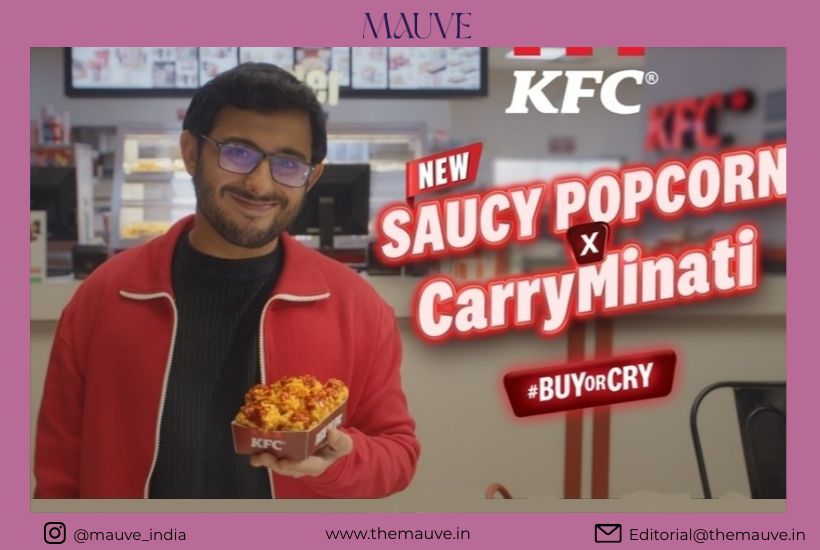
The brand partnered with YouTube creator CarryMinati to launch Saucy Popcorn, tapping into one of India’s biggest digital personalities to create buzz around a new snacking proposition.
It also collaborated with comedian Vir Das for the Dunked Range, using humour and entertainment to position the product as a bold, indulgent offering aimed at younger consumers.
Rather than relying on celebrity endorsements alone, KFC is increasingly using creators who command loyal online communities and speak the language of Gen Z.
Also read :
Marketing built around culture
KFC’s campaigns also leaned into internet culture and humour.
The #BuyOrCry campaign used playful digital storytelling and social-first content to spark conversations online, while the brand continued to localise its communication around Indian tastes and consumer behaviour.
The company complemented its marketing with product innovation, introducing offerings such as the ₹69 Chana Chatpata Burger, designed specifically for value-conscious consumers seeking affordable indulgence.
Alongside premium products, KFC also expanded its Epic Savers platform, reinforcing affordability at a time when discretionary spending remained under pressure.
Digital at the heart of customer engagement
Beyond campaigns, KFC is investing heavily in digital customer experiences.
More than 80% of its restaurants are now equipped with self-service kiosks, enabling faster ordering while generating richer first-party customer data.
These digital touchpoints are helping the company personalise offers, understand customer preferences and strengthen loyalty through more relevant engagement.
Parent company Devyani International is also integrating AI and advanced analytics into its marketing ecosystem through its DIL Commerce platform, creating a unified customer view across dine-in, takeaway and delivery channels.
The platform is designed to improve campaign targeting, optimise marketing investments and deliver more personalised experiences across every stage of the customer journey.
Read more: KFC unveils global revamp with boneless menu, new sauces and next-gen restaurant design
Relevance becomes the competitive advantage
KFC’s strategy illustrates how marketing priorities are evolving in India’s QSR sector.
Instead of depending primarily on mass advertising, the brand is combining creator partnerships, localised innovation, digital engagement and value-led offerings to stay relevant in an increasingly crowded marketplace.
For KFC, the challenge is no longer simply attracting customers into restaurants. It is remaining part of the cultural conversation long after a campaign ends.
Follow Storyboard18 on Google for the latest and breaking how it works news and industry updates, along with in-depth coverage of digital media and media & entertainment news. Stay informed with the latest perspectives only on Storyboard18.
Tags
- brand marketing
- GenNXT Edge
- GenZ
- GenZ Marketing Summit
- GenZ Summit
- how it works
- influencer marketing
- Media
- Social Media
As the quick-service restaurant (QSR) industry grapples with evolving consumer behaviour and tighter discretionary spending, Devyani International is betting that smarter marketing—not just more marketing—will define the next phase of growth.
The operator of KFC, Pizza Hut, Costa Coffee and several homegrown brands says it is transforming into a technology-driven, consumer-centric food platform, using artificial intelligence, data analytics and digital marketing to deliver personalised customer experiences across every touchpoint.
At the heart of that strategy is DIL Commerce, a technology platform designed to create a unified, 360-degree view of customers across dine-in, takeaway and online channels. Combined with AI-powered analytics and automation, the platform is intended to help the company understand customer behaviour, personalise engagement, optimise marketing spend and improve capital allocation.
Also read:
Marketing becomes data-driven
Chairman Ravi Jaipuria said that even in a challenging demand environment, the company sharpened its marketing strategy by focusing on value, accessibility and digital engagement rather than pursuing growth at any cost.
Instead of relying solely on mass-market campaigns, Devyani increasingly used technology and consumer insights to improve customer engagement while selectively investing in digital capabilities. As consumer confidence began improving towards the end of FY26, value-led initiatives and product innovation helped stabilise same-store sales across key brands.
Across the organisation, the company says it is embedding AI and advanced analytics into customer engagement, decision-making and operations as part of its broader transformation into a technology-enabled restaurant platform.
KFC targets Gen Z through creators and culture
Among Devyani’s brands, KFC has adopted the most aggressive digital-first marketing strategy.
The company said the brand increasingly targets Gen Z consumers through mobile-first experiences, gamified loyalty programmes, localised social media content and creator partnerships.
Influencer collaborations played a central role in FY26. KFC partnered with YouTuber CarryMinati to launch Saucy Popcorn, while comedian Vir Das fronted the campaign for its Dunked Range, built around bold flavours and indulgent eating experiences.
Campaigns such as #BuyOrCry, designed around humour and snackable digital content, reflected the brand’s effort to create culturally relevant conversations rather than traditional advertising.



 Robertapop says: