
What Does It Really Mean to Serve a Country?
Patriotism is often presented in absolutes.
Borders. Flags. Uniforms. Sacrifice.
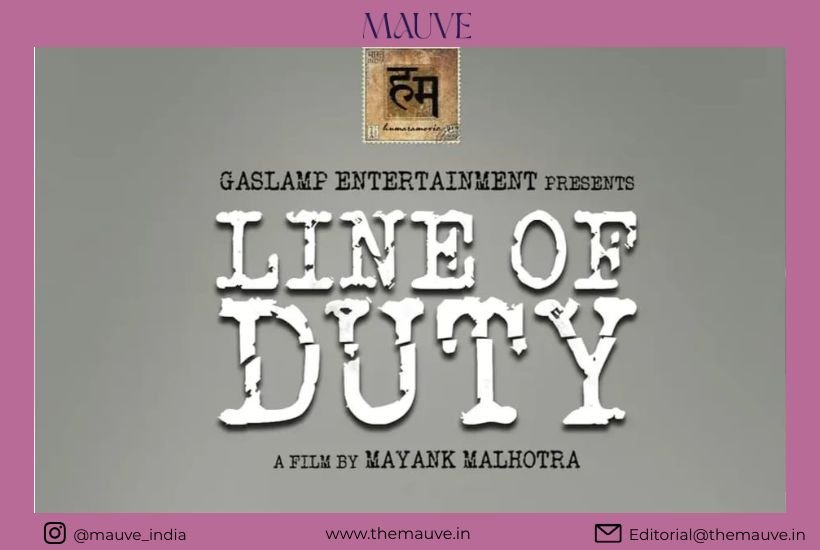
But Line of Duty, the 13-minute Hindi short film written and directed by Mayank Malhotra, chooses to look at patriotism through a more complicated—and ultimately more human—lens.
Released for public viewing on India’s 80th Independence Day, the award-winning short film follows a young Army recruit stationed at a remote outpost along the India-Pakistan border.
Then nature intervenes.
A natural disaster forces him to confront a question that is considerably more difficult than any straightforward definition of duty: what happens when the humanity on the other side of the border becomes impossible to ignore?
⸻
A Border, A Soldier and a Moral Reckoning
At the centre of Line of Duty is a young recruit whose understanding of nationalism is tested by circumstances beyond his control.
The film doesn’t abandon the idea of duty. Instead, it examines what duty can mean when confronted with compassion.
The border remains a physical and political divide.
But the film asks whether that line can—or should—erase the fundamental humanity of the people standing on either side.
It is this tension that gives the film its emotional weight.
Rather than presenting patriotism through spectacle, Line of Duty looks towards something quieter: the compassion, responsibility and moral courage that can exist within service.
⸻
A Story Inspired by True Events
Written and directed by Mayank Malhotra, Line of Duty draws inspiration from true events.
Its compact 13-minute runtime gives the story little room for excess. The film instead builds its premise around a single extraordinary circumstance and the emotional consequences it creates.
The result is a story about soldiers, but also about choices.
About what happens when an individual is forced to look beyond the role assigned to him and confront another person as a human being.
⸻
The Cast Behind the Story
The film features Priyanshu Painyuli, Lakshya Kocchar and Sayan Banerjee.
Painyuli, known for projects including Mirzapur and Extraction, joins Kocchar, who has appeared in Bambai Meri Jaan and Industry, and Banerjee, known for Jee Karda.
Together, the cast brings the film’s intimate story to life without allowing its larger themes to overwhelm its human core.
⸻
From India to Four Continents
Before reaching public audiences, Line of Duty spent considerable time on the international festival circuit.
The film travelled to more than 30 film festivals across India and abroad, reaching audiences across four continents.
Its festival journey included:
- River to River Florence Indian Film Festival, Italy
- Chicago South Asian Film Festival
- International Documentary and Short Film Festival of Kerala
- Super Shorts Film Festival, London
- Oaxaca FilmFest, Mexico
- Boston Short Film Festival
The international journey gave the film an opportunity to carry a distinctly Indian story into a much wider cinematic conversation.
⸻
A Festival Run That Brought Recognition
The film’s journey wasn’t limited to screenings.
Line of Duty has received honours across several categories, including Best Film, Best Director, Best Screenplay and Best Actor.
That recognition places the film in an interesting space: a short-format work with a distinctly Indian setting and premise that has nonetheless found resonance across international festival audiences.
For independent and short-form cinema, that journey can be as significant as the eventual public release.
⸻
Independence Day, Seen Differently
The timing of the film’s public release adds another layer to its story.
As India marked 80 years of independence, Line of Duty arrived with a narrative that moves beyond conventional expressions of patriotism.
There are no easy answers here.
Instead, the film asks viewers to consider the more difficult dimensions of service: duty without dehumanisation, sacrifice without hatred and patriotism without losing compassion.
The border is central to the story precisely because it makes the question harder.
⸻
The Mauve Perspective
The most powerful stories about patriotism aren’t always the loudest.
Sometimes, they are the ones that make us uncomfortable enough to reconsider what we thought we understood.
Line of Duty begins with a soldier and a border. But its emotional territory is much larger.
It asks whether duty and compassion have to exist in opposition.
Whether recognising the humanity of another person weakens one’s sense of national identity—or makes the idea of service more meaningful.
And whether the strongest expression of patriotism might sometimes be found not in the act of drawing another line, but in understanding what remains human on either side of it.
For a country celebrating eight decades of independence, it is a timely question.
Because borders define where nations end. They don’t necessarily define where humanity should.