
TREVOC’s latest workforce initiative puts safety, dignity and recognition at the centre of responsible development
Real estate is often measured in things that are easy to photograph: towers rising against a skyline, landscaped entrances, new neighbourhoods and the promise of better ways to live. But behind every finished address is a workforce whose contribution is rarely visible once the building is complete.
That makes workforce welfare an increasingly important part of the conversation around responsible development. Beyond construction timelines and physical infrastructure, the way people are treated on the ground can say just as much about a developer’s values.
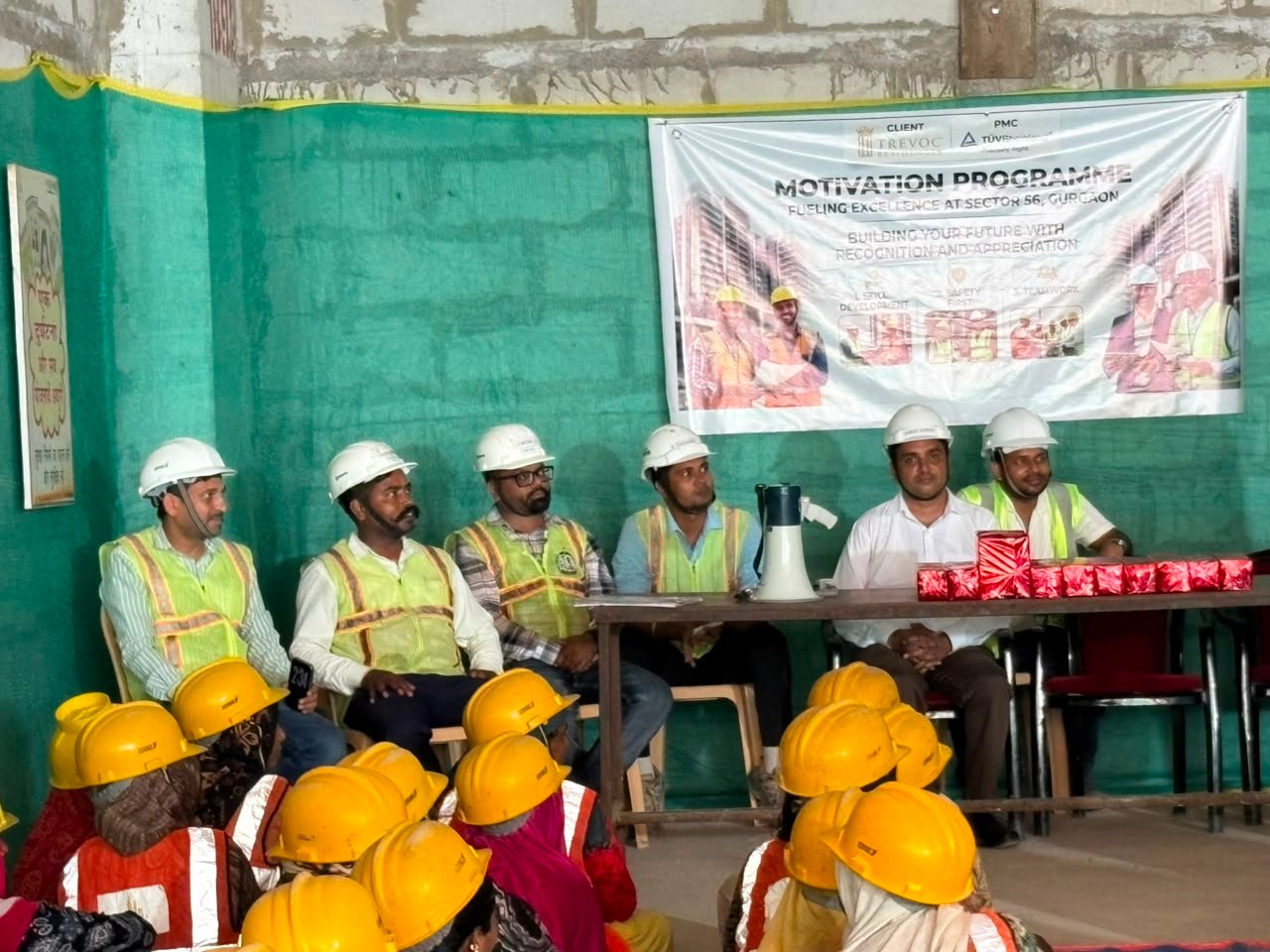
At TREVOC, this idea has taken shape through a recent Reward & Recognition programme at TREVOC Royal Residences in Gurugram, where the company recognised safety workers, foremen and ground staff for their contribution to maintaining safe and responsible project operations.
The People Behind the Project
The initiative was positioned as part of TREVOC’s wider CSR and workforce welfare efforts, with a particular focus on frontline personnel.
For a sector where site teams work through demanding conditions and are often the least visible part of the final product, recognition can serve a purpose beyond a moment of appreciation. It reinforces the idea that safety, discipline and well-being are not peripheral considerations but fundamental to how a project comes together.
Prahlad Dalal, Vice President – Projects, TREVOC Group, said:
“Responsible development is not only about the buildings we create, but also about the people who contribute to bringing them to life.”
He added:
“Our site personnel work every day with dedication and commitment, often away from the spotlight, and recognising their contribution is an important part of our responsibility towards their welfare and dignity.”
The distinction matters. A building may ultimately be judged by its architecture, amenities or location, but its creation involves hundreds of people whose daily decisions directly influence how safely and responsibly that building takes shape.
Why Recognition Matters on the Ground
Workplace recognition is often discussed as an employee engagement tool, but in industries with large frontline workforces, it can also become part of a broader culture of accountability.
Safety workers, foremen and ground staff occupy roles where consistency is critical. Their contribution may not always make headlines, but maintaining safe operations requires discipline every day rather than only when an inspection or milestone is approaching.
TREVOC’s initiative brings that often-overlooked layer of development into focus. By recognising frontline teams, the company is linking employee welfare with the larger idea of responsible construction.
It is also a reminder that CSR does not necessarily have to exist outside a company’s core business. For a real estate company, responsibility can begin within the project itself — with the people working on it.
From Buildings to Built Environments
The language around responsible real estate has expanded considerably. Sustainability, energy efficiency and community development are now increasingly part of how projects are evaluated. Workforce welfare belongs in the same conversation.
A genuinely responsible built environment encompasses more than the person who eventually buys or occupies the property. It includes the workers who construct it, the communities surrounding it and the systems that determine how safely and respectfully development takes place.
TREVOC’s workforce engagement initiative reflects this broader interpretation of CSR, placing dignity of work and employee well-being alongside operational safety.
Dalal said:
“Through initiatives such as these, we want to reinforce that every individual’s contribution matters while creating greater awareness around safety, care and responsible practices at the workplace.”
The Changing Meaning of CSR in Real Estate
For India’s real estate industry, this shift is particularly relevant. Development is ultimately a people-intensive process, even as technology, automation and new construction systems continue to transform the sector.
The future conversation around responsible development is therefore unlikely to stop at what a building consumes or how efficiently it operates. It will increasingly include who builds it, under what conditions, and whether the people behind the project are treated as an essential part of its success.
TREVOC’s latest initiative is modest in scale, but its underlying idea is larger: responsible development cannot end at the property boundary.
The strongest built environments are not simply those that look impressive when completed. They are the ones whose definition of progress includes the people who made them possible.