
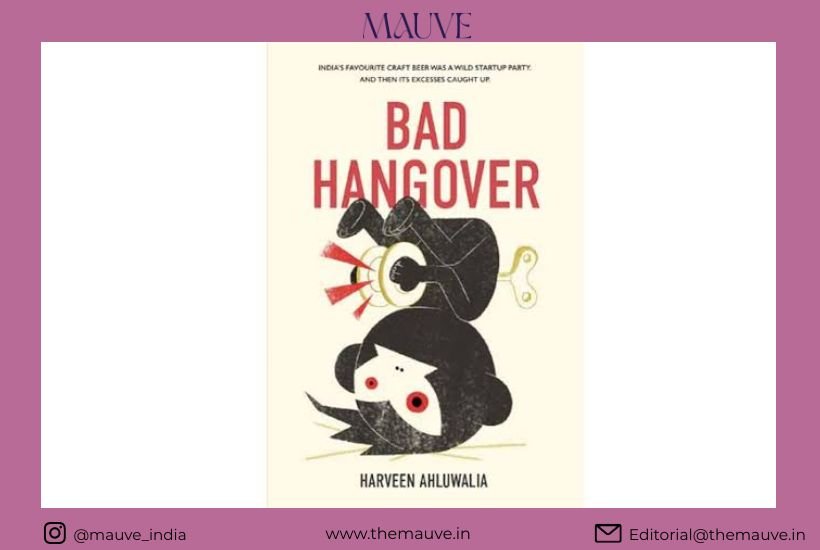
With Bad Hangover, a behind-the-scenes account of Bira’s rise and fall, The Morning Context publisher enters business-book publishing with a distinctly journalistic proposition.
India’s startup story has often been told through the language of ambition: rapid growth, disruptive ideas, charismatic founders and the promise of building something enormous. But as the ecosystem matures, another kind of story is becoming increasingly valuable—the story of what happens when ambition begins to outrun the business itself.
That is the territory Slowform Publishing House is entering.
Slowform Holdings Ltd, the publisher behind The Morning Context, has launched a new business-books division dedicated to deeply researched, narrative-led accounts of companies, industries and the people who shape them. Its first title, Bad Hangover by journalist and The Morning Context co-founder Harveen Ahluwalia, examines the rise and fall of Bira, one of India’s most recognisable craft beer companies.
The book is scheduled for publication on October 9, 2026, and marks a natural extension of Slowform’s existing long-form journalism into a format that allows business stories to unfold at considerably greater depth.
The premise is particularly interesting because Bad Hangover does not appear to be positioned as another celebratory founder story. Instead, it looks at ambition, excess, relationships, startup culture and the decisions that contributed to an avoidable collapse.
In doing so, Slowform is betting on a simple idea: business history becomes more useful when it is honest about failure.
From Startup Success Stories to Startup Autopsies
For much of the last decade, India’s startup ecosystem generated a particular kind of business narrative.
The founder was the protagonist. Funding rounds became milestones. Valuations became shorthand for success. Expansion was almost always framed as evidence of momentum.
But companies do not exist only in moments of growth.
Behind every celebrated consumer brand are decisions around capital, hiring, positioning, operations, distribution, leadership and timing. When those decisions begin to compound in the wrong direction, the resulting story can reveal more about entrepreneurship than a successful fundraising announcement ever could.
That is what makes business books different from business news.
A news report can explain that a company has raised money, launched a product or entered a new market. A well-researched book can spend hundreds of pages examining why those decisions were made, what happened behind closed doors and how one decision changed the next.
Bad Hangover takes that longer view of Bira.
Ahluwalia has followed the company since its early years, documenting a decade in which the brand moved from being an exciting Indian craft-beer proposition to becoming a cautionary business story.
“In any startup, what fails is as important to understand as what works,” said Ahluwalia.
She added:
“I have followed Bira since its early years. It is a phenomenal consumer story to have come out of India, and this book is my attempt to document that ambition, rise and fumbles.”
Why Bira Makes for a Larger Business Story
Bira’s story matters beyond the beer industry.
It sits at the intersection of several defining shifts in India’s consumer economy: the emergence of premium consumption, changing urban lifestyles, the rise of aspirational Indian brands and the willingness of younger consumers to experiment with categories that were once dominated by established multinational players.
The company became closely associated with the country’s growing craft-beer culture and the broader idea that Indian consumers were becoming increasingly willing to pay for products with personality, provenance and a differentiated identity.
That makes its eventual troubles particularly instructive.
The story of Bira is not simply about whether a beer company succeeded or failed. It is about what happens when brand momentum, consumer enthusiasm and entrepreneurial ambition encounter the harder mechanics of building a sustainable business.
That distinction is becoming increasingly important in India’s startup economy.
The glamour of entrepreneurship tends to focus on the beginning: the idea, the founder, the first product and the early believers. The more difficult questions emerge later.
Can growth be sustained?
Can a brand translate cultural relevance into economics?
Can a company maintain its identity while scaling?
And perhaps most importantly, can founders recognise when the strategy that created momentum is no longer the strategy required for survival?
These are the questions that make a business story endure.
The Morning Context Takes Its Long-Form DNA Into Books
For Slowform Holdings, the move into books is not a completely new direction.
Since its launch in 2019, The Morning Context has built its identity around long-form journalism and detailed reporting on India’s businesses and consumer economy. The publication says it has built a global subscriber base of more than 300,000 readers across India, the Middle East, the United Kingdom and the United States.
Slowform Publishing House extends that editorial philosophy into book-length narratives.
Ashish K. Mishra, co-founder and editor-in-chief of The Morning Context, described the move as a natural extension of the publication’s journalism.
“Books are a natural extension of The Morning Context’s journalism with our specialization in long-form writing. The space is ripe for disruption where business books must be written by practitioners who understand how to serve the best interests of readers.”
The distinction is important.
Business publishing has traditionally occupied a broad spectrum—from management manuals and entrepreneurial self-help to biographies, founder memoirs and corporate histories. Slowform is entering with a proposition closer to investigative business history: books that attempt to document how businesses actually operate, including the uncomfortable parts.
Its stated ambition is to produce deeply researched and rigorously fact-checked accounts that can serve as lasting records of business history.
That is a different proposition from writing books designed primarily to celebrate a company or its leadership.
The Business Book Is Becoming a Record of Its Time
There is another reason this move is timely.
India’s business landscape has changed dramatically over the past decade. Startups have moved from being niche technology stories to becoming part of everyday consumer life. Companies in beauty, fashion, food, fintech, mobility, hospitality and retail have reshaped how Indians spend, travel and interact with brands.
But the historical record of this transformation is still being written.
Much of the information exists in fragmented form: interviews, funding announcements, news reports, social media posts, investor presentations and company statements. A book can bring those fragments together into a narrative that captures not just what happened, but the context around it.
That makes business publishing valuable beyond entrepreneurs and investors.
For students of management, these stories can reveal decision-making under pressure. For founders, they can expose patterns that are difficult to see while operating a company. For consumers, they can explain how brands that seem ubiquitous are actually built.
And for the industry itself, they create institutional memory.
Bad Hangover Is About More Than a Beer Brand
The title itself hints at the book’s approach.
Bad Hangover promises a story of “unchecked ambition, extravagance, relationships going south and hustle culture taken too far”—a narrative that goes beyond balance sheets and product launches.
That framing places culture alongside commerce.
The startup economy has spent years celebrating the language of hustle. Long hours, aggressive expansion and relentless ambition were often treated as virtues in themselves. But the same qualities can become liabilities when they are not accompanied by discipline, sustainable economics and the ability to change direction.
The Bira story therefore becomes a useful case study in the psychology of growth.
What does a founder do when momentum becomes expectation?
What happens when a company’s public image grows faster than its underlying business?
And how does a culture built around constant acceleration respond when the market demands restraint?
These questions extend far beyond beer.
A New Chapter for Indian Business Publishing
With Bad Hangover, Slowform Publishing House is making an argument about what business books should be.
Not simply manuals.
Not founder mythology.
Not corporate celebration.
But detailed accounts of how businesses are actually built—and sometimes how they come apart.
That approach could become increasingly relevant as India’s entrepreneurial ecosystem enters a more mature phase. The first generation of modern Indian startups is now old enough to have accumulated not only success stories, but failures, restructurings, exits, controversies and lessons that deserve to be documented.
The next generation of business literature may therefore be less interested in asking, How did they win?
It may be more interested in asking, What really happened?
And that is perhaps where the most useful business stories begin.