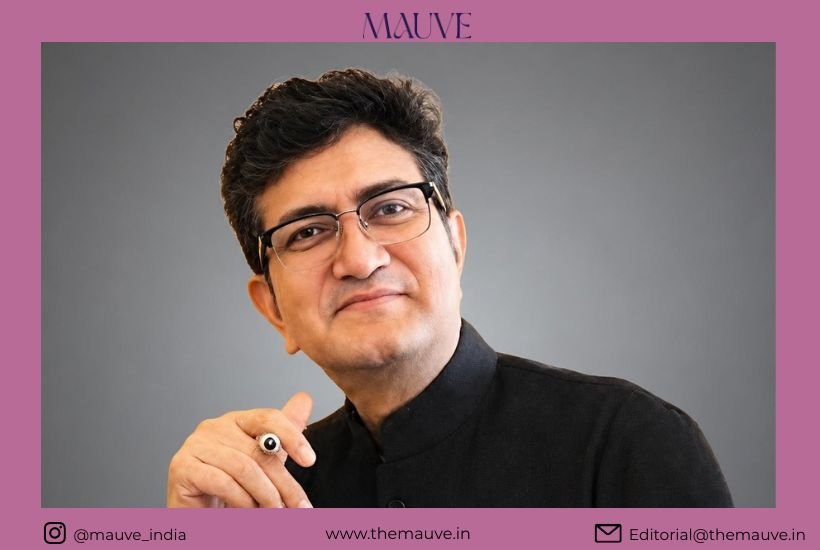
‘Dharavi Ka Kal Bula Raha Hai’ brings together the words of Prasoon Joshi and the voice of Shankar Mahadevan to celebrate Dharavi’s people, enterprise, resilience and aspirations for tomorrow.
Some places are defined by their skylines. Others by their stories.
Dharavi has long been one of Mumbai’s most complex and recognisable neighbourhoods — a place shaped by enterprise, community, ambition and an extraordinary density of human stories. Now, that identity has found a musical expression.
On Gandhi Jayanti, Maharashtra Chief Minister Devendra Fadnavis unveiled ‘Dharavi Ka Kal Bula Raha Hai’, an anthem dedicated to Dharavi and its future.
Written by poet, thinker and brand visionary Prasoon Joshi and composed and sung by Shankar Mahadevan, the anthem seeks to capture the energy of Dharavi while looking towards the possibilities of what comes next.
More Than a Place
The idea behind the anthem is rooted in a simple premise: Dharavi is not merely a geographical location.
It is a living ecosystem of people, businesses, craftsmanship, aspirations and everyday resilience.
Prasoon Joshi describes Dharavi as a story of “resilience, enterprise, aspiration and human spirit”, with the anthem intended to look forward without disconnecting from the neighbourhood’s history and the people who have shaped it.
That balance — between memory and possibility — becomes central to the song.
Rather than presenting the future as something detached from Dharavi’s existing identity, the anthem attempts to build its narrative around the people and ambitions that already give the neighbourhood its distinctive character.
Giving Dharavi Its Own Rhythm
For Shankar Mahadevan, the challenge was musical as much as lyrical.
Dharavi has a rhythm of its own — created by its people, work, movement and everyday energy. Translating that intangible character into a piece of music required the composition to feel rooted in the place while carrying an optimistic sense of what lies ahead.
Mahadevan described the song as an attempt to create an anthem that reflects Dharavi’s own rhythm while communicating the optimism associated with its future.
It is an approach that places music at the intersection of identity and storytelling.
A neighbourhood known internationally through photographs, films, journalism and popular culture is now being given another medium through which its story can be experienced: song.
When Urban Transformation Becomes a Human Story
The anthem arrives as the Dharavi Redevelopment Project enters another phase of its larger transformation narrative.
Infrastructure and urban planning can define the physical dimensions of a redevelopment, but transformation is ultimately experienced by people.
That makes storytelling an important part of how such a future is communicated.
According to Pranav Adani, the anthem is intended to help connect people with a vision of Dharavi’s future by giving its aspirations an emotional and cultural expression.
The same idea extends to the Dharavi Experience Centre, which seeks to make the proposed transformation more tangible by allowing visitors to engage with the story of Dharavi’s past, present and future.
The anthem becomes another layer of that experience.
A Story of Tomorrow, Without Forgetting Yesterday
There is a particular significance in choosing artists such as Prasoon Joshi and Shankar Mahadevan to tell this story.
Joshi’s work sits at the intersection of poetry, popular culture and brand storytelling, while Mahadevan’s voice and music have become deeply embedded in India’s contemporary musical landscape.
Together, they bring two powerful storytelling languages — words and music — to a place whose identity is already built around stories.
For Ajay Kakar, Head – Corporate Branding, Adani Group, the anthem reflects the philosophy of communicating a future rooted in positivity, hope and aspiration.
The result is an attempt to move the conversation around Dharavi beyond physical infrastructure and towards something more personal: what the future might feel like for the people who live, work and build their lives there.
A New Voice for Dharavi
Every urban transformation eventually becomes more than a question of buildings, roads and infrastructure. It becomes a question of identity.
What remains? What changes? And, most importantly, how do the people at the centre of that transformation imagine their own future?
‘Dharavi Ka Kal Bula Raha Hai’ approaches those questions through culture rather than construction.
Its message is forward-looking, but its foundation remains Dharavi itself — its people, energy, enterprise and dreams.
And now, as Dharavi’s future takes shape, that vision has a soundtrack.
Watch the anthem:
YouTube — Dharavi Ka Kal Bula Raha Hai