Rating: 2/5
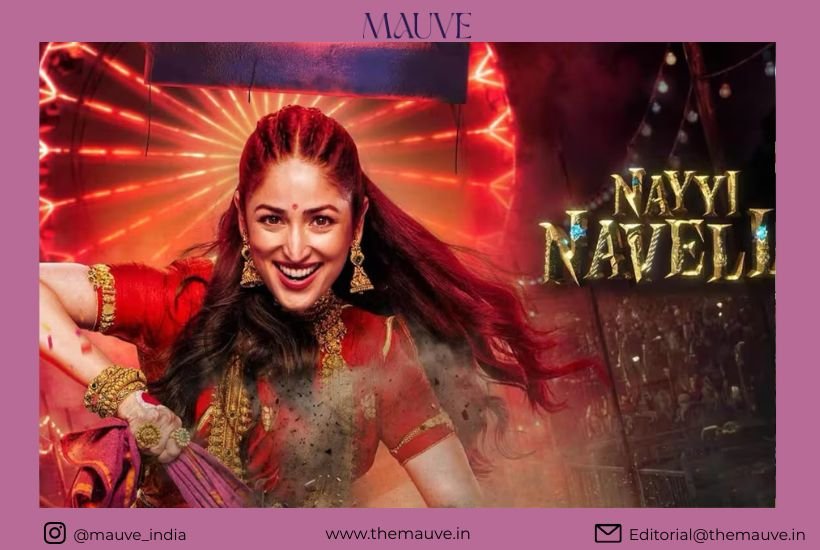
There is a certain art to making a horror comedy work. It must know when to make its audience laugh, when to leave them unsettled and, most importantly, when to let the silence do the talking. Nayyi Navelli, starring Yami Gautam Dhar, attempts to bring together supernatural intrigue, family conflict and comedy, but struggles to find the balance that makes the genre so compelling.
Directed by Balaji Mohan and written by Divy Nidhi Sharma, based on a story by Himanshu Sharma, the film is set in Meerut and follows Mohini, played by Gautam Dhar, an MNC head drawn into a supernatural family conflict. On paper, the premise offers room for an entertaining mix of folklore, humour and domestic chaos. On screen, however, the execution feels far more chaotic than captivating.
When Noise Takes Over the Narrative
Nayyi Navelli appears determined to announce itself as a fresh take on the horror comedy. Its visual palette is garish, its performances frequently exaggerated, and its dialogue rarely gives the audience a moment to breathe. Instead of allowing the supernatural elements to build suspense or the humour to emerge naturally from the situations, the film leans heavily on theatricality.
The problem is not a lack of energy. It is the absence of restraint.
The screenplay often confuses loudness with liveliness, leaving little room for atmosphere, narrative coherence or genuinely effective comic timing. Dialogue begins to overshadow action, while the story struggles to establish a rhythm of its own. What should have been an engaging collision of the ordinary and the extraordinary becomes an exhausting succession of competing tones.
Yami Gautam Has the Presence, but Not the Material
Yami Gautam Dhar brings glamour and screen presence to the film, attempting to hold together a narrative that frequently threatens to unravel. As Mohini, she has the opportunity to anchor the supernatural conflict with a combination of authority and vulnerability. Yet the writing does not consistently give her character the depth or narrative purpose required to make that potential count.
Anurag Thakur, meanwhile, finds himself caught in a screenplay that relies on relentless chatter. The performance may be energetic, but the writing leaves little room for that energy to translate into meaningful comedy. When every exchange seems determined to compete for attention, even capable performers can struggle to create a memorable moment.
The larger ensemble suffers from a similar problem. Rather than allowing individual performances to complement one another, the film often feels like a contest in which everyone is trying to outdo everyone else.
The Stree Comparison: A Difference in Execution
The most revealing comparison for Nayyi Navelli is Stree, the 2018 horror comedy starring Rajkummar Rao and Shraddha Kapoor. Both films draw on supernatural themes and the uneasy relationship between everyday life and the inexplicable. But the similarities also highlight precisely where Nayyi Navelli falls short.
Stree understood that horror and comedy do not need to compete for attention. Its humour emerged from recognisable characters and situations, while its supernatural premise provided genuine intrigue. Beneath the laughs and scares was also a pointed commentary on gender, fear and the treatment of women in society.
Crucially, Stree trusted its storytelling. It allowed atmosphere to build, gave its characters room to breathe and understood that a well-timed pause could be more effective than an entire exchange of punchlines.
Nayyi Navelli, by contrast, often seems to be trying too hard. Its dialogue overwhelms its action, its visual excesses do little to strengthen the supernatural atmosphere, and its humour struggles to land with the consistency the genre demands. Where Stree made its tonal shifts feel organic, Nayyi Navelli struggles to bring its competing elements into harmony.
The difference is not necessarily in the ambition of the two films, but in how effectively that ambition is translated to the screen.
Where Are the Chills, and Where Are the Laughs?
A horror comedy can survive an imperfect plot if it delivers memorable scares, genuinely funny moments or characters audiences want to spend time with. Ideally, it offers all three. Nayyi Navelli struggles to sustain any one of these elements long enough to compensate for its narrative shortcomings.
The supernatural premise never quite develops the atmospheric tension it needs, while the comedy is frequently buried beneath excessive dialogue and exaggerated execution. The background score and songs by G.V. Prakash Kumar do little to elevate the experience, and the film’s visual treatment adds to its sensory overload rather than creating a distinctive cinematic identity.
For a film that appears so eager to be different, the disappointing irony is that its excesses make it feel less distinctive.
The Mauve Verdict
Nayyi Navelli arrives with an intriguing premise, a recognisable lead and the promise of a genre that audiences have embraced when it is handled with imagination. But a promising combination of horror and humour is not enough on its own. It needs a screenplay that understands pacing, performances that work in concert and a director who knows when to turn the volume down.
Compared with Stree, the film feels like a reminder that a successful horror comedy requires more than supernatural elements, punchlines and heightened performances. It needs a point of view, a coherent world and the confidence to let its storytelling do the work.
Yami Gautam Dhar brings the screen presence, and the film has the ingredients for an entertaining supernatural ride. What it lacks is the narrative discipline to make those ingredients come together.
Final rating: 2/5. Nayyi Navelli is neither sufficiently funny to succeed as a comedy nor sufficiently atmospheric to leave a lasting supernatural impression. Where Stree found the sweet spot between laughter, folklore and social commentary, Nayyi Navelli gets lost in the noise.