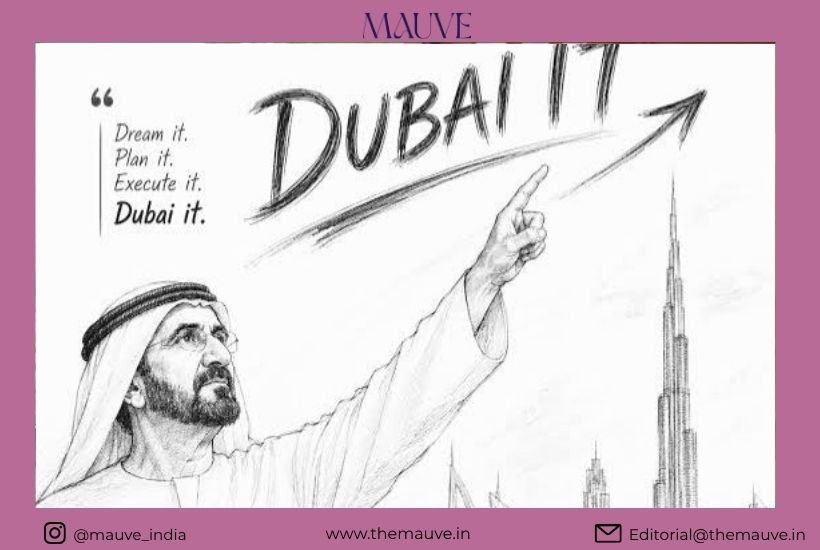
There was a time when Dubai’s skyline was not punctuated by glass towers, its roads were not filled with supercars, and its name was not synonymous with luxury, tourism and global ambition.
There was the Creek.
There were dhows.
There was trade.
And there was a ruler who could see further than the city in front of him.
Before the Skyline, There Was a Vision
The story of modern Dubai is closely tied to Sheikh Rashid bin Saeed Al Maktoum, who ruled Dubai from 1958 until 1990.
At the time, Dubai was a small trading community whose economy revolved around fishing, pearl diving and regional commerce. Oil had not yet transformed the Gulf, and Dubai did not possess the enormous reserves of some of its neighbours.
Sheikh Rashid’s defining instinct was therefore not simply to ask what Dubai had, but what Dubai could become.
He understood something remarkably early: resources could finance development, but infrastructure could create an economy.
And that distinction would eventually change Dubai forever.
Building Before the World Was Watching
Dubai’s transformation began with projects that, at the time, appeared disproportionate to the size of the city.
The Creek was dredged to allow larger vessels to enter. Roads were developed. Electricity and water infrastructure expanded. Dubai Airport was developed.
Then came one of the most consequential bets of all: Jebel Ali.
The vision was audacious—a vast port and industrial zone outside the traditional centre of Dubai that could connect the emirate to international trade.
It was not necessarily about what Dubai needed that year.
It was about what Dubai might need decades later.
That became a recurring theme in Dubai’s development.
Oil Was the Beginning, Not the Business Model
Dubai discovered oil in 1966.
But unlike Abu Dhabi, Dubai’s oil reserves were relatively modest.
That constraint helped shape its economic philosophy.
Oil revenues became a means of financing roads, ports, airports and urban infrastructure rather than the final destination of the economy.
The question gradually shifted from:
“How much oil does Dubai have?”
to:
“What can Dubai build that the world will need?”
The answer became increasingly clear: connectivity.
Trade. Aviation. Tourism. Logistics. Finance. Real estate.
Dubai was positioning itself not merely as a city in the Gulf, but as a bridge between markets.
Sheikh Mohammed and the Acceleration of the Dream
The next chapter belonged to Sheikh Mohammed bin Rashid Al Maktoum.
As Crown Prince and later Ruler of Dubai, Sheikh Mohammed pushed the city into a new era—one in which infrastructure was no longer just about enabling commerce, but about creating global relevance.
Dubai began thinking at a different scale.
The launch and expansion of Emirates helped transform Dubai into an international aviation hub. Jebel Ali became a crucial component of global logistics. Free zones attracted multinational companies. Tourism became an economic engine.
And then came the projects that would turn Dubai from a commercial hub into a global brand.
Palm Jumeirah.
Burj Al Arab.
Downtown Dubai.
Burj Khalifa.
Dubai Mall.
The World.
Each project was more than a building or development.
It was a piece of a larger proposition:
Come to Dubai.
Come to do business.
Come to invest.
Come to shop.
Come to holiday.
Come to build.
Come to live.
Luxury Became an Economic Strategy
Perhaps one of Dubai’s most interesting achievements is the way it transformed luxury from an aesthetic into an economic proposition.
Luxury hotels were not simply hotels.
Iconic architecture was not simply architecture.
Shopping malls became destinations. Airports became gateways. Hospitality became part of the city’s identity.
Dubai understood the psychology of global attention.
In an increasingly competitive world, being functional was not enough.
You had to be memorable.
And Dubai became exceptionally good at being memorable.
The Business Lesson Hidden Inside Dubai
For business leaders, Dubai’s story offers a lesson that extends well beyond the UAE.
Build for the future, not merely for present demand.
When Dubai invested in its port, airport and roads, it was creating capacity before the full demand existed.
When it developed free zones, it was creating an environment designed to attract businesses.
When it built luxury hotels and landmarks, it was creating reasons for the world to look towards Dubai.
This is perhaps the most important part of the Dubai story:
Infrastructure came before scale.
Scale followed infrastructure.
And global attention followed scale.
From Trading Port to Global Brand
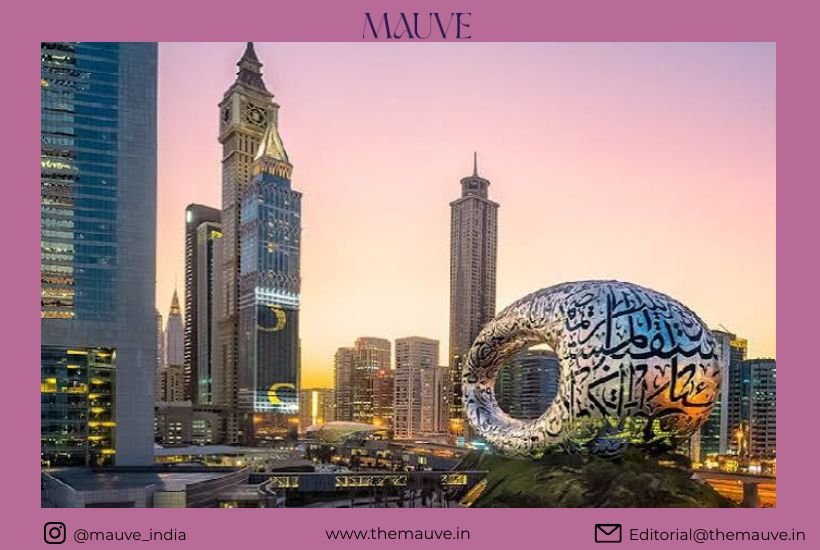
Today, Dubai is recognised around the world for its skyline, luxury hospitality, aviation, real estate, shopping and tourism.
But the skyscrapers are really the final chapter of a much longer story.
Before the Burj Khalifa came the port.
Before the luxury resorts came the roads.
Before the international tourists came the airport.
Before Dubai became a global brand, there was a ruler thinking about what would happen when the oil eventually ran out.
That may be the greatest legacy of Sheikh Rashid’s vision—and the ambition that Sheikh Mohammed subsequently amplified.
Dubai did not wait for the world to discover it.
It built the infrastructure, experiences and ambition that gave the world a reason to arrive.
And perhaps that is why Dubai’s most impressive creation is not a building at all.
It is the idea of Dubai itself.
⸻
Mauve Take
Dubai’s rise is often reduced to oil, skyscrapers and limitless ambition. The deeper story is about strategic foresight.
Its rulers recognised early that a city does not become globally relevant merely by possessing resources. It becomes relevant by creating reasons for people, businesses and capital to come—and reasons for them to stay.
In that sense, Dubai’s greatest luxury has never been its gold interiors or five-star hotels.
It has been its ability to think decades ahead.


 DanielKal says:
  Denisspept says: