In a world of Instagram-perfect couples, endless expectations and carefully defined boundaries, perhaps the real relationship skill we are losing is the ability to simply understand each other.
There was a time when relationships seemed to be built around a few simple ideas: love, trust, patience, compromise and understanding.
Today, relationships seem to come with a checklist.
How often should they call?
How quickly should they reply?
Should they post about you?
Should they surprise you?
Should they remember every little detail?
Should they understand what you need without you having to say it?
And when they don’t?
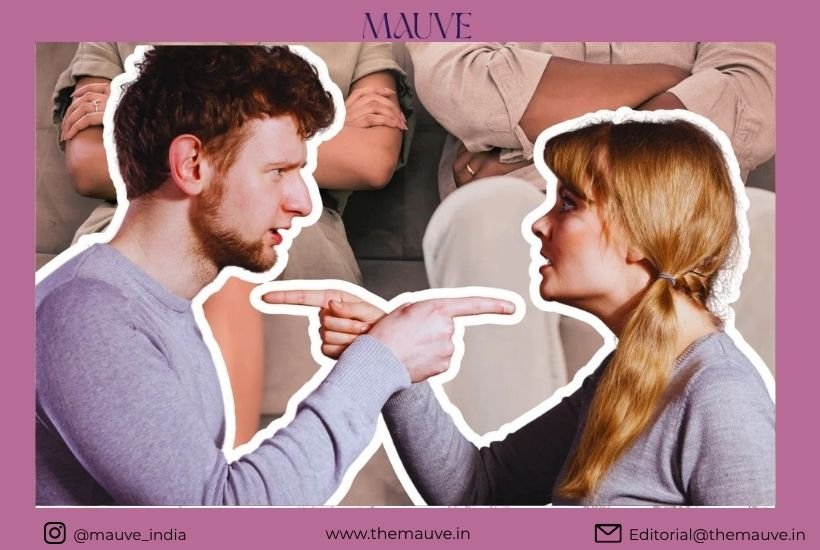
We fight.
Somewhere between changing ideas of independence, personal boundaries, individual expectations and the constant presence of social media, relationships have become increasingly complicated.
Books like Men Are from Mars, Women Are from Venus and Conflict: A Better Way to Resolve Them make us look at relationships through another lens: people communicate differently, process emotions differently and respond to conflict differently.
Yet, perhaps today, we have another challenge that previous generations didn’t face at this scale.
We are constantly comparing our real relationships with someone else’s digital highlight reel.
The Instagram Relationship
Scroll through Instagram and there is no shortage of perfect relationships.
The surprise date.
The flowers.
The elaborate birthday.
The perfectly planned proposal.
The couple travelling across the world.
The boyfriend who remembers everything.
The girlfriend who somehow always knows exactly what to say.
The husband who does something incredibly romantic.
The wife who plans the perfect surprise.
And somewhere in the back of our minds, a question starts forming:
“Why doesn’t my partner do that for me?”
That question can be dangerous.
Not because wanting affection is wrong. It isn’t.
But because we are beginning to compare real people with curated content.
We see the 30-second video. We don’t see the argument that happened before it.
We see the anniversary dinner. We don’t see the disagreements behind closed doors.
We see the romantic gesture. We don’t see the ordinary Tuesday.
We see the highlight reel and then use it to judge our entire relationship.
And slowly, someone else’s relationship becomes the standard against which we measure our own.
We Cannot Make People Into Copies
Perhaps one of the biggest lessons we forget is that every person is different.
The person we choose will have their own way of expressing love.
Their own emotional vocabulary.
Their own insecurities.
Their own experiences.
Their own strengths.
And their own flaws.
They may not love you in exactly the way someone else’s partner loves them.
They may not communicate the way you communicate.
They may not respond to conflict the way you expect them to.
And that doesn’t automatically mean they don’t care.
Sometimes, we spend so much time trying to make our partners behave the way we want them to that we forget to understand the person we actually chose.
You cannot create a copy of another person’s partner.
And perhaps you shouldn’t want to.
A relationship isn’t about finding someone who perfectly matches an imaginary template.
It is about understanding the individual standing in front of you.
That doesn’t mean accepting disrespect or abandoning your boundaries.
It simply means recognising that imperfection is part of being human—and therefore part of being in a relationship.
When Expectations Become Pressure
Expectations are natural.
We all have them.
We expect honesty.
Respect.
Attention.
Affection.
Loyalty.
But sometimes, expectations are never communicated. They simply exist inside our heads.
We expect our partner to know what we need.
We expect them to understand why we’re upset.
We expect them to notice the little things.
We expect them to behave in a particular way because, “If they really loved me, they would know.”
But how can someone fulfil an expectation they were never told about?
This is where communication becomes essential.
Not communication as in talking more.
Communication as in understanding better.
Communication Isn’t About Winning
Most couples know they need to communicate.
But communication isn’t simply saying everything you feel.
It isn’t giving explanations.
It isn’t defending yourself.
And it certainly isn’t waiting for your partner to finish speaking so that you can prove your point.
Real communication begins when you stop listening to respond and start listening to understand.
Instead of asking:
“How do I prove that I’m right?”
Ask:
“What is this person actually trying to tell me?”
Sometimes anger is actually hurt.
Sometimes silence is actually disappointment.
Sometimes frustration is actually a need for reassurance.
Sometimes the argument isn’t about the thing you’re arguing about at all.
It is about feeling unheard.
Unseen.
Unappreciated.
Or misunderstood.
And that is why communication requires empathy.
You have to step into the other person’s shoes for a moment and try to see the situation from their side.
Not because you have to agree with them.
But because understanding someone doesn’t require agreement.
When Ego Enters, Understanding Leaves
Perhaps the biggest enemy of a relationship isn’t conflict itself.
It is ego.
Why should I apologise first?
They started it.
Why should I compromise?
I didn’t do anything wrong.
Let them call me.
I’m not going to message first.
Suddenly, two people who love each other are competing against each other.
And once a relationship becomes a competition, everyone loses.
There will be disagreements.
There will be misunderstandings.
There will be moments when both people are wrong.
There will be moments when one person needs to apologise.
There will be moments when both need to adjust.
The goal shouldn’t always be to establish who won the argument.
Sometimes the goal should simply be:
How do we get back to us?
Perhaps We Need Less “Me” and More “Us”
Modern relationships have rightly become more conscious of individuality.
You should have your own identity.
Your own ambitions.
Your own boundaries.
Your own friendships.
Your own space.
But a relationship also requires partnership.
And partnership requires a certain amount of adjustment.
It doesn’t mean losing yourself.
It means occasionally asking:
What does the other person need?
What can I do differently?
Where can I meet them halfway?
What can we build together?
There is a difference between sacrificing your identity and making compromises for someone you love.
There is a difference between having boundaries and building walls.
There is a difference between protecting your peace and refusing to have difficult conversations.
And perhaps finding that balance is one of the hardest—and most important—parts of a relationship.
Love Isn’t Always Grand
Maybe we have also forgotten that love doesn’t always have to look spectacular.
Sometimes love is a conversation.
Sometimes it is an apology.
Sometimes it is giving someone space.
Sometimes it is remembering how they take their coffee.
Sometimes it is choosing patience when you could choose anger.
Sometimes it is sitting down after a fight and saying:
“Okay. Let’s understand each other.”
Not every beautiful relationship moment needs to be photographed.
Not every expression of love needs to be posted.
Not every relationship needs to look impressive from the outside.
Some of the strongest relationships may never become content.
Because they are too busy being lived.
So, What If We Stopped Comparing?
The next time you see a relationship online and think, “Why doesn’t mine look like this?”, pause.
Ask yourself:
Do I actually know what happens behind that screen?
Have I told my partner what makes me feel loved?
Do I know how they express love?
Have we spoken about our expectations?
Am I listening to understand or listening to respond?
Am I trying to understand the person I chose—or trying to turn them into someone else?
And perhaps the most important question:
Are we trying to win against each other, or are we trying to save the relationship?
Because conflicts are inevitable.
Expectations will sometimes be missed.
Egos will clash.
People will misunderstand each other.
But conflict doesn’t necessarily mean the relationship is broken.
Sometimes, it simply means two different people are trying to find a way to understand each other.
And maybe that’s what love requires most—not perfection, but the willingness to keep understanding.
Maybe Start With One Conversation.
Put the phone away.
Put the ego aside.
Sit down.
Talk.
Listen.
Don’t prepare your answer while the other person is speaking.
Don’t communicate just to prove your point.
Communicate to understand theirs.
Because sometimes, the person you’re fighting with isn’t your enemy.
They’re the person you chose.
And if you both still want a better relationship, perhaps the next step isn’t another argument.
Perhaps it’s one honest conversation.
Send this to someone you want a better relationship with.
Maybe this is the conversation you both needed.
Put the ego aside. Talk. Listen. Understand.
And resolve the fight—not to prove who is right, but to understand each other a little better.
Because sometimes, one honest conversation can change everything.