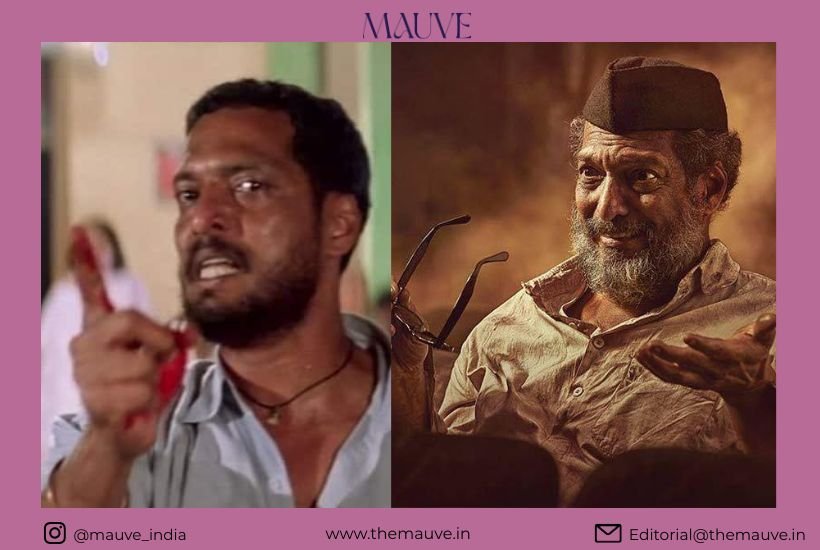
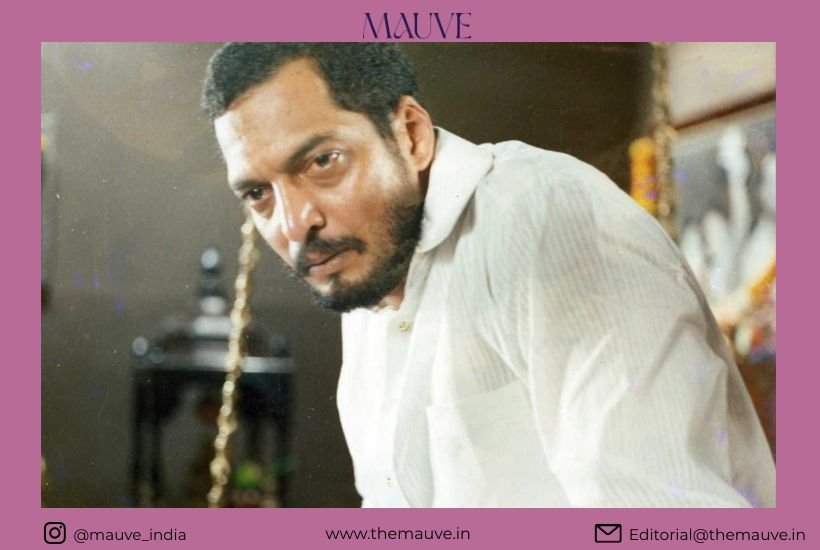
There are actors who deliver dialogues. And then there is Nana Patekar, who somehow makes a line feel like it has lived a life before it reached the screen.
His voice can sound like a warning, a confession, an insult, a philosophy lesson—and occasionally, the funniest thing you have heard all week. From Parinda and Krantiveer to Ab Tak Chhappan and Welcome, Patekar has built some of Bollywood’s most instantly recognisable moments not through elaborate speeches, but through lines that feel brutally human.
What makes them memorable is not merely the delivery. It is the truth hiding underneath.
Because somewhere between gangsters, politicians, cops, grieving men and gloriously frustrated characters, Nana Patekar has been giving Bollywood something more valuable than iconic dialogues: lessons in life.
Here are eight of them.
1. Never underestimate the smallest thing
“Ek machhar saala aadmi ko hijda bana deta hai.”
Yashwant
It is aggressive, funny and deeply unsettling—and that is precisely why it works.
The lesson is simple: power isn’t always proportional to size.
The smallest disruption can expose the biggest weakness. A tiny problem, a seemingly insignificant person or one overlooked detail can completely change the balance of power.
In a world obsessed with scale, Nana’s dialogue is a reminder that sometimes the smallest thing in the room deserves the most attention.
2. Never confuse vulnerability with defeat
“Aa gaye meri maut ka tamaasha dekhne?”
Krantiveer (1994)
Few lines capture defiance quite like this one.
The character isn’t simply facing death. He is confronting the people who have come to watch him fall—and turning the moment back on them.
The lesson? Being vulnerable doesn’t mean you have surrendered.
Sometimes the most powerful position you can take is to stand your ground when everyone expects you to break.
3. Business and emotions don’t always belong in the same room
“Dhande mein koi kisi ka bhai nahi hota.”
Parinda (1989)
Cold? Absolutely.
True? Often.
The world of business, crime and ambition has repeatedly been portrayed as one where relationships can become secondary to survival. Nana’s line distils that brutal logic into a sentence.
But there is a contemporary lesson hidden inside it too: know which relationships are personal and which decisions are professional.
Not every negotiation needs emotion. Not every friendship needs to become a business partnership.
Sometimes boundaries are what keep both intact.
4. Understand the system before you try to survive it
“Hum sab system ka hissa hain. System decide karta hai, apun follow karta hai.”
Ab Tak Chhappan
This may be one of Nana Patekar’s most relevant lines for modern life.
We like to believe we are completely independent decision-makers. But careers, institutions, workplaces, social structures and algorithms quietly influence what we see, choose and become.
The lesson isn’t necessarily to accept the system.
It is to recognise the system first.
Because you cannot change something you don’t understand.
5. Sometimes frustration is just grief wearing a funny face
“Saala ye dukh kaahe khatam nahi hota be…”
Welcome (2007)
Perhaps one of the most relatable lines in this entire list.
Uday Shetty’s problems are exaggerated for comedy, but the feeling underneath is universal: the exhaustion of wondering when life will finally give you a break.
There are days when nothing dramatic has happened, yet everything feels exhausting.
And sometimes, instead of pretending to have everything figured out, you just need to say it out loud.
“Why does this suffering never end?”
Cinema gave us a meme. Nana gave us a coping mechanism.
6. Winning changes how history remembers you
“Raajneeti mein hamesha jeet ko hi maan milta hai.”
Politics has never been particularly interested in second place.
The line captures one of the oldest truths about power: people often remember the winner more generously than the journey.
In politics, business and even popular culture, success can rewrite perception.
But there is another way to read it: don’t become so obsessed with winning that you forget what the victory is supposed to mean.
Because winning is temporary.
What you build with it is what lasts.
7. Blood doesn’t recognise the divisions we create
“Yeh Musalman ka khoon, yeh Hindu ka khoon…”
Krantiveer (1994)
Few themes have been as central to Indian cinema as the absurdity of dividing people who are, fundamentally, human beings first.
The power of this dialogue lies in its simplicity.
Blood has no religion.
Pain has no religion.
Grief has no religion.
The lesson is perhaps the most timeless one on this list: humanity existed before the labels we placed upon it.
And sometimes cinema reminds us of that more effectively than a lecture ever could.
8. Success means little if you don’t have dignity
“Bhagwan ka diya hua sab kuch hai. Daulat hai. Shohrat hai. Izzat hai.”
Welcome (2007)
Uday Shetty may be one of Bollywood’s most chaotic characters, but this particular line accidentally becomes a masterclass in the vocabulary of success.
We spend so much time chasing money and recognition that we often forget the third word: izzat.
Wealth can be accumulated.
Fame can be manufactured.
But respect is earned.
And perhaps that is why this dialogue continues to live beyond the comedy of Welcome. It captures a very Indian understanding of success—one where prosperity means more when it comes with dignity.
The Nana Patekar School of Life
What makes Nana Patekar’s dialogues so enduring is that they rarely sound polished.
They sound lived-in.
His characters shout, stumble, threaten, joke, complain, rage and occasionally reveal uncomfortable truths. They aren’t delivering motivational speeches. They are simply saying what they believe.
And perhaps that’s the secret.
In an era of carefully crafted captions, personal branding and perfectly edited lives, Nana Patekar’s greatest lesson may be this:
You don’t always need to sound perfect to say something that lasts.
Sometimes, all you need is the truth—and the courage to say it like you mean it.