The new-age festive wardrobe is no longer confined to ethnicwear. From contemporary Indian silhouettes and statement watches to versatile footwear, expressive makeup and beauty discovery, Gen Z is approaching the festive season as an opportunity to make tradition its own.
By The Mauve
The festive wardrobe has always been about more than clothes. It is about anticipation, rituals, family photographs, evenings that stretch longer than planned and the excitement of dressing for something special. But for Gen Z, a generation that discovers trends through Instagram, shops across multiple price points and treats personal style as an extension of identity, festive dressing is becoming a more expansive conversation.
For Gen Z, the question is no longer simply what to wear for Diwali, Navratri or a festive gathering. It is how to make the look feel personal, how to move between traditional and contemporary silhouettes, which accessories deserve investment and whether a festive purchase can have a life beyond one evening.
The result is a wardrobe that draws from multiple directions. Indian craftsmanship meets modern styling, high-street fashion sits alongside luxury accessories, and beauty becomes an integral part of the overall expression. The festive look is increasingly assembled rather than prescribed.
And brands are responding across categories, from fashion labels revisiting Indian craft to beauty houses creating collections for India’s celebration season.
The Indianwear Renaissance: Tradition, Without the Rules
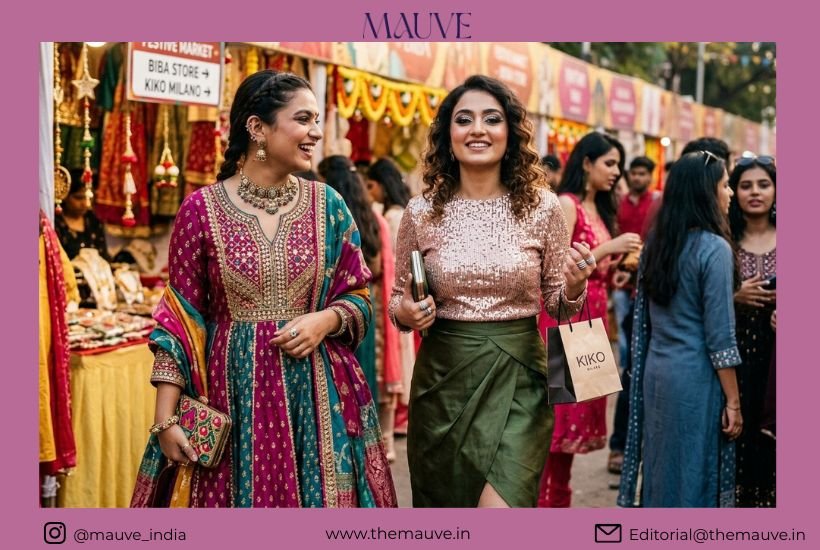
Indianwear remains central to festive dressing, but its interpretation is becoming more varied. The contemporary festive wardrobe can include a sari, an embroidered kurta, a co-ord set, a sharara or a lehenga, depending on the occasion and the individual wearing it.
BIBA‘s festive collection, Too BIBA To Blend In, offers a particularly interesting starting point. Built around colour, print and ornamentation, the collection brings together Indian crafts including Ajrakh, Rabari embroidery, Kalamkari, Patola, Bandhej, Banarasi brocade and Sanganeri hand-block printing. Its assortment spans anarkalis, lehengas, kurta sets, dresses and co-ord sets, with prices ranging from ₹1,299 to ₹20,000.
The breadth of the collection reflects an important possibility within festive dressing: traditional craftsmanship does not have to be restricted to a single silhouette or occasion.
For younger consumers, a printed co-ord set can feel as appropriate for a festive lunch as a more elaborate ensemble might for an evening celebration. A heritage-inspired textile can become a statement in a contemporary outfit, while familiar Indian silhouettes can be styled in ways that reflect individual taste.
The appeal lies in having choices. Festive fashion can be maximalist and colourful, or understated and versatile. It can celebrate craftsmanship without demanding that every occasion calls for a heavily embellished outfit.
The shift is not necessarily away from tradition. It is towards greater freedom in how tradition is worn.
When Luxury Meets the High Street
The boundary between designer fashion and high-street retail is another interesting part of the evolving festive wardrobe.
The ELIE SAAB x H&M collection, unveiled at a Mumbai launch attended by Tamannaah Bhatia and Mahieka Sharma, brought the fashion house’s signature aesthetic into a high-street collaboration. Tamannaah Bhatia wore the Lace Signature Dress, while Mahieka Sharma appeared in the Knitted Lace Dress.
For a generation navigating different price points and fashion influences, collaborations such as these create an opportunity to engage with designer aesthetics through a different retail proposition.
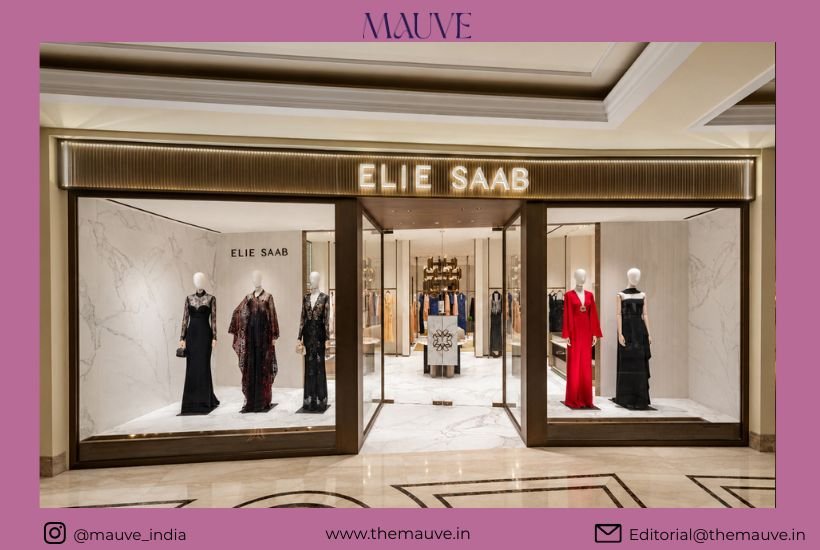
This sits alongside the broader luxury landscape in India. ELIE SAAB‘s first Indian boutique at DLF Emporio in New Delhi, opened in October 2026, brings the house’s ready-to-wear, perfumes and accessories into a dedicated retail space.
These are distinct developments, but together they illustrate the variety of ways in which consumers encounter fashion today: through a designer collaboration, a luxury boutique, a high-street collection or a piece discovered online.
The festive wardrobe can accommodate all of them.
The more interesting question is not whether a particular purchase is luxury or accessible, but how a consumer chooses to combine pieces, interpret trends and build a look that feels individual.
The Rise of the Outfit That Can Do More
The festive calendar rarely consists of one occasion. There are family gatherings, office celebrations, dinners, festive lunches, pujas and evenings with friends. Each comes with its own expectations, and the temptation to buy something new for every event can quickly become expensive.
This makes versatility an important consideration.
UNIQLO‘s expanded retail presence at Ambience Mall, Gurugram, reflects the continuing relevance of contemporary everyday clothing within India’s evolving fashion retail landscape. Its emphasis on considered essentials offers a useful counterpoint to the idea that every festive look must begin with an entirely new outfit.
A versatile wardrobe can bring together occasion-specific pieces and everyday staples. A festive skirt might be paired with a simpler top for one gathering and a more dramatic blouse for another. An embroidered jacket can transform an otherwise understated ensemble. A well-cut pair of trousers can move from a work celebration to a dinner with friends.
The same principle extends to footwear.
ECCO‘s footwear edit previously featured in The Mauve’s coverage included the Soft 60 Lace Up, Sculpted LX Ballerinas, BIOM 2.1 X MTN Low Lea, Metro London M Derby and Cozmo Slide Sandal, with prices ranging from ₹9,999 to ₹19,999. Across these styles, footwear offers another way to think about dressing for different settings rather than treating every festive occasion as a completely separate wardrobe requirement.
The point is not that every festive outfit needs to be practical. It is that a considered purchase can be expressive and wearable beyond a single celebration.
For a generation balancing self-expression with spending decisions, that combination deserves a place in the conversation.
Accessories Are No Longer an Afterthought
Sometimes, the difference between an ordinary outfit and a memorable one lies in the finishing touches.
A statement watch, an interesting pair of shoes or carefully chosen jewellery can change the character of an ensemble without requiring an entirely new wardrobe. Accessories also offer a way to experiment with personal style while keeping clothing relatively simple.
Versace‘s festive watch edit, featuring Malaika Arora, places timepieces within this conversation. The V-Square Petite Watch, Apodis Lady and Millenium Lady offer different expressions of the house’s distinctive design language, positioning watches as more than purely functional additions to an outfit.
A watch can sit alongside a traditional ensemble, complement contemporary separates or provide contrast to an otherwise understated look. It can also occupy a different role as a considered gift or a lasting wardrobe purchase.
The wider point is that accessories need not be selected only after an outfit has been assembled. They can be the starting point around which the rest of a look takes shape.
For consumers drawn to both luxury and individuality, this offers another way to make festive dressing feel personal.
The Beauty Edit: From KIKO Milano to Iris Cosmetics
No conversation about the modern festive wardrobe is complete without beauty.
Makeup has become one of the most immediate ways to experiment with colour, texture and identity. A bold lip can transform a simple outfit, while a softer complexion, defined eyes or a touch of shimmer can create an entirely different mood.
KIKO Milano‘s Sparkle Stories limited-edition Diwali collection brings this idea directly into the festive season. The range features nine products across 16 SKUs, including the 3D Hydra Lipgloss, Unlimited Double Touch, Unlimited Blush and Maxi Mod Mascara, alongside festive gift sets. Its packaging draws on Indian architectural patterns, vibrant colours and antique-gold accents.
The collection makes an interesting case for beauty as part of the celebration itself. The packaging is designed for the occasion, while the products offer options across lips, cheeks and eyes.
Iris Cosmetics offers another reference point through its festive edit, which included the Matte Made Her Do It Liquid Lipstick in Her Own Rules, priced at ₹949, and the Oh! She Blushes Liquid Blush in She’s All That, priced at ₹799. Both formulations were presented with hyaluronic acid.
The appeal of these edits lies in the range of ways makeup can be incorporated into a festive look. Some may prefer a statement lip, others a blush-led finish or a more dramatic eye. There is no single festive beauty formula that works for everyone.
And for a generation accustomed to discovering products through digital platforms, the process of experimenting with beauty can be as much a part of personal styling as choosing the outfit itself.
Skincare Before the Celebration
The festive beauty conversation also begins before makeup is applied.
A growing selection of skincare products across price points gives consumers different ways to approach their routines. The Mauve’s previous coverage has included CITTA, KASS and Style Lounge, alongside products from Pond’s, Vaseline, Simple, Lakmé and Minimalist.
These brands occupy different positions within skincare and beauty, but together they provide a useful lens through which to consider the range of choices available to consumers.
Pond’s Hydra Miracle Super Light Gel, Simple Hydrating Light Moisturizer, Lakmé Peach Milk Crème and Perfect Radiance Day Gel Crème, Vaseline Gluta-Hya Dewy Radiance and Minimalist Vitamin B5 10% are among the products previously featured in the brand pipeline.
The more meaningful story, however, is not a list of products promising a festive glow. It is the relationship between skincare routines, individual needs and the desire to feel comfortable in one’s own skin.
CITTA‘s conscious approach to skincare, KASS‘s emphasis on formulation and education, and Style Lounge‘s AI-led skin analysis and discovery offer different perspectives on personalisation and beauty choices.
Together, they create space for a more considered conversation about skincare: understanding one’s needs, choosing products thoughtfully and resisting the idea that a last-minute routine can replace consistent care.
For the festive wardrobe, skin preparation is part of the larger picture, but it does not need to become another source of pressure.
Fragrance: The Invisible Part of Personal Style
Fashion is visual, but personal style does not end with what can be seen.
Fragrance offers another way to create a sense of occasion. It can become part of a getting-ready ritual, a personal signature or a gift associated with a particular moment.
L’Occitane en Provence‘s fragrance releases, including its collection inspired by the woods and landscapes of Southern France, offer a natural entry point into this conversation. Fragrance sits at the intersection of sensory experience, personal preference and gifting, making it relevant to both everyday routines and special occasions.
A festive wardrobe might be built around colour and silhouette, but fragrance adds another dimension to the overall experience.
For younger consumers exploring different expressions of luxury, this is an opportunity to consider personal style beyond clothing and visible accessories.
The Beauty Wardrobe Is Becoming an Experience
The relationship between beauty and fashion is also being shaped by the way consumers discover products.
Tira‘s 2026 Beauty Advent Calendar, presented in a limited-edition Mokobara cabin bag, brings together 24 beauty products across skincare and makeup. The selection includes brands such as Medicube, The Ordinary, Beauty of Joseon, SKIN1004, Fenty Beauty, Dolce & Gabbana, Huda Beauty, Benefit Cosmetics, NARS and KIKO Milano.
The format turns beauty discovery into an experience, combining multiple brands within a single offering and pairing the collection with a reusable travel accessory.
For a generation interested in exploring different products, this kind of curated format offers a different proposition from purchasing a single item. It brings together discovery, gifting and the appeal of a collection.
It also reflects how festive beauty can extend beyond the products themselves. Packaging, presentation, curation and the experience of opening a gift can all influence how consumers engage with a brand.
In this sense, the festive wardrobe is not simply about clothing, makeup or accessories. It is an ecosystem of choices that together shape how someone approaches an occasion.
Beyond the Perfect Outfit
There is an unavoidable tension in contemporary festive dressing. Social media provides endless inspiration, but it can also make every celebration feel like an opportunity to produce another look, another photograph and another moment of visible consumption.
The desire to experiment with fashion is not the problem. The challenge is separating personal expression from the pressure to constantly acquire something new.
A considered festive wardrobe can include a statement purchase, a versatile pair of shoes, a beauty product worth revisiting and clothes that have already been worn and loved. It can include high-street discoveries, designer pieces, Indian craftsmanship and everyday essentials.
There is no contradiction in appreciating luxury while making practical choices. Nor does personal style require a new trend for every occasion.
For brands, the opportunity lies in understanding that today’s festive consumer may be looking for more than novelty. Design, versatility, craftsmanship, product experience and relevance to individual preferences can all become part of the decision.
For consumers, the opportunity is simpler: to dress for the occasion without feeling obliged to become someone else for it.
The New Rules of Festive Dressing
The Gen Z festive wardrobe is not defined by a single trend. It brings together Indianwear, contemporary retail, statement accessories, beauty discovery and a more personal approach to getting dressed.
BIBA demonstrates the continuing possibilities of craft-led Indianwear. H&M x ELIE SAAB illustrates the meeting of designer aesthetics and high-street fashion. UNIQLO and ECCO offer a lens on versatile everyday dressing and footwear, while Versace brings accessories into the centre of the conversation. KIKO Milano and Iris Cosmetics show how beauty can become part of festive self-expression, and CITTA, Style Lounge and L’Occitane broaden the discussion to skincare, personalisation and fragrance.
Each occupies a different place in the modern wardrobe. Together, they reflect the breadth of choices available to consumers navigating tradition and contemporary style.
Perhaps the most meaningful change is that festive dressing no longer needs to follow one formula. It can be colourful or understated, traditional or experimental, built around a new purchase or reimagined through pieces already owned.
The celebration remains the reason to dress up. What changes is the freedom to decide what that looks like.
And for Gen Z, the most compelling festive wardrobe may be the one that leaves room for every version of personal style.