At a curated gathering of founders, professionals and entrepreneurs, a candid conversation explored what businesses should really look for when building teams — from attitude and adaptability to retention and potential.
Hiring has become one of those business conversations that sounds straightforward until you actually have to make the decision.
A strong CV can open a door. A good interview can create an impression. But what happens after the candidate joins? Can they adapt? Can they learn? Can they contribute to the culture of the organisation? And, perhaps most importantly, can they grow with the business?
These questions took centre stage at Founders Meet Raipur, a curated gathering bringing together entrepreneurs, professionals and business leaders for conversations around business, growth and collaboration.
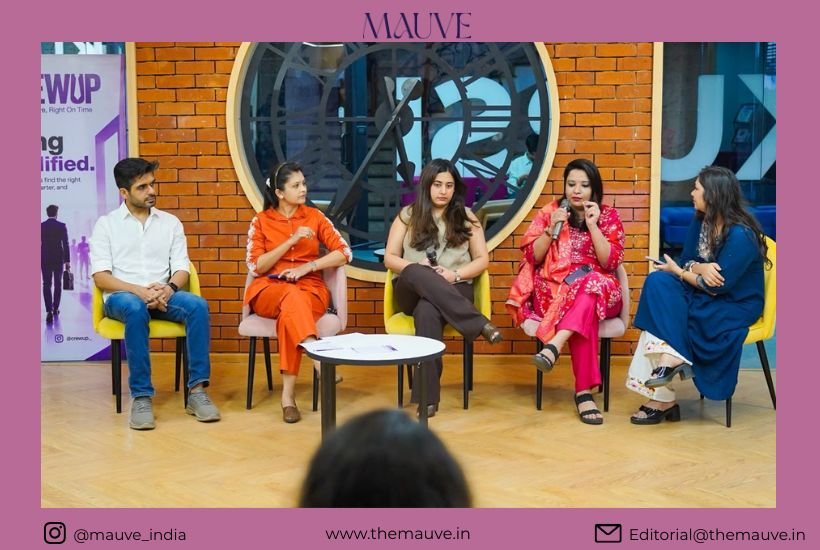
Hosted by Priya Lalwani, Founder & Editor of Mauve, the gathering brought together Aamna Meer, PRO, DPR Chhattisgarh Government; Yash Nachrani, Director, Astha Group; Dr. Shilpee Lunia, Women’s Health Physiotherapist; and Nishtha Madnani, Founder, CREWUP.
Rather than treating hiring as a straightforward process of matching a CV to a job description, the conversation looked at the more nuanced question: what actually makes someone the right hire?
Experience Isn’t Always the Complete Answer
Experience is an obvious starting point when evaluating a candidate. But years on a resume don’t necessarily tell an employer how someone will perform in a new environment.
For Dr. Shilpee Lunia, attitude and the ability to stay and grow can be just as significant.
“The right hire isn’t always the person with the longest experience. Sometimes it’s the person with the right attitude to learn and stay.”
— Dr. Shilpee Lunia, Women’s Health Physiotherapist
For growing organisations, where responsibilities can shift quickly, the ability to learn may prove more valuable than simply having done the same job somewhere else.
The Hidden Cost of Getting Hiring Wrong
Hiring also comes with a cost that goes well beyond a salary package.
Every new employee requires onboarding, training, managerial attention and time. When someone leaves soon after joining, businesses have to repeat that entire process — while existing teams often carry the additional workload.
Nishtha Madnani, Founder of CREWUP, brought the conversation back to one of the most important but often overlooked aspects of recruitment: retention.
“Hiring repeatedly for the same role is expensive. The real win is finding people who can grow with the organisation.”
— Nishtha Madnani, Founder, CREWUP
The point is particularly relevant for startups and growing businesses, where every individual can have a visible impact on the organisation.
Looking Beyond What Is Already on the Resume
A resume is essentially a record of what someone has already done. But potential is harder to capture on a piece of paper.
Aamna Meer, PRO, DPR Chhattisgarh Government, offered another perspective on the hiring equation — the importance of recognising what a candidate could bring, rather than focusing exclusively on what they already know.
“Sometimes the biggest hiring mistake is looking only for what a candidate already knows, instead of recognising what they could bring to the table.”
— Aamna Meer, PRO, DPR Chhattisgarh Government
It is a shift from hiring purely against a checklist towards understanding a person’s potential, perspective and ability to contribute something new.
When the Interview Isn’t Enough
Another important part of the conversation was the gap between saying you can do something and actually doing it.
For certain roles, practical assignments or short real-world trials can offer employers a much clearer understanding of how a candidate approaches problems, manages deadlines and executes ideas.
Because while an interview can reveal communication skills and a CV can establish experience, actual work reveals working style.
That distinction becomes particularly important as businesses increasingly look for people who can operate independently, think on their feet and adapt to changing requirements.
What Makes a Good Hire Today?
The conversation ultimately moved beyond the traditional experience-versus-skills debate.
Perhaps the more useful questions for employers are:
Can this person learn?
Can they adapt?
Can they work with the existing team?
Can they take ownership?
Can they grow with the organisation?
And the equation works both ways.
Candidates are also evaluating companies more closely — their culture, leadership, growth opportunities and working environment. A successful hire therefore isn’t simply about an employer choosing a candidate. It is increasingly about two sides choosing each other.
Building Better Teams, Not Just Filling Vacancies
For Yash Nachrani, Director, Astha Group, the conversation also brought the perspective of a business leader navigating the realities of building and managing an organisation.
The presence of voices from business, healthcare, government communication and recruitment made the discussion particularly relevant. Each field approaches people differently, but the fundamental challenge remains similar: how do you find the people who can help an organisation move forward?
That is perhaps the bigger question behind modern hiring.
Because recruitment shouldn’t end when the offer letter is signed.
It should begin with understanding who the person is, what they can bring, and where they can go next.
A Conversation Beyond Networking
While Founders Meet Raipur was designed as a space for entrepreneurs and professionals to connect, conversations like these demonstrate why curated networking can be more valuable than simply exchanging business cards.
The evening brought together different industries, experiences and perspectives — creating room for conversations that could potentially extend well beyond the event itself.
And in a business ecosystem where the right connection can lead to a new idea, collaboration or opportunity, perhaps that is exactly the point.
Think Bigger. Connect Better. Build Together. 🚀