Mapito Safari Camp’s latest recognition reflects a larger shift in luxury travel — where the destination, the wilderness and the way a guest experiences both are becoming inseparable.
Luxury travel is increasingly moving away from the idea that luxury has to announce itself.
The most compelling properties today are often those that allow their surroundings to do the talking: a remote landscape, a sense of place, exceptional service and the feeling that the experience could not have been recreated anywhere else.
Few destinations illustrate that shift quite like the Serengeti.
At the 2026 World Travel Awards Africa Gala Ceremony in Zanzibar, Mapito Safari Camp, Serengeti, was named Tanzania’s Leading Luxury Tented Safari Camp 2026, placing the property within a growing conversation around experiential luxury and Tanzania’s evolving high-end tourism landscape.
The award was presented on August 28 at Diamonds Bijoux in Zanzibar, where names from across Africa’s travel and tourism industry gathered for the annual ceremony.
For Mapito, the recognition arrives at an interesting moment. The camp is among Tanzania’s newer luxury safari destinations and forms part of Marriott International’s Autograph Collection — a portfolio built around properties with their own individual character.
That combination is significant.
The modern luxury traveller is not necessarily looking for a standardised five-star experience transported into another country. Increasingly, they are looking for something that feels inseparable from where they are.
Luxury That Belongs to Its Landscape
A safari has always offered something conventional hotels cannot manufacture: proximity to wilderness.
In the Serengeti, the landscape is not simply a backdrop. It is the central character of the journey.
Wildlife, open plains, changing light and the possibility of witnessing the Great Wildebeest Migration create an experience whose appeal lies partly in its unpredictability. The role of luxury hospitality, therefore, becomes less about competing with nature and more about creating comfort around it.
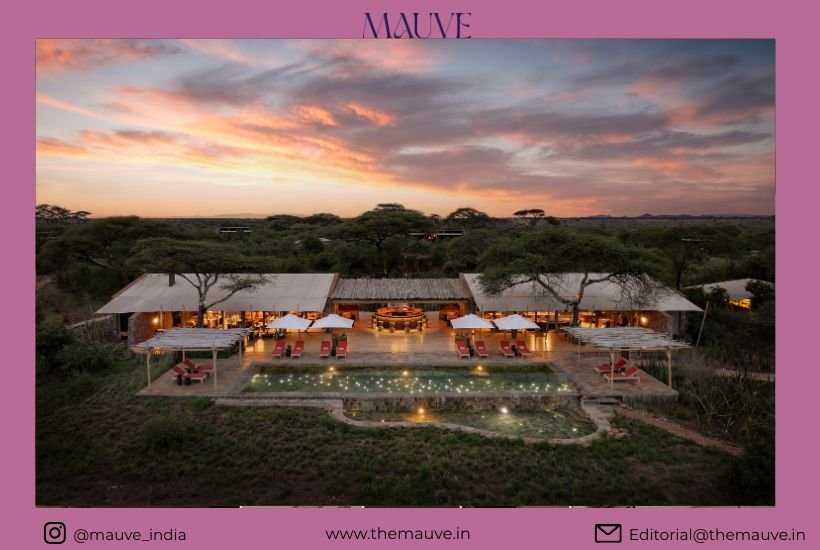
Mapito’s proposition follows that philosophy, combining the intimacy of a tented camp with contemporary accommodation, personalised hospitality and elevated dining.
It is an approach increasingly relevant to Indian luxury travellers, particularly those moving beyond traditional beach holidays, city breaks and conventional resort experiences.
The new luxury itinerary is often experiential first.
Tanzania Is Having a Luxury Travel Moment
Mapito’s recognition also needs to be understood within the larger momentum surrounding Tanzania.
At the 2026 World Travel Awards, Tanzania was named Africa’s Leading Destination for the third consecutive year, following its wins in 2024 and 2025.
Serengeti National Park, meanwhile, was named Africa’s Leading National Park for the eighth consecutive year, retaining the title every year from 2019 through 2026. The destination was also recognised as Africa’s Leading Big 5 National Park 2026.
For a luxury safari property located within this landscape, the timing could hardly be more relevant.
Tanzania is no longer simply selling the idea of an African safari. It is increasingly positioned around a broader luxury proposition: wildlife, wilderness, hospitality, conservation, culture and highly personalised travel experiences.
Mapito’s award becomes part of that larger story.
The Indian Traveller Is Looking for More Than a Holiday
For Indian luxury travellers, the appeal of a property such as Mapito lies in the possibility of combining adventure with comfort.
Safari travel once carried an almost exclusively adventurous connotation. Today, luxury safari has become its own category — one where a day can begin with wildlife encounters and end in an intimate camp environment designed around fine dining, comfort and personal service.
That balance is important.
The modern luxury traveller does not necessarily want to choose between exploration and indulgence. They increasingly expect both to exist within the same itinerary.
Mapito’s founder, Rishen Patel, describes the property’s ambition through precisely that intersection.
“We are incredibly honoured to receive this recognition from the World Travel Awards. Mapito was created with a simple ambition – to offer guests an exceptional Serengeti experience where luxury, nature and a genuine sense of place come together. This award is a wonderful recognition of the team behind Mapito and of the passion with which they welcome guests from around the world,”
The phrase “genuine sense of place” perhaps captures the most important shift in luxury hospitality.
A luxury property can offer exceptional rooms, service and amenities. But what makes an experiential destination memorable is often something that cannot be designed into a hotel blueprint: its relationship with its surroundings.
The New Language of Safari
The tented camp itself has also evolved.
Once associated primarily with rugged travel and basic accommodation, the luxury tented safari now occupies an entirely different space. The tent remains part of the romance, but contemporary design, thoughtful interiors, dining and personalised service have transformed what guests expect from the format.
It creates an interesting contradiction: being close to nature without necessarily giving up comfort.
That contradiction is precisely what makes luxury safari so compelling.
You can spend the day immersed in one of the world’s most celebrated wildlife destinations and return to an environment that feels intimate and refined.
For travellers accustomed to luxury hotels in major global cities, it offers something those environments cannot: luxury through distance.
A Broader Future for Tanzania
Mapito is also part of a wider hospitality vision from Delaware Investments, which is developing luxury hotels, resorts and safari lodges across Tanzania.
Its portfolio includes Mapito Safari Camp and the upcoming Ritz-Carlton Safari Lodge in the Serengeti, targeted to open in Q2 2027.
That signals something larger about the country’s hospitality ambitions.
Tanzania’s opportunity is not simply to attract more visitors. It is to attract travellers who stay longer, travel deeper and spend more time engaging with destinations.
Luxury hospitality can play an important role in that evolution when it is connected to local employment, skills development and communities rather than existing as an isolated enclave.
The future of luxury travel, after all, may depend as much on how a destination is experienced as where it is located.
Beyond the Five-Star Checklist
The World Travel Awards recognition places Mapito among Tanzania’s notable luxury safari offerings, but the larger story extends beyond a single accolade.
Luxury travel is becoming increasingly difficult to define through star ratings and material markers alone.
A suite can be luxurious. So can a private aircraft, a yacht or an extraordinary restaurant.
But the experiences people remember tend to be more elusive: seeing wildlife across the Serengeti at first light, watching a landscape change with the sun, returning to a quiet camp after a day in the wilderness, or experiencing a destination in a way that feels genuinely personal.
That is where the next chapter of luxury hospitality is being written.
And in the Serengeti, the landscape has already written most of the story.
The challenge — and opportunity — for properties such as Mapito is to create the kind of hospitality that allows travellers to experience it more deeply.