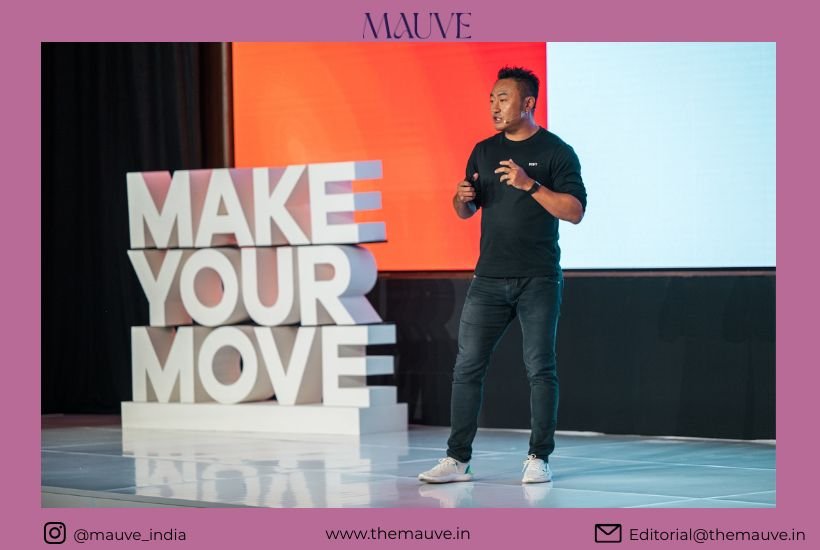
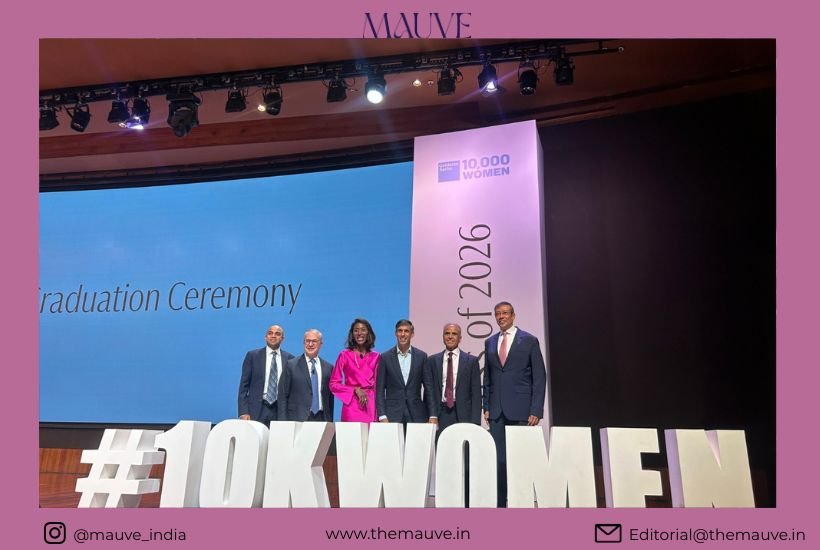
In a conversation with Asahi Pompey, Global Head of Corporate Engagement and President of the Goldman Sachs Foundation, the former British Prime Minister reflects on his entrepreneurial upbringing, the changing landscape for women-led businesses, AI’s potential to transform small enterprises and the values that have shaped his leadership journey.
What does it take to build a business that lasts? Is it the courage to take risks, the discipline to make difficult decisions, or the ability to recognise when the world around you has changed?
For Rishi Sunak, the answer lies in a combination of resilience, adaptability and the willingness to keep learning. Speaking with Asahi Pompey, Global Head of Corporate Engagement and President of the Goldman Sachs Foundation, the former Prime Minister of the United Kingdom shared lessons from a career spanning finance, public service and leadership, offering a perspective on what it takes to navigate an increasingly unpredictable world.
The conversation moved from his childhood spent helping his mother’s pharmacy in Southampton to India’s economic growth, the opportunities emerging for women entrepreneurs, the transformative potential of artificial intelligence and the leadership principles he first encountered during his internship at Goldman Sachs.
Running through it all was a consistent message: the ability to grow depends not only on what you know, but on how willing you are to adapt.
The First Lessons in Entrepreneurship Came From His Mother
Long before Sunak was responsible for the UK’s public finances, he was helping his mother manage the accounts of her pharmacy. From serving customers and cleaning the shop to balancing the books, his early experiences offered an unfiltered view of what running a small business actually entails.
It was not simply a lesson in numbers. It was a lesson in resilience.
Recalling the experience, Sunak described the realities of entrepreneurship, where financial uncertainty, unexpected setbacks and the responsibility of keeping a business running are part of everyday life.
He remembered an incident in which the pharmacy was broken into, with items stolen and the premises vandalised. Despite the disruption, his mother worked through the night to ensure the shop could open and serve customers the following morning.
For him, the experience demonstrated what distinguishes entrepreneurs: the ability to keep going when circumstances become difficult.
“What you need if you are running a small business, particularly as an entrepreneur, is resilience,” he said, explaining that his mother’s passion for serving the local community through healthcare helped her navigate the difficult moments.
The story offers a reminder that entrepreneurship is often built on persistence long before it is recognised through growth or success. Behind every business is a series of decisions, sacrifices and moments when continuing requires more conviction than certainty.
For women building businesses today, that resilience remains essential. But as the conversation went on to explore, resilience alone is not enough; entrepreneurs must also recognise the opportunities emerging around them.
India’s Growth Story and the Opportunity for Women Entrepreneurs
Reflecting on India’s economic landscape, Sunak pointed to several structural trends that he believes are creating opportunities for businesses.
Among them are infrastructure investment, the formalisation of the economy and the growing participation of women in the workforce. Together, these developments are influencing how businesses operate, where demand is emerging and which markets are opening up.
He described India’s domestic growth story as particularly compelling, noting that infrastructure development and the expansion of formal credit can support businesses looking to scale.
But one of the most interesting opportunities, in his view, lies in the changing economic participation of women.
As more women enter the workforce and establish businesses, their influence extends beyond employment statistics. They become consumers, founders and decision-makers, while also driving demand for services such as childcare that enable greater participation in the economy.
For entrepreneurs, this creates opportunities to build businesses around evolving needs rather than simply competing within established markets.
The conversation also raises an important question for the wider business ecosystem: how can financial institutions and governments ensure that women-led enterprises have access to the capital, networks and support required to grow?
Recognising an opportunity is only the beginning. Turning it into a sustainable business requires access to funding, the ability to reach customers and the confidence to make decisions in an uncertain environment.
For Sunak, the next major shift in that environment is already underway.
AI Could Become the Small Business Superpower
Artificial intelligence has become central to conversations about productivity, innovation and the future of work. But Sunak’s perspective places particular emphasis on the opportunities it creates for smaller businesses.
Large organisations often have established systems, multiple layers of approval and complex processes that can slow the adoption of new technology. Smaller enterprises, by contrast, can experiment, make decisions quickly and integrate new tools into their operations with fewer barriers.
For Sunak, that agility could become a significant competitive advantage.
“I really think, in particular, for small businesses, because it really can be a small-business superpower,” he said.
The potential lies in allowing small teams to accomplish more without needing to expand their resources at the same pace. Tasks that once demanded considerable time and expertise can increasingly be supported by AI, giving entrepreneurs greater capacity to focus on strategy, customers and growth.
Sunak offered two practical applications for business owners.
The first is using AI as a sparring partner before important meetings. By sharing a brief and asking the tool to challenge assumptions, explore counterarguments or simulate difficult questions, entrepreneurs can prepare more effectively for conversations with clients, suppliers and investors.
The second is building an AI assistant that functions like a chief of staff. Such a system could help organise information, support planning and streamline routine work, freeing up time for higher-value decisions.
For small businesses operating with limited teams and competing priorities, these applications offer a practical starting point. The opportunity is not simply to adopt technology because it is new, but to identify where it can remove friction and create more room for meaningful work.
Sunak’s optimism, however, comes with an important qualification: businesses must be prepared to keep changing as the technology evolves.
Why Adaptability Matters More Than Sticking to the Plan
When asked which leadership trait would matter most for the next generation of entrepreneurs, Sunak chose one word: adaptability.
Vision, financial acumen and determination remain important. But in an environment where technology, consumer expectations and business models are changing rapidly, even a well-designed strategy can become outdated.
“Ultimately, grit is all good and well, but if it’s grit about sticking to a plan that doesn’t make sense anymore, that grit becomes stubbornness,” he explained.
It is a distinction that speaks directly to the realities of entrepreneurship. Persistence helps founders overcome setbacks, but persistence without reassessment can also keep a business committed to an approach that no longer works.
Sunak referred to a conversation with a managing partner at Sequoia Capital, who had encouraged companies to think about reinventing themselves every four months in response to the pace of AI development.
The larger point was not that every business needs to overhaul itself on a fixed timetable. It was that leaders must remain willing to question their assumptions, test new approaches and adjust their strategies when circumstances change.
For founders, adaptability can mean revisiting pricing, experimenting with new distribution channels, reconsidering how teams operate or finding a different way to serve customers.
The objective is not change for its own sake. It is the ability to distinguish between the principles worth preserving and the methods that need to evolve.
In a fast-changing market, a business’s long-term advantage may depend less on having the perfect plan and more on knowing when to revise it.
Excellence, Integrity and Teamwork: The Values That Stay
Despite his emphasis on change, Sunak’s approach to leadership is grounded in values he considers enduring.
Reflecting on his time as Prime Minister, he recalled bringing staff together in Downing Street to establish three principles he wanted them to embody: excellence, integrity and teamwork.
What makes the story particularly significant is that these were not values he developed exclusively in government. They were principles he had encountered during his summer internship at Goldman Sachs more than two decades earlier.
For Sunak, excellence means striving to do the best possible work. Integrity means remaining worthy of trust, particularly when decisions become difficult. Teamwork means placing collective achievement above individual egos.
He described trust as an invaluable commodity, emphasising that integrity must remain central to the way an organisation operates.
His third principle, teamwork, was equally practical. Difficult days become easier when responsibility is shared, while success becomes more meaningful when it is celebrated collectively.
The advice he shared from an investor early in his career was even more succinct: “It’s nice to be important, but it’s more important to be nice.”
For entrepreneurs building teams, these principles offer a framework that extends beyond business performance. Excellence can establish standards, integrity can strengthen relationships with customers and partners, and teamwork can help organisations navigate uncertainty without losing sight of their shared objectives.
Leadership, in this sense, is not only about the decisions made at the top. It is also about the culture those decisions create.
The Power of Mentorship and a Growth Mindset
Sunak’s reflections on leadership also extended to the importance of mentorship and role models, particularly for women entrepreneurs.
Following a roundtable with women business owners, he spoke about being struck by their energy, ambition and determination. He also reflected on the example they could set for his two daughters, aged 13 and 15.
His comments highlighted the importance of seeing people who demonstrate what is possible, particularly for those building businesses in environments where they may be the first in their families or communities to pursue that path.
He also spoke about the value of structured entrepreneurship programmes, explaining that the Goldman Sachs initiative had inspired the UK government’s Help to Grow programme, which he helped establish while serving as Chancellor of the Exchequer.
Such programmes can provide practical support in areas such as distribution, customer pricing and business strategy. But Sunak believes one of the most important qualities entrepreneurs bring to the experience cannot simply be taught in a classroom.
“One thing a course can’t teach you is mindset,” he said.
He encouraged the women in the room to preserve their growth mindset: the belief that they can continue learning, improving and building beyond their current circumstances.
For founders, this distinction matters. Business knowledge can be acquired, strategies can be refined and skills can be developed. But the willingness to remain open to learning, particularly when things do not go according to plan, must be sustained from within.
What Leaders Should Stop Doing to Protect Their Time
Time management often becomes more complicated as a business grows. More people need decisions, more meetings appear on the calendar and more responsibilities compete for a leader’s attention.
Sunak’s advice was to attend fewer meetings that do not lead to decisions.
Leaders, he argued, need to preserve their time for the conversations in which important choices are made. Not every decision requires their direct involvement, and delegating appropriately allows others to take responsibility while leaders focus on issues that genuinely require their attention.
He also drew on Jeff Bezos’s distinction between two-way-door and one-way-door decisions.
Two-way-door decisions are relatively easy to reverse. They can often be delegated because mistakes can be corrected without lasting consequences. One-way-door decisions are harder to undo and therefore deserve more careful consideration from the people ultimately accountable for the outcome.
For founders, the framework offers a practical way to assess where their attention is most valuable.
Not every email needs a meeting. Not every operational choice needs the founder’s approval. And not every decision deserves the same amount of deliberation.
The ability to distinguish between reversible and consequential decisions can help leaders move faster without treating every choice as equally important.
The Hardest Decisions Leave a Lasting Impression
Leadership is often discussed through achievements, strategies and measurable outcomes. Yet some of its most difficult lessons emerge from the consequences of decisions that cannot make everyone happy.
Recalling his time as Chancellor during the COVID-19 pandemic, Sunak described one of the hardest questions he encountered from a business owner: “Why are you putting me out of business?”
The question stayed with him because it represented the personal consequences of decisions taken during an extraordinary public health crisis.
Restrictions were imposed to curb the spread of the virus, while the government introduced measures intended to support jobs and businesses through the disruption. Even so, not every business survived and not every job could be protected.
Sunak acknowledged the weight of those individual experiences, explaining that behind the broader economic picture were people who had worked hard to build their businesses and found themselves facing circumstances beyond their control.
The recollection offered a more personal dimension to his discussion of leadership. Decisions may be made with broader objectives in mind, but their consequences are experienced by individuals, families and communities.
For entrepreneurs, the lesson is equally relevant: leadership requires not only making difficult decisions, but understanding the people affected by them.
His Final Advice to Women Building Businesses: Don’t Be Afraid to Fail
As the conversation drew to a close, Pompey asked what Sunak would say to a woman who was the first in her family to build a business at scale while carrying the weight of expectations.
His answer was direct: “I think don’t be afraid to fail.”
He explained that some of the most successful people he had encountered had achieved their goals because they had failed, learned from the experience and rebuilt.
Failure, in this context, is not something to romanticise or pursue. It is a possibility that comes with trying to build something new, particularly when the outcome is uncertain and the path has not been established before.
The ability to learn from setbacks can help entrepreneurs recognise what needs to change, approach problems differently and return with a stronger understanding of their businesses.
For women navigating the additional expectations that can accompany being a first-generation founder, the message is particularly resonant. The pressure to get everything right can make experimentation feel risky, even when learning through experience is essential to growth.
Sunak’s advice brings together the central themes of the conversation: resilience to withstand difficulty, adaptability to respond to change, integrity to guide decisions and the courage to keep moving forward.
Because building a business is rarely a straight line from ambition to achievement. It is a process of learning, adjusting and beginning again.
And sometimes, the most valuable leadership skill is not knowing exactly what comes next, but having the confidence to meet it when it arrives.