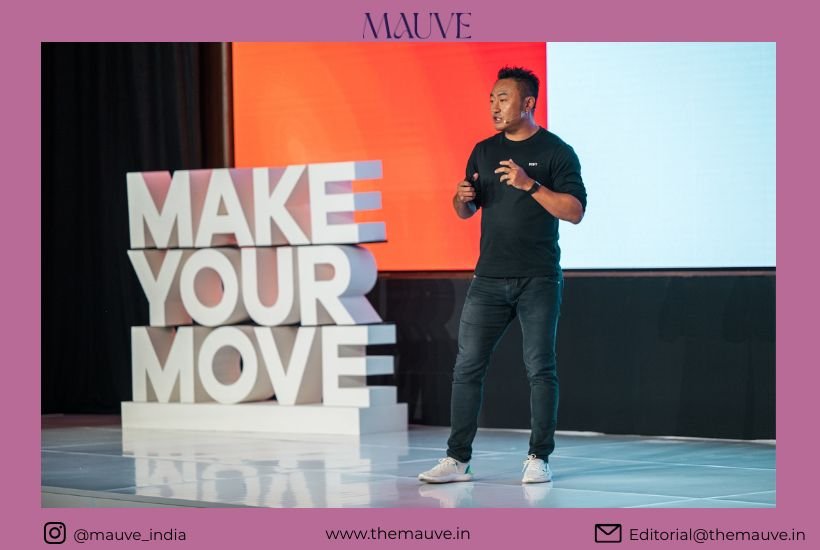
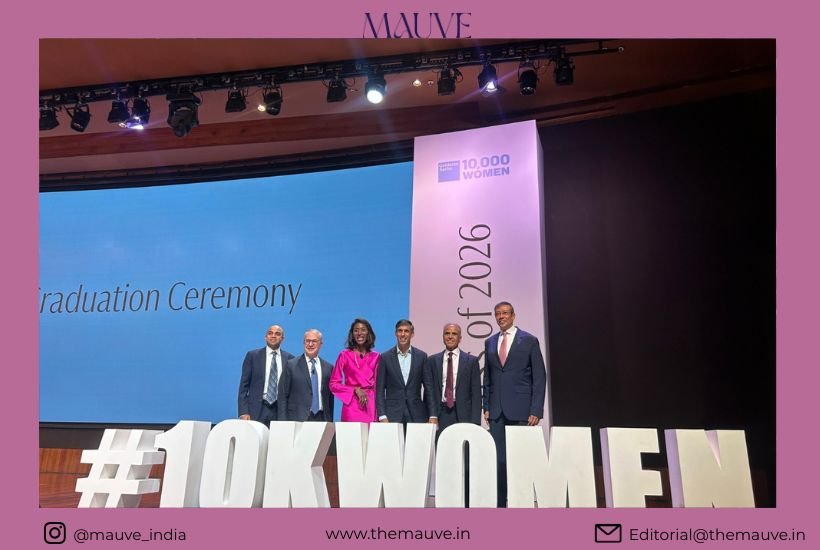
In a conversation with Kevin Sneader, President of Asia Pacific (ex-Japan) at Goldman Sachs, Bharti Enterprises Founder and Chairman Sunil Bharti Mittal reflects on the power of conviction, the people who sustain businesses through crises, and why India’s next chapter could offer extraordinary opportunities for young entrepreneurs.
Every entrepreneurial journey begins somewhere. Sometimes, it begins with a breakthrough idea. Sometimes, it begins with access to capital, a strong network or a market waiting to be discovered. For Sunil Bharti Mittal, it began with something far more modest: a bicycle crankshaft manufactured in a hot workshop in Ludhiana, Punjab.
Decades later, the founder and chairman of Bharti Enterprises has built a business spanning telecommunications and other sectors, navigating technological shifts, financial challenges and intense competition along the way. Yet, when speaking about the journey, Mittal returned repeatedly to a few enduring principles: recognise opportunities early, find partners who believe in your vision, remain resilient through uncertainty and never underestimate the people who make a business work.
In a conversation with Kevin Sneader, President of Asia Pacific (ex-Japan) at Goldman Sachs, Mittal shared the experiences that shaped his entrepreneurial philosophy, offering lessons for founders building businesses in an economy increasingly defined by digital transformation and technological change.
The First Step Is Not Always the Biggest One
Growing up in Ludhiana, a city known for its bicycle manufacturing industry, Mittal understood the limitations of starting a business without substantial capital. Rather than attempting to manufacture complete bicycles, he began by producing a smaller component — a crankshaft — serving established manufacturers in the region.
It was a practical decision, but one that would establish the foundation of his entrepreneurial journey.
The experience also shaped how he approached opportunity. Instead of waiting until he had the resources to compete with larger businesses on their terms, he began with what was possible and expanded as new opportunities emerged.
That willingness to move beyond an existing business model would become a recurring theme throughout his career.
Recalling the early years, Mittal explained that technological shifts continually presented opportunities to enter new markets. The challenge was recognising when an established direction had reached its limits and when a new one deserved attention.
His relationship with telecommunications began in the early 1980s, when he identified an opportunity to bring India’s first push-button telephone to market. At a time when obtaining a telephone connection could involve waiting years, the product represented a different way of thinking about everyday communication.
From push-button telephones, the business expanded into answering machines, cordless phones and fax machines. In 1992, Mittal became India’s first mobile licence holder, followed by the launch of mobile services in 1994.
The progression was not simply a series of product launches. It reflected an entrepreneur continually looking for the next opportunity to build upon the previous one.
For founders, the lesson is particularly relevant: starting small does not necessarily mean thinking small. A business can begin with a narrow offering and still be built around a much larger ambition.
Recognising the Moment to Reinvent
Digital transformation can feel overwhelming, particularly for businesses trying to anticipate the scale of investment, infrastructure and expertise required to remain competitive.
Mittal’s approach, however, centres on the importance of recognising change early and acting before an opportunity becomes obvious to everyone.
He recalled how the business had to reconsider its direction as new technologies emerged, moving from manufacturing components towards telecommunications and digital connectivity.
His experience suggests that the challenge for entrepreneurs is not simply identifying new technology, but understanding what it makes possible for their customers and businesses.
Sometimes, the next stage of growth lies beyond the category in which a company first established itself. Recognising that possibility requires a willingness to leave familiar territory and develop capabilities that may initially seem far removed from the original business.
Mittal also acknowledged that the scale of investment required for telecommunications was greater than he had initially understood. As the business grew, he had to look internationally for funding to sustain its ambitions.
His recollection offers an important distinction between courage and recklessness. Entrepreneurs need the conviction to pursue opportunities, but they must also recognise when growth requires additional capital, stronger partnerships and a different operating model.
The objective is not to predict every technological shift correctly. It is to remain alert enough to respond when one arrives.
Why Partnerships Can Change the Course of a Business
For an entrepreneur competing against larger organisations, access to capital can determine how quickly an idea becomes a viable business.
During the conversation, Sneader asked Mittal how he approached partnerships with established international players, including Suzuki, AT&T and Siemens, particularly when those organisations had far greater financial resources.
Mittal’s answer centred on the ability to communicate a convincing business case.
“You need to be convincing enough about your story, your product, service or idea that you can get people to put money on the table,” he explained.
He illustrated this through the OneWeb satellite project, for which he described having to persuade the UK government to commit $500 million during the pandemic. The project was intended to support an alternative satellite constellation to complement existing systems, rather than relying solely on Starlink.
Mittal said he subsequently invested $1 billion of his own money, demonstrating his conviction in the opportunity.
The example highlights a broader principle of entrepreneurial finance: investors are not simply backing a product or a market. They are also assessing the founder’s understanding of the opportunity, their commitment to the business and their ability to execute the vision.
For Mittal, successful partnerships have been built on a combination of conviction and mutual value. He pointed to partners and investors who had generated returns through their association with Bharti businesses, arguing that trust and confidence in the opportunity had helped sustain these relationships.
For emerging founders, the implication is clear. Raising capital is not merely about persuading someone to fund an idea; it is about building a case that others can believe in, while demonstrating how the partnership can create value for everyone involved.
The Crises That Tested Bharti Enterprises
Growth rarely follows a smooth trajectory. Markets shift, competitors emerge, business models come under pressure and decisions made in one period can become liabilities in another.
Mittal described three particularly difficult periods for his business — 2002, 2009 and 2016 — as moments when the company’s survival came into question.
He referred to these experiences as Bharti’s “Mahabharatas”, conveying the scale of the battles the organisation had to navigate.
In such circumstances, he said, tenacity becomes essential. Leaders must be prepared to take responsibility, put in the work required and lead from the front when the outcome is uncertain.
But his account placed particular emphasis on something that cannot be captured on a balance sheet: the workforce.
“In our case, our raw material was not the balance sheet. It was not the technology, because ultimately, it is the same technology. It was our people,” he said.
Mittal recalled employees across states including Kerala, Tamil Nadu, Odisha, Bihar, Maharashtra and Punjab working directly with customers during periods of intense competition. While competitors offered free services, frontline teams worked to retain customer relationships and demonstrate the value of staying with Airtel.
He attributed the company’s ability to grow during the competitive disruption of 2016–2018, when several other operators exited the market, in significant part to the commitment of its people.
The reflection offers a valuable perspective on leadership during a crisis. Financial resources and technology may provide the infrastructure for a business, but people determine how effectively that infrastructure is used, how customers are treated and whether an organisation can adapt under pressure.
For founders, investing in a motivated workforce is not separate from business strategy. It can be one of the factors that determines whether the business survives its most difficult periods.
India’s Next Chapter Belongs to Its Entrepreneurs
When Sneader asked about India’s economic outlook, Mittal spoke with enthusiasm about the opportunities ahead.
He reflected on the country’s expanding market, its young population and the possibilities available to entrepreneurs over the next decade or two. He also expressed a desire to be younger himself, given the scale of change he believes India will experience.
His optimism rests partly on the relationship between population, economic expansion and the opportunities available to new businesses.
A large domestic market can support demand across multiple sectors, while infrastructure development and digital connectivity can help businesses reach customers and expand beyond their immediate geographies.
For young entrepreneurs, this creates the possibility of building companies that address needs at a much greater scale than was feasible for earlier generations.
But market size alone does not guarantee success. Businesses still need to identify meaningful customer problems, develop viable products and services, secure the right resources and build organisations capable of delivering consistently.
Mittal’s own journey illustrates how those elements can come together over time: an initial product, a willingness to enter a new industry, partnerships that enable growth and a workforce capable of sustaining the business through uncertainty.
India’s opportunity, in this sense, is not simply about becoming a larger economy. It is also about the businesses that can emerge as the country’s infrastructure, technology and consumer markets continue to develop.
Success Begins With Conviction, but It Does Not End There
Towards the close of the conversation, Mittal offered a message to the entrepreneurs in the audience, encouraging them to think beyond the limits of what they might currently imagine possible.
“Whatever goals, ideas, plans and ambitions you have, you can succeed beyond your imagination,” he said.
He reflected on the fact that he had never expected the company he founded to reach the scale it has achieved, acknowledging the support of customers, employees, partners and stakeholders along the way.
His concluding remarks also pointed towards the responsibility that accompanies success. Building a large business is not an individual achievement alone; it depends on the many people who contribute to its development and continued growth.
For an entrepreneur who began by manufacturing a single bicycle component, the journey offers a reminder that scale is often the outcome of repeated decisions rather than one defining moment.
Recognise the opportunity. Make the first move. Find the people who believe in the vision. Adapt when the market changes. And when the difficult periods arrive, remember that the strength of a business is measured not only by its financial resources, but also by the people willing to stand behind it.
For India’s next generation of founders, that may be one of the most enduring lessons from Mittal’s journey: ambition sets the direction, conviction makes the first move, and people help carry the business forward.