Walk into any premium supermarket today and you’ll find shelves lined with products labelled Ratlami Sev, Bikaneri Bhujia or Gujarati Chiwda. They look familiar. They sound authentic. Yet most have very little connection to the places whose names they borrow.
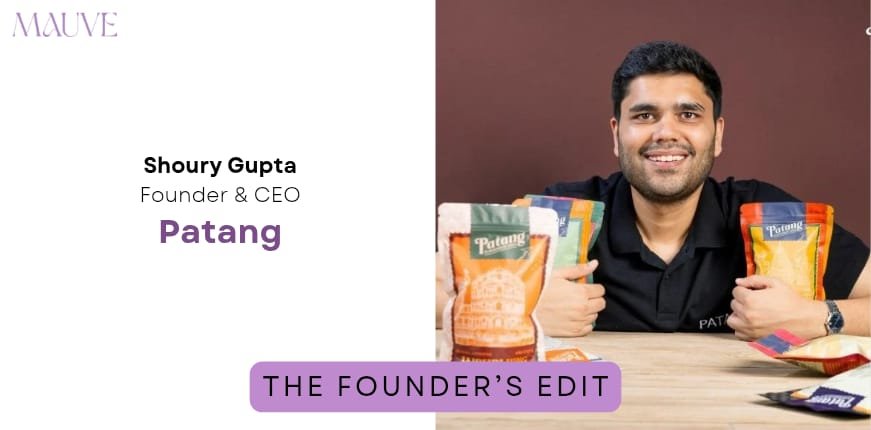
That contradiction became impossible for Shoury Gupta to ignore.
Standing in the snack aisle of a premium grocery store, after over a decade spent building brands across telecom, media and consumer technology, he realised something unsettling. India’s extraordinary regional food culture had quietly become anonymous. Recipes that once belonged to cities, communities and generations had been reduced to generic products manufactured hundreds of kilometres away.
“The Ratlami sev wasn’t from Ratlam. The chiwda had no district, no kitchen, no hands behind it,” he recalls.
For Gupta, this wasn’t simply a supply-chain issue. It was the gradual disappearance of provenance—the story of where food truly comes from.
That quiet moment became the beginning of Patang, a food brand built on an unusually uncompromising promise: every snack is made in its place of origin, by the regional kitchens that have perfected it over generations.
It is an idea that sounds deceptively simple.
In reality, it makes almost every business decision considerably more difficult.
After thirteen years in a stable career, Gupta stepped away from the predictability of corporate life to build something entirely his own. Like most founders, he traded certainty for conviction, balancing entrepreneurship alongside the realities of raising a young child while his wife managed her own legal practice.
Yet there were compromises he refused to make.
“Made at the place of origin is either true or it’s marketing.”
That single belief continues to shape Patang’s operating model.
Instead of consolidating production through one large contract manufacturer, the company works with multiple regional kitchens across India. Every product carries the identity of its birthplace, preserving recipes exactly where they belong. Equally non-negotiable are the brand’s refusal to use palm oil or preservatives—even when doing so complicates manufacturing, logistics and shelf life.
For Gupta, those aren’t operational constraints.
They’re the business itself.
His larger mission is perhaps best understood through the misconception he most enjoys correcting.
For decades, India’s regional snacks have been treated as commodities—something bought from railway platforms or neighbourhood stores, while premium food has often been associated with imported products and minimalist packaging.
Gupta sees the opposite.
“A Jamnagari Chiwda or an Amdavadi Methi Para carries more craft, more recipe history and, frankly, more flavour engineering than most modern snacks.”
India, he believes, never lacked premium culinary traditions. It merely lacked brands willing to present them with the same respect reserved for single-origin coffee, estate teas or artisanal chocolates.
That philosophy has quietly positioned Patang at the intersection of food, culture and storytelling.
The idea wasn’t born solely from nostalgia.
It also emerged from recognising an overlooked market opportunity.
Globally, provenance has long been central to premium food—whether through Protected Designation of Origin cheeses, appellation wines or single-origin coffee. India has successfully embraced provenance across beauty, wellness and handicrafts, yet savoury snacks largely remained untouched.
At the same time, countless regional kitchens with generations of expertise had little access to modern retail, quick commerce or national distribution.
Patang became the bridge.
Interestingly, the company’s founding philosophy continues to shape everything from sourcing to product development.
Instead of asking which flavours are trending, Gupta asks a very different question:
“Which district’s snack deserves a national audience next?”
Every SKU is mapped to its district through the Government of India’s One District One Product (ODOP) programme, ensuring geography remains central to every business decision.
Authenticity, however, means little without trust.
In an increasingly saturated marketplace, Gupta believes Patang’s greatest strength is that its claims can actually be verified.
“Most brands claim authenticity. Ours is falsifiable—and that’s the point.”
Every product openly identifies where it was made, who made it and why that place matters.
Scaling such a model naturally comes with complexity.
Rather than expanding production capacity through centralised factories, Patang has chosen to scale distribution instead—working across quick commerce, modern retail, institutional partnerships and corporate gifting while keeping manufacturing rooted in regional kitchens.
It is operationally demanding.
But for Gupta, centralising production would fundamentally change the company.
“The moment we centralise production for convenience, we become just another snack company with better copywriting.”
Perhaps even more fascinating is the way he defines Patang’s customer.
Not by age.
Not by income.
But by memory.
“Someone with a taste memory.”
The person who remembers how sev tasted during childhood visits to Ratlam.
The family looking to gift something unmistakably Indian without compromising on quality.
The consumer who reads ingredient labels, avoids palm oil and views food not merely as consumption, but as cultural expression.
Listening to those customers has significantly influenced Patang’s evolution.
Early sales data revealed something unexpected.
Discovery often happened through quick-commerce platforms, but loyalty emerged through curated experiences rather than individual products.
Instead of expanding endless SKUs, the company began creating thoughtfully designed collections and festive hampers—each built around a narrative rather than an assortment.
Names like Utsav, Pitara and Aabhaar became stories customers could gift, not merely boxes they could purchase.
Community, too, has taken on a distinctly editorial approach.
Rather than relying solely on promotional campaigns, Patang behaves almost like a publication—sharing stories about districts, recipes, local kitchens and India’s rich culinary geography.
For Gupta, loyalty isn’t measured by likes or followers.
It’s measured by introductions.
“When someone gifts Patang, they’re putting their own name behind the recommendation.”
Looking ahead, he believes several powerful shifts will reshape India’s food industry.
Stricter ingredient regulations, increasing scrutiny around ultra-processed foods and palm oil, AI-driven retail operations and the continuing premiumisation of local products will all reward brands built on genuine transparency rather than marketing narratives.
The greater challenge, he believes, will be protecting authenticity as provenance itself becomes fashionable.
Which is why Patang continues to anchor every claim in verifiable truth.
Beyond revenue, Gupta measures success differently.
Repeat purchases matter.
Repeat gifting matters even more.
But perhaps the metric closest to his heart lies far away from balance sheets.
“If a family-run kitchen in Darbhanga or Ratlam is hiring because Patang exists, then the model is working at both ends.”
Leadership, meanwhile, has become an exercise in restraint.
The founder who once wrote product listings, packed warehouse orders and negotiated retailer margins now spends more time building systems than executing tasks.
What he values most today isn’t speed—but judgment.
“A consultant’s job is to have answers quickly. A founder’s job is to hold questions longer.”
It is a philosophy earned not only through growth but also through difficult lessons.
An early experience with a large retail partner taught him that enthusiasm can never replace contractual discipline. Delayed payments and unmet commitments became a reminder that sustainable businesses require operational rigour alongside ambition.
Goodwill, he now believes, is never a working-capital strategy.
For Patang, however, the larger mission remains unchanged.
In restoring India’s regional snacks to the places they truly belong, Shoury Gupta isn’t simply selling food.
He is rebuilding geography, memory and craftsmanship—one district, one kitchen and one story at a time.