
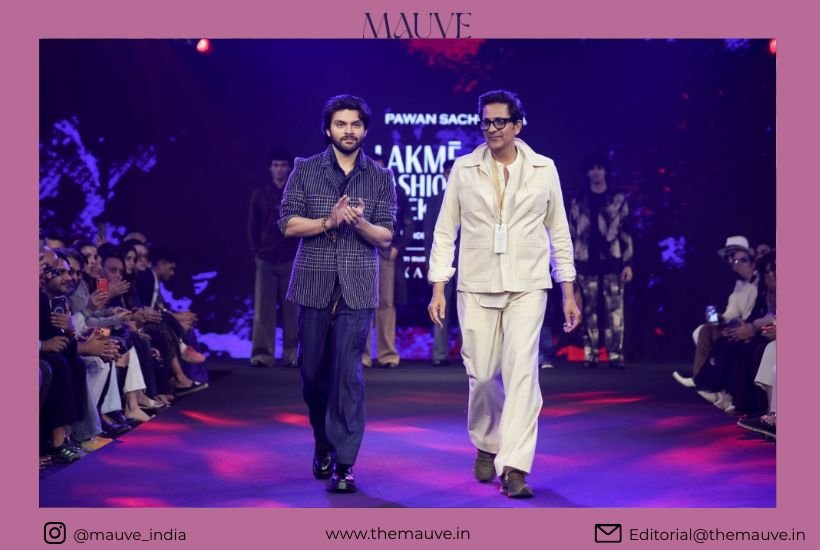
With RECAST, the designer reimagines Indian craftsmanship through contemporary menswear, bringing traditional textile techniques, modern tailoring and gender-fluid silhouettes into a new design conversation.
Fashion’s relationship with heritage is constantly evolving. What was once rooted in tradition is finding new expression through experimental silhouettes, unconventional textures and a contemporary approach to dressing. At Lakmé Fashion Week in partnership with the Fashion Design Council of India (FDCI) 2026, Indian fashion designer Pawan Sachdevaa explored this intersection with RECAST — Recasting the Familiar. Redefining the Modern Silhouette., featuring actor Veer Pahariya as the showstopper.
Presented in New Delhi on 18 October 2026, the collection examined how the richness of Indian craftsmanship could translate into a modern wardrobe without losing its cultural character. Through considered tailoring, innovative textile treatments and a meeting of traditional techniques with contemporary menswear, RECAST offered a fresh perspective on the possibilities of Indian design.
When Indian Craft Meets Contemporary Dressing
At the heart of RECAST lies a simple yet compelling idea: heritage is not something to be preserved in a fixed form; it is something that can evolve with the times.
Sachdevaa approached traditional Indian craftsmanship through the language of modern workwear, luxury streetwear and contemporary tailoring. Techniques such as Bandhani, Shibori, Kasuti and Kantha were reinterpreted through new textures, silhouettes and applications, moving beyond their conventional expressions to find a place in contemporary dressing.
The result was a collection that brought together the familiarity of Indian textile traditions and the freedom of modern design. Rather than reproducing traditional forms, the designer explored their essence, translating intricate craft practices into a wardrobe that felt current, versatile and gender-fluid.
The material palette further strengthened this dialogue. Kala Cotton Khadi, Khadi Silk, Matka Silk, Habutai Silk, Bouclé and denim came together to create contrasts between texture and structure, rawness and refinement. Each fabric contributed to a design vocabulary that balanced the organic character of handcrafted textiles with the precision of contemporary construction.
The New Language of Menswear
The silhouettes at the centre of RECAST reflected a shift towards menswear that embraces individuality, versatility and experimentation. Structured jackets, relaxed tailoring, utility separates, coats, shirts and fluid trousers formed the foundation of the collection, offering multiple interpretations of the modern wardrobe.
Handcrafted interventions and natural dyeing were complemented by contemporary textile treatments, including acid washing, enzyme washing, stone washing and ombré dyeing. These techniques introduced depth and variation, allowing traditional materials to take on new visual identities.
The colour story moved through indigo, ecru, black and mustard, drawing from the richness of natural dyes and the understated appeal of earthy, versatile tones.
Balancing formal dressing with workwear influences and luxury streetwear, the collection challenged the idea that Indian craftsmanship belongs exclusively to traditional silhouettes. Instead, RECAST positioned it as an evolving design language — one capable of moving effortlessly between different occasions, aesthetics and expressions of personal style.
Veer Pahariya Brings the Collection to the Runway
Adding a celebrity highlight to the showcase, Veer Pahariya took on the role of showstopper, bringing the collection’s contemporary menswear aesthetic to the runway.
“For me, style is about expressing who you are with confidence, while keeping it effortless. Walking for Pawan Sachdevaa’s RECAST was a great experience, bringing together the richness of Indian craftsmanship and a contemporary design language. What stood out to me was the way the collection reimagined traditional elements through modern silhouettes, creating looks that felt distinctive, versatile and true to their own identity,” Veer shared.
His appearance complemented the collection’s emphasis on individuality and contemporary expression, reinforcing the idea that heritage-inspired dressing can feel relevant to a generation increasingly interested in personal style, versatility and distinctive design.
Pawan Sachdevaa on Recasting Heritage
With more than 27 years of experience in the fashion industry, Pawan Sachdevaa has developed a design sensibility defined by attention to detail, considered fit and refined versatility. His work brings together traditional Indian influences and contemporary aesthetics, exploring how craftsmanship can remain relevant as the language of fashion changes.
For RECAST, this exploration centred on giving familiar techniques and textiles a different context through modern silhouettes and construction.
“RECAST is about respecting the richness of Indian craftsmanship while allowing it to evolve. I wanted to take techniques and textiles that carry generations of knowledge and reinterpret them through modern silhouettes, tailoring and the way we dress today. For me, heritage is not static; it continues to grow when we give it new context,” Sachdevaa said.
His approach reflects a broader conversation within Indian fashion, where designers are increasingly exploring ways to integrate indigenous techniques into contemporary wardrobes. The challenge lies not simply in incorporating traditional craft, but in allowing it to shape the design itself — from the choice of material to the construction, finish and final silhouette.
Reimagining the Familiar
With RECAST, Pawan Sachdevaa explored the contrasts that define contemporary fashion: heritage and modernity, craft and construction, irregularity and precision. By bringing traditional Indian techniques into conversation with denim, utility dressing and modern tailoring, the collection proposed a way of looking at craftsmanship beyond convention.
At Lakmé Fashion Week x FDCI 2026, the showcase placed Indian textile heritage within a contemporary menswear narrative, demonstrating how traditional knowledge can inspire new forms of expression.
The message behind RECAST was ultimately one of reinvention. Indian craftsmanship does not need to remain confined to the past to retain its significance. In the hands of a designer willing to reinterpret it, heritage can become a living, evolving part of the modern wardrobe.