Padel 360’s new 15,000 sq. ft. Lower Parel destination brings padel, pickleball, Pilates, yoga, recovery and hospitality together under one roof
There was a time when playing a sport meant showing up at a court, playing for an hour and heading home.
That idea is changing.
Across India, sports are increasingly becoming social rituals — places to meet people, build communities, stay fit and, increasingly, spend an entire part of the day. Padel sits comfortably at the centre of that shift. What began as a relatively unfamiliar racquet sport has quickly found an audience among India’s urban, fitness-conscious generation, turning courts into social spaces as much as sporting ones.
Over the last three years, the number of padel courts in India has grown from fewer than 100 in 2023 to more than 300, with nearly 100,000 active players now part of the country’s growing padel community.
And as the sport grows, so does the expectation of what a padel destination should offer.
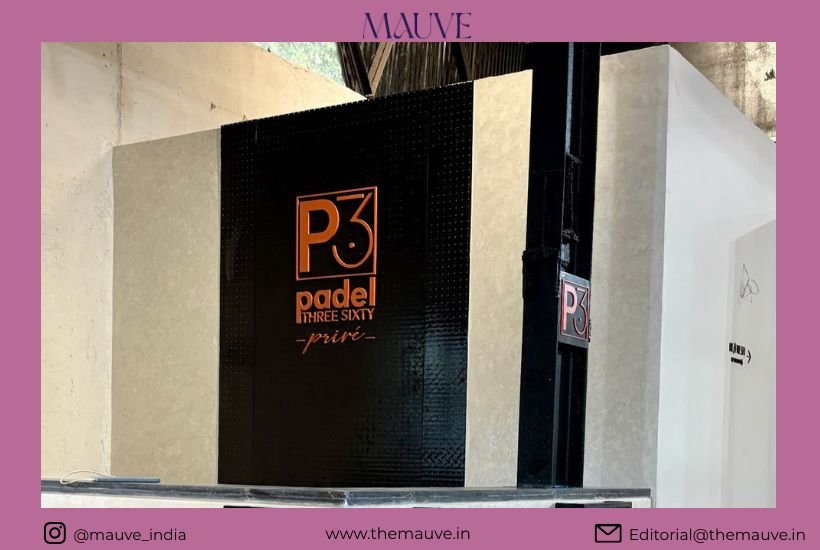
Padel 360’s newest centre in Lower Parel, Mumbai, is built around exactly that idea.
Spread across 15,000 sq. ft., the new destination brings together two international-quality padel courts, two pickleball courts, a café, a Pilates and yoga studio and a dedicated recovery centre. The result is less traditional sports facility and more integrated wellness destination — a place designed around what happens before, during and after the game.
From Court Time to Community Time
The rise of padel in India has been closely connected to its social nature.
It is easy to pick up, typically played in doubles and naturally lends itself to group participation. That makes the sport particularly suited to a generation that increasingly views fitness as a lifestyle rather than an isolated activity.
Padel 360 appears to be building its proposition around that behavioural shift.
Since opening its flagship centre in Worli in November 2024, the brand says it has grown to welcome close to 600 visitors every day across its existing facilities.
The Lower Parel destination takes that model a step further by placing sport, wellness and hospitality within the same ecosystem.
“Padel is evolving from an emerging sport into one’s daily lifestyle, and we believe the infrastructure supporting that growth must evolve alongside it. With our fourth centre, we are introducing a destination that brings together premium playing facilities, wellness, and hospitality in an all-integrated ecosystem. Our ambition extends beyond expanding our footprint; we want to shape how the next generation experiences racquet sports in India.”
— Nilesh Bansal, Co-Founder, Padel 360
What Happens When the Sport Doesn’t End at the Court?
The Lower Parel space is interesting because its proposition isn’t built around padel alone.
Players can move between padel and pickleball, while Pilates and yoga introduce a more deliberate wellness component. A recovery centre gives the destination another layer, while the café creates a space to linger rather than immediately leave after a session.
It reflects a broader evolution in premium fitness: consumers are increasingly looking for environments that combine performance, recovery, wellness and social interaction rather than treating each as a separate category.
The gym is becoming a club.
The sports court is becoming a community.
And the wellness studio is becoming part of the same ecosystem.
“A Place Where They Can Play, Unwind, Build Connections”
For Padel 360, community appears to be as important as the sporting infrastructure itself.
“When we envisioned this space, we wanted to create more than just great courts. We wanted to build a place that brings people together, a place where they can play, unwind, build connections, and feel a true sense of community. Whether they are here to compete, for a casual game, or simply to spend time with friends, we hope they find more than a sport here. We hope they meet like-minded people and find their tribes.”
— Anu Bansal, Co-Founder, Padel 360
That idea of finding a “tribe” is particularly relevant to the new generation of fitness consumers.
For many, wellness is no longer simply about physical outcomes. It is also about belonging — finding people with similar interests, routines and ambitions.
Padel, with its inherently social format, offers a natural foundation for that.
The Celebrity Effect
The sport’s growing cultural visibility has also helped move padel beyond the niche-sport category.
Padel 360 says its existing centres have welcomed celebrities, athletes and entrepreneurs, including Akash and Shloka Ambani, Alia Bhatt, Yuvraj Singh, Rishabh Pant, Sanju Samson, AP Dhillon, Shanaya Kapoor, Sonakshi Sinha, Agastya Nanda, Ibrahim Ali Khan, Zaheer Khan, Mandira Bedi, Rachin Ravindra and Devon Conway, alongside members of the New Zealand cricket team.
Celebrity participation alone doesn’t create a sporting culture, but it can accelerate visibility.
For a relatively new sport, seeing familiar public figures on the court can make the activity feel more accessible, aspirational and culturally relevant.
Beyond Padel
The larger ambition for Padel 360 appears to be about building an ecosystem around racquet sports rather than simply adding more courts.
“Padel is one of the most exciting and fastest-growing sports in India today. Our passion has always been to inspire more people to discover the game while creating world-class experiences around it. As the sport continues to grow, we remain committed to building an ecosystem that brings together community, competition, and premium infrastructure to support its long-term future.”
— Ishita Mohatta, Co-Founder, Padel 360
That ecosystem is already expanding. With the Lower Parel centre taking the brand to four facilities, another Mumbai location at Ruby Mills, Dadar, is reportedly in the pipeline.
The strategy points towards a market that is beginning to mature.
The question is no longer simply whether Indians want to play padel.
It is whether the infrastructure can evolve quickly enough to match the way people increasingly want to experience sport.
The New Fitness Destination Is Also a Social Destination
The most interesting thing about Padel 360’s Lower Parel launch may therefore not be the number of courts.
It is the decision to put sport, wellness, recovery, food and community into one address.
That model reflects a larger change in urban lifestyles. People want their fitness spaces to feel less transactional. They want somewhere they can spend time, meet friends, discover new activities and return even when they aren’t necessarily training for anything.
Padel happens to be particularly well positioned for this moment.
It is competitive without being intimidating, social without being exclusively recreational and physical without feeling like conventional gym culture.
And now, in places such as Padel 360, the court is becoming only the beginning.
The next generation of sports destinations may not ask you to simply come and play.
They may give you a reason to stay.