Written by Priya Lalwani & Khizra Khan
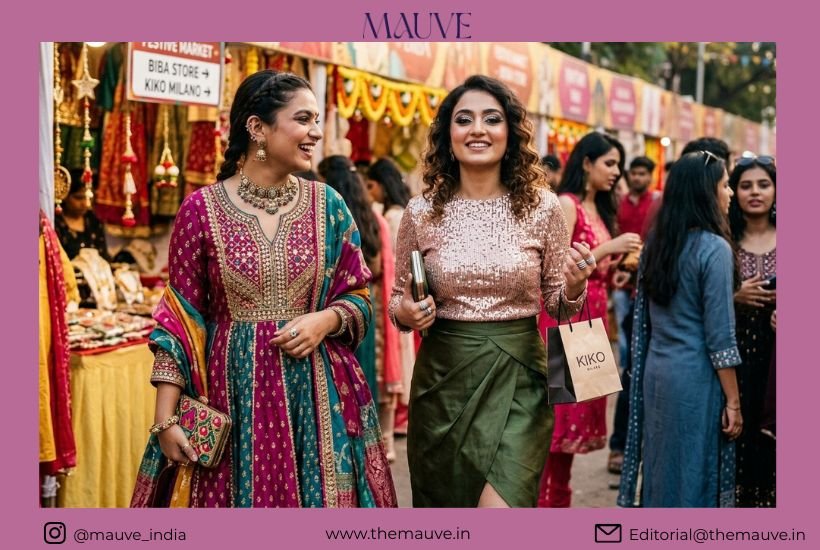
There was a time when festive fashion followed a predictable formula. More shimmer meant more celebration. Heavier embroidery signalled greater luxury. Makeup became bolder with every passing season, and jewellery wasn’t complete unless it occupied half the outfit.
That definition of celebration is quietly disappearing.
Across India’s fashion and beauty industries, consumers are beginning to value something very different—not less luxury, but more meaningful luxury. Instead of asking “What’s trending?”, they’re asking “Does this feel like me?”
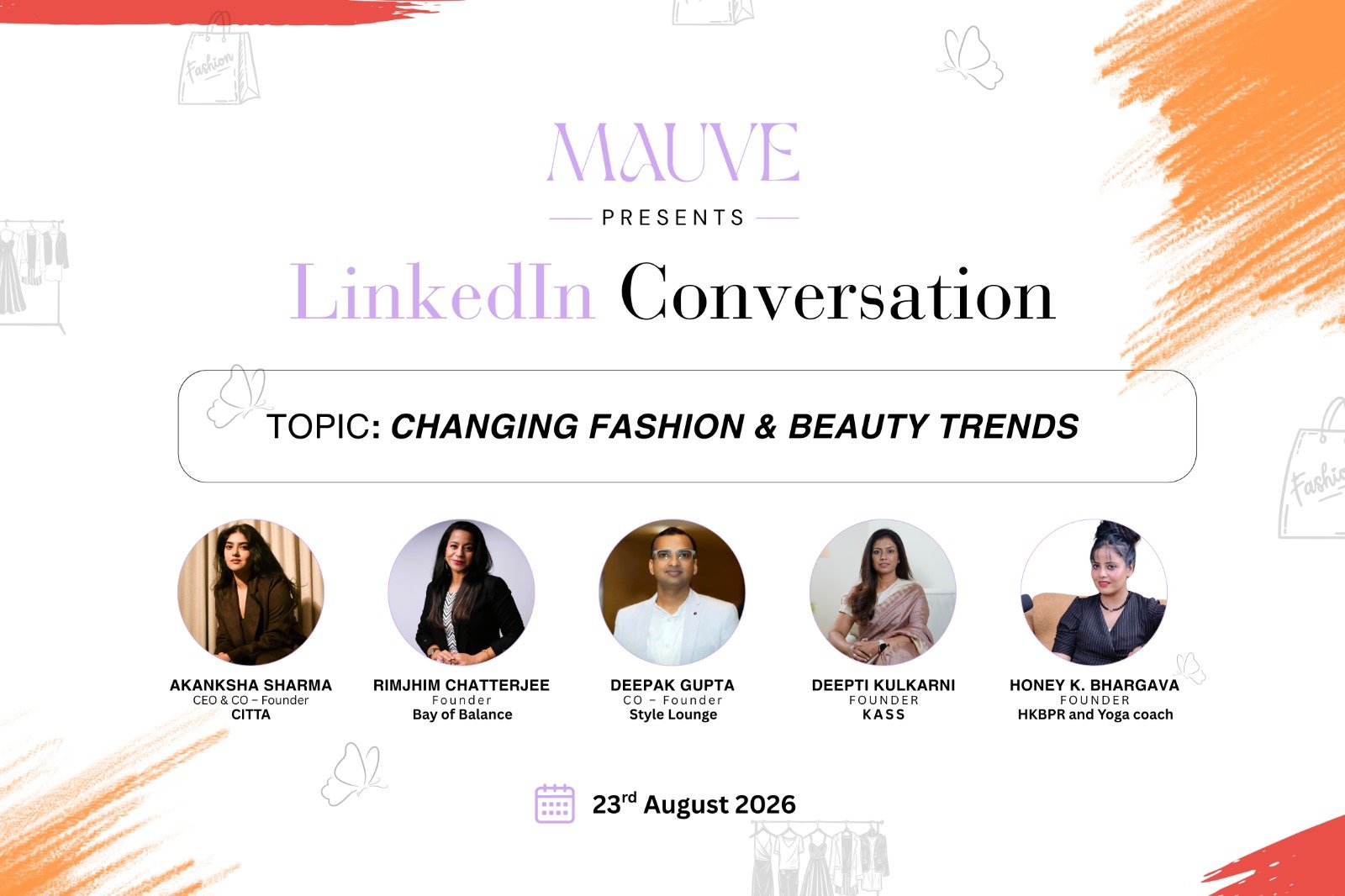
This shift formed the basis of Mauve India’s LinkedIn Conversations, where founders across beauty, fashion and wellness shared what they’re observing from the frontlines of consumer behaviour. Together, their insights reveal that festive fashion in 2026 is no longer about doing more. It is about choosing better.
Akanksha Sharma, CEO and Co-Founder of CITTA, believes consumers are increasingly prioritizing naturally healthy, glowing skin over heavy cosmetic coverage. Skincare awareness is increasing, shifting from last-minute facials and quick fixes toward more conscious, consistent care.
Social Media Isn’t Creating Skincare Trends – It’s Accelerating Them
Social media has made consumers more experimental and aware, while also shortening trend cycles. As skin health becomes a year-round priority, skin barrier care could become the next festive beauty essential.
Yet Deepti Kulkarni, Founder of Kass, argues that this acceleration isn’t inherently negative.
Platforms have democratised access to information, exposing consumers to new brands, styling ideas, ingredient education and craftsmanship that traditional advertising rarely showcased. Today’s shoppers are significantly more informed than previous generations.
The challenge isn’t social media itself.
It’s developing the ability to distinguish timeless style from temporary virality.
The End of Festive Excess
For decades, Indian festive dressing rewarded abundance. More embellishment, more accessories and heavier silhouettes often equated to greater elegance.
Honey K. Bhargava, Founder of HKBPR, believes that mindset is gradually fading.
Consumers are increasingly investing in one exceptional garment paired with one meaningful piece of jewellery rather than multiple statement pieces competing for attention.
The emphasis has shifted from quantity to intention.
Luxury has always been rooted in craftsmanship, longevity and emotional value. Fashion in 2026 appears to be returning to those principles.
Beauty Is Becoming a Wellness Experience
Festive beauty routines have traditionally focused on visible outcomes.
Glowing skin.
Perfect makeup.
Photograph-ready appearances.
According to Rimjhim Chatterjee, Founder of Bay of Balance, beauty is becoming less transactional and more therapeutic.
Consumers are beginning to value rituals themselves rather than simply the results they promise. A skincare routine is increasingly seen as an act of emotional wellbeing rather than merely cosmetic improvement.
This evolution reflects wider consumer behaviour. The global sustainable fashion market was valued at approximately US$10.1 billion in 2025 and is projected to surpass US$22 billion by 2032. Meanwhile, studies indicate that nearly 61% of Gen Z consumers actively consider sustainable or second-hand options before making purchases.
Consumers are no longer buying products simply because they work.
They’re buying products that align with how they want to live.
Personalisation Is the New Luxury
Perhaps the most significant transformation lies in how people discover products.
Deepak Gupta, Co-founder of Style Lounge, believes artificial intelligence is making beauty increasingly personal.
AI-powered skin analysis and personalised recommendations are replacing generic influencer advice, enabling consumers to make choices based on their unique skin concerns rather than viral routines.
Ironically, technology is making beauty more human.
Instead of encouraging conformity, AI is helping consumers celebrate individuality.
Luxury Has Become More Personal Than Ever
Viewed collectively, these conversations point towards a much broader shift in consumer psychology.
Festive fashion is no longer about being the most noticeable person in the room.
It is about feeling the most authentic.
Minimal makeup doesn’t mean minimal effort.
Simple dressing doesn’t mean compromising on luxury.
Sustainability doesn’t mean sacrificing elegance.
Technology doesn’t replace personal taste—it enhances it.
The future of festive fashion belongs to consumers who value confidence over comparison and craftsmanship over consumption.
Luxury, after all, has never been about owning more.
It has always been about choosing wisely.
And perhaps that is the defining festive trend of 2026—not maximal glamour, but maximal meaning.