With a ₹36,441-crore sports outlay, ambitions for the 2030 Commonwealth Games and the 2036 Olympics, and growing interest in golf tourism, India’s turf industry is turning towards precision technology, water efficiency and global expertise.
As India looks towards a decade of sporting ambition, the spotlight is beginning to fall on an essential yet often overlooked part of the game: the grass beneath the athletes’ feet.
From cricket pitches and football grounds to championship golf courses, natural turf is far more than a finishing touch. Its quality can influence performance, playing conditions and the long-term sustainability of sporting infrastructure. And as India strengthens its ambitions on the global sporting stage, the science of growing and maintaining that grass is becoming increasingly important.
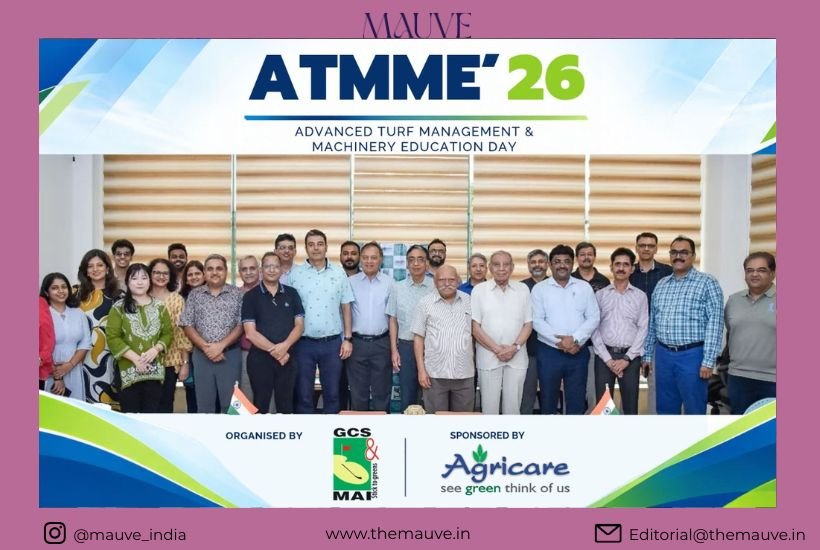
On October 24, 2026, the Golf Course Superintendents & Managers Association of India (GCS&MAI) will bring together turf, irrigation, agronomy and machinery specialists from India, the UK, the USA and Japan at Noida Golf Course. The technical programme will focus on water-efficient irrigation, seasonal turf management and the mechanisation of course maintenance for Indian conditions.
The gathering arrives at a moment when turf management is evolving into a technology-led discipline, shaped by climate pressures, the demand for international playing standards and the need to make every drop of water count.
The Business Behind the Green
India’s sporting ambitions are creating fresh opportunities for the businesses and specialists working behind the scenes. The Union Cabinet has approved a combined outlay of ₹36,441 crore for an expanded Khelo India scheme and support for national sports federations from 2026–27 to 2030–31. Meanwhile, the country’s preparations for the 2030 Commonwealth Games in Ahmedabad and its ambitions to host the 2036 Olympics are bringing greater attention to the infrastructure needed to support world-class sporting events.
That infrastructure extends well beyond stadium architecture. Maintaining playing surfaces that can withstand intensive use, changing seasons and demanding performance standards requires specialised knowledge, equipment and investment.
According to Future Market Insights, India’s sports turf sensor market is projected to grow at an annual rate of 13.2% through 2036, outpacing the forecast global growth rate of 10.3%. The figures point towards increasing interest in technologies that help grounds teams understand soil conditions, monitor moisture and make more informed maintenance decisions.
The broader global turf protection market, valued at USD 6.38 billion in 2025, is projected to reach USD 10.58 billion by 2034, according to Fortune Business Insights. While North America currently accounts for nearly 40% of this market, India remains an emerging opportunity, with the source placing its market at approximately USD 180 million.
For the industry, the opportunity is not simply to introduce more products. It is to develop practices and systems suited to the realities of Indian climates, budgets and water availability.
When Global Sport Meets Local Conditions
The international sporting calendar is already bringing India’s playing surfaces into sharper focus.
The USD 4 million DP World India Championship at Delhi Golf Club, highlighted in the announcement as the DP World Tour’s largest prize fund for an event in India, has attracted leading golfers, including Rory McIlroy and defending champion Tommy Fleetwood. Such tournaments bring attention not only to the players and the competition, but also to the course conditions that underpin elite performance.
Cricket is seeing its own evolution. UK-based SIS Grass has invested in bringing hybrid-pitch technology to India following the International Cricket Council’s approval of hybrid surfaces for T20 and one-day international matches. The HPCA Stadium in Dharamshala is cited as an early Indian example.
These developments reflect a wider shift: the management of sporting surfaces is increasingly informed by agronomy, engineering and technology. As international standards become more important, India’s ability to build local expertise will be as significant as its ability to invest in infrastructure.
The Water Equation
For India’s turf managers, however, the challenge begins with the weather.
A course or sports ground must remain playable through intense summer heat, winter cold in northern regions and the changing conditions between seasons. The announcement points to temperatures reaching 47.2°C in Vidarbha in May as an illustration of the heat that turf must endure.
Water efficiency is therefore central to the conversation. Government figures presented to Parliament in July indicate that India’s overall stage of groundwater extraction declined from 63.33% in 2017 to 60.63%. Yet 730 of the country’s 6,762 groundwater assessment units remained classified as over-exploited, underscoring the continued need for careful water management.
For golf courses and sports grounds, this means moving beyond irrigation based solely on routine or visual judgement. Soil-moisture sensors, precision irrigation systems, heat-tolerant grass varieties and machinery designed to perform multiple tasks can help maintenance teams use resources more strategically.
The aim is to maintain playing quality without treating water as an unlimited resource. In a country with significant climatic variation, these practices could also help develop solutions relevant to other regions facing hotter, drier conditions.
Turf as an Economic Asset
The importance of professionally managed turf extends beyond sporting performance. Golf courses and well-maintained sports grounds can contribute to tournaments, tourism, employment and the value of surrounding destinations.
Speaking about the opportunity, Wg. Cdr. Arun K. Singh, President of GCS&MAI, said: “India will soon host the world’s athletes and golfers on its own grass, and that grass performs in conditions few other countries face.”
He added that India’s opportunity lies in building domestic expertise that meets international standards while using less water and operating at lower cost. The ambition, he suggested, is for India to become a benchmark for turf management in a hotter, drier world rather than simply importing knowledge and technology.
Vinod Goyal, Secretary General of GCS&MAI, similarly emphasised the economic value of well-maintained sporting surfaces.
“A well-kept course or sports ground brings tournaments, tourists, property value and jobs, and it deserves to be managed like any other infrastructure,” he said.
Goyal also highlighted a shift from experience-led maintenance towards diagnosis informed by soil science, grass selection and appropriate machinery. The result, when implemented effectively, can be better-targeted interventions and savings in both water and operating costs.
Golf Tourism and the Next Sporting Chapter
The growing interest in golf tourism adds another dimension to India’s turf story. At the launch of the Indian Golf Premier League in April, Union Tourism Minister Gajendra Singh Shekhawat described golf tourism as a segment that attracts high-value visitors and supports long-term economic growth. The league has committed to mobilising USD 2 billion for golf tourism infrastructure, including in tier-two and tier-three cities.
For destinations seeking to attract tournaments and visitors, the quality and sustainability of golf facilities can become part of a broader economic proposition. But achieving that potential requires trained professionals, reliable maintenance systems and an understanding of how different grasses and technologies respond to local conditions.
This is where industry collaboration becomes particularly relevant. Bringing together specialists from India and established international turf markets can support the exchange of technical knowledge while allowing global approaches to be adapted to India’s environmental and operational realities.
Building the Expertise Beneath the Game
The GCS&MAI programme at Noida Golf Course will address three connected priorities: efficient irrigation, seasonal turf management and mechanised course maintenance. Together, these reflect an industry increasingly shaped by measurable conditions, specialised skills and resource-conscious decision-making.
The association works to raise standards in golf course management through technical education, knowledge sharing and sustainable turf practices. Its initiatives include a Greenkeepers Certification Course, launched in 2023 with ILead and Kolkata-based Champ for Life Academy, and SUSTAIN, its seminar series on sustainable turf and irrigation practices.
As India prepares to welcome more international sporting events and develop its golf tourism infrastructure, the people responsible for maintaining its playing surfaces will have a growing role in determining how successfully those ambitions translate into reality.
The next chapter of Indian sport will be shaped by athletes, investment and venues. But it will also depend on the science beneath the game: healthier grass, smarter irrigation, better machinery and a workforce equipped to meet international standards under distinctly Indian conditions.
Event details
- What: GCS&MAI technical programme on water-efficient irrigation, seasonal turf management and mechanisation of course maintenance
- When: October 24, 2026
- Where: Noida Golf Course
- Participants: Turf, irrigation, agronomy and machinery experts from India, the UK, the USA and Japan
- Website: www.gcsmai.com