From a seven-city search to a national finale, Bar Maestro’s first edition points to a larger shift in how India sees bartending — not simply as service, but as craft, creativity and storytelling.
There was a time when the bartender was largely part of the background of a night out. The drink arrived at the table; the person who made it rarely became part of the story.
That relationship is changing.
India’s cocktail culture has matured considerably, and with it has come a growing appreciation for the people behind the bar. Ingredients are being treated with the same curiosity as chefs give produce, techniques have become part of the experience, and cocktails increasingly carry a sense of place, personality and intent.
The first edition of Bar Maestro, the flagship platform from ABD Maestro in association with Tulleeho Beverage Academy, offers an interesting snapshot of that evolution.
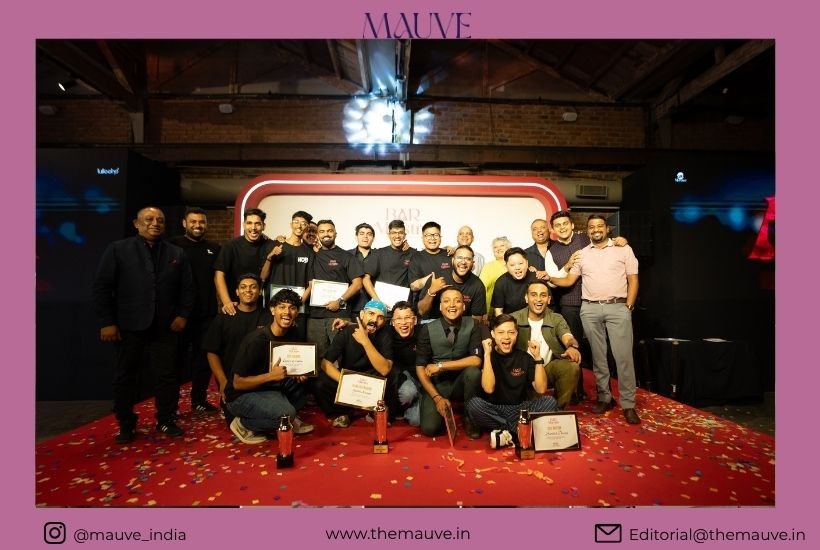
After a nationwide search spanning seven cities, the competition culminated in Mumbai with 16 finalists competing for the title of Grand Gold Maestro. The winner, Yumit Kumar of The First Floor, Delhi, stood out with a spirit-forward cocktail that brought together all five elements of nature — Earth, Water, Fire, Air and Space.
But the more interesting story may be what happened before the final.
Bar Maestro received more than 350 entries from bartenders across India. Of these, 160 were shortlisted for the second round, before the final 16 emerged from city-level evaluations.
Numbers like these suggest that the Indian bar industry is no longer operating within a narrow circle of familiar names and established metropolitan destinations. There is a wider talent pool emerging, and increasingly, bartenders are being given platforms to experiment, compete and articulate their own point of view.
The bartender as a creative professional
The five-element brief was deliberately open-ended. Earth and Water could be interpreted through regional ingredients and flavours, while Fire and Air could find expression through smoke, heat, aroma and technique. Space, perhaps the most abstract of the five, encouraged minimalist and conceptual interpretations.
That matters because modern mixology is not only about getting a recipe right.
It is about translating an idea into flavour.
A cocktail can now communicate geography, memory, texture, nostalgia or even a particular design philosophy. The bartender becomes part technician, part storyteller and part creative director — balancing taste with presentation and theatre.
Yumit Kumar’s winning approach, interestingly, moved in the opposite direction.
After experimenting with different techniques throughout his bartending career, he chose simplicity for the final.
“Winning Bar Maestro feels incredibly special, having competed with some of the finest bartenders in the country. After exploring so many techniques throughout my bartending journey, I chose to return to my roots – simplicity. Seeing something so personal resonate at this level makes the win even more meaningful. I hope it inspires more bartenders to embrace minimalism, trust their instincts, and stay true to their own style.”
That idea — trusting one’s own style — may be one of the more revealing aspects of where Indian mixology is heading.
As the industry becomes more sophisticated, sophistication does not necessarily mean adding more. Sometimes it means knowing what to leave out.
From competition to community
Bar Maestro’s significance also lies in the scale of participation.
The competition brought together bartenders from established bars as well as emerging talent, eventually narrowing hundreds of entries down to a national final. Delbert D’Costa of Mofo, Goa and Sandesh Thalang of Sidecar, Delhi were named the two Gold Maestros, while Houz Cafe, Delhi was recognised for recording the highest sales nationally during the Bar Maestro journey.
For an industry that depends heavily on knowledge sharing, competitions can become more than award platforms. They create spaces where professionals encounter different techniques, ingredients and philosophies — and where talent from different cities can see what the rest of the country is doing.
That community-building aspect is central to Bikram Basu, Vice Chairman, ABD Maestro’s vision for the platform.
“I’ve spent some time behind bars and a lot in front of them to know that bartenders are often the most creative people in the room, yet quite often the least celebrated. Each liquid they pour in a cocktail tell a story, and ‘Bar Maestro’ was to build centre stage for the community to showcase their craft and creativity. What made the first edition exciting was the extent and quality of participation, with bartenders representing some of the country’s best bars to emerging talent from across India.”
The language is telling: centre stage.
Because recognition changes an industry. It signals that the work deserves to be examined, discussed and celebrated.
India’s mixology story is getting deeper
The evolution of Indian cocktails is also tied to a broader shift in how people drink and dine.
Bars are increasingly becoming destinations in their own right. Consumers are curious about ingredients, provenance and technique. Regional flavours are being interpreted through contemporary formats, while bartenders are drawing inspiration from India’s enormous culinary and cultural vocabulary.
The result is an industry that has room for both experimentation and restraint.
That was visible in the Bar Maestro final, where the same five-element brief produced markedly different interpretations. One bartender might approach an element through an ingredient; another through temperature, aroma, smoke or visual presentation.
The brief remained constant. The creative response did not.
And perhaps that is precisely what a mature cocktail culture looks like.
Vikram Achanta, Founder and CEO of Tulleeho and a member of the judging panel, sees the competition as part of that larger development.
“Over the years, Tulleeho has worked closely with the Indian bar community to build the education and training that this industry needs to grow on its own terms. ‘Bar Maestro’ is a natural extension of that work providing young talent with a reason to research, experiment and push their craft further. Seeing how far the interpretations of the five elements went, from technique to storytelling, tells me Indian mixology is maturing faster than ever, and I’m proud to have been part of that journey.”
What comes next for India’s bar industry?
The bigger question is what happens when bartending talent receives more platforms, better education and a national audience.
Competitions alone cannot define an industry. But they can create visibility. They can encourage experimentation. They can make bartenders more ambitious about their craft — and consumers more interested in understanding what is in their glass.
For brands, meanwhile, the opportunity extends beyond selling spirits. Supporting bartender communities can become a way of investing in the culture that surrounds those products.
That makes Bar Maestro part of a wider conversation: India’s cocktail industry is moving from consumption to appreciation.
The drink is no longer necessarily the entire experience. Increasingly, there is a person behind it, a technique behind the person, and a story behind the technique.
And if the first Bar Maestro edition is any indication, India’s next chapter in mixology may belong not just to the bars themselves, but to the bartenders finally getting their moment in the spotlight.